
Neuroctenus elongatus
Osborn, 1903
flat bug
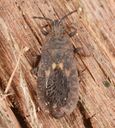
Neuroctenus elongatus is a of flat bug in the Aradidae, first described by Osborn in 1903. The species is characterized by its elongated body form, which distinguishes it from other members of the . It is distributed across North America. Flat bugs in this family are typically associated with decaying wood and fungal , though specific ecological details for this species remain limited.

Pronunciation
How to pronounce Neuroctenus elongatus: /nʊ.ˈrɒk.tə.nəs ɪˈlɒŋ.ɡə.təs/
These audio files are automatically generated. While they are not always 100% accurate, they are a good starting point.
Identification
Distinguished from other Neuroctenus by its notably elongated body proportions. Members of Aradidae can be recognized by their extremely flattened bodies, long , and reduced wings that often leave abdominal tergites exposed. Species-level identification within Neuroctenus requires examination of body proportions and male genitalia.
Images
Habitat
Specific microhabitat preferences are not documented, but members of Aradidae are typically found under bark of dead or dying trees, in decaying wood, and in association with fungal growth. These provide the moisture and food resources necessary for survival.
Distribution
Recorded from North America. Specific state or provincial records are not detailed in available sources, but the Neuroctenus has broad representation across the continent.
Behavior
Like other flat bugs, likely exhibits cryptic remaining concealed under bark or within decaying wood. When disturbed, members of this typically remain motionless or move slowly rather than flying away, reflecting their reduced capability.
Ecological Role
Member of the saproxylic —organisms dependent on dead or dying wood. Aradidae feed on fungal and are part of the decomposer in forest . Their specific ecological function within this guild has not been studied for this .
Human Relevance
No direct economic or medical significance. Not known to be a pest of timber or structures. Of interest primarily to systematic entomologists and those studying saproxylic insect diversity.
Similar Taxa
- Other Neuroctenus speciesShare the same and general body plan; distinguished by body proportions, particularly the degree of elongation
- Aradus speciesLarger in the same with similar flattened ; distinguished by different antennal segment proportions and body shape
More Details
Taxonomic history
First described by Herbert Osborn in 1903, a prominent American entomologist known for his work on Hemiptera. The specific epithet directly references the ' most conspicuous morphological feature.
Data limitations
Available sources provide minimal biological detail beyond taxonomic placement and geographic distribution. The 33 iNaturalist observations suggest the is encountered infrequently, likely due to its cryptic lifestyle rather than rarity.