
Neuroctenus
Fieber, 1860
flat bugs
Species Guides
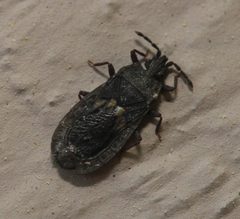
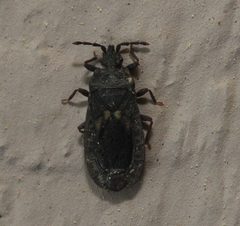
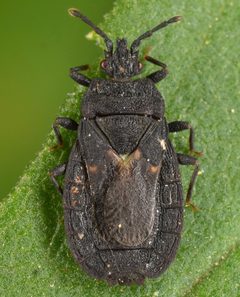
6Neuroctenus is a of flat bugs in the Aradidae, Mezirinae, containing approximately 7 described . Species in this genus are characterized by their strongly flattened bodies adapted for living under bark and in decaying wood. They are mycophagous, feeding on fungal mycelium, and have been documented in East and Southeast Asia including Taiwan, Hainan, Yunnan, Guizhou, and Tibet. Several species have been studied through mitochondrial sequencing, revealing close phylogenetic relationships within the genus and placement of Neuroctenus as sister to Mezira within Mezirinae.
Pronunciation
How to pronounce Neuroctenus: /nʊˈrɔktənəs/
These audio files are automatically generated. While they are not always 100% accurate, they are a good starting point.
Images
Habitat
Under bark of fallen trees and decaying wood in wet forest environments; arboreal and shrub with decaying fallen wood and dead branch bark. have been observed in crevices of bark where protective coloration provides camouflage.
Distribution
East and Southeast Asia: Taiwan Island (China); southern China including Hainan, Yunnan, Guizhou, and Tibet Autonomous Region. Specific collection localities include Dawei Mountain (Pingbian Miao Autonomous County, Yunnan), Yigongbai Village (Dexing Town, Motuo County, Linzhi City, Tibet), and Hainan Province.
Diet
Feeds on fungal mycelium. Documented associations include medicinal fungi Poria cocos and Ganoderma lucidum.
Host Associations
- Poria cocos - food sourcemedicinal fungus
- Ganoderma lucidum - food sourcemedicinal fungus
Behavior
Rarely flies; weak migratory capacity. Exhibits gregarious under decaying tree bark. Flat body with protective coloration makes individuals difficult to detect.
Ecological Role
Considered a pest of valuable traditional Chinese medicinal materials due to feeding on medicinal fungi.
Human Relevance
Pest status on economically important medicinal fungi used in traditional Chinese medicine.
Similar Taxa
- MeziraSister within Mezirinae; Neuroctenus distinguished by phylogenetic placement and morphological features
- BrachyrhynchusRelated within Mezirinae; Neuroctenus forms a clade with Mezira separate from Brachyrhynchus
Sources and further reading
- BugGuide
- Wikipedia
- GBIF taxonomy match
- iNaturalist taxon
- NCBI Taxonomy
- Analysis of the mitochondrial genome of Neuroctenus hainanensis and the phylogenetic position of Aradoidea.
- The complete mitochondrial genome of Neuroctenus taiwanicus (Hemiptera: Aradidae).
- Complete mitochondrial genome of Neuroctenus yunnanensis Hsiao, 1964 (Hemiptera: Aradidae: Mezirinae).