
Neuroctenus hopkinsi
Heidemann, 1904
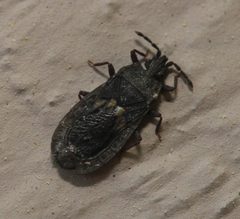
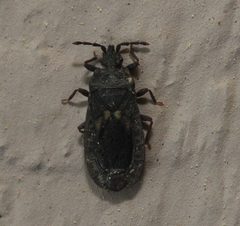
Neuroctenus hopkinsi is a of flat bug in the Aradidae, characterized by its dorsoventrally flattened body adapted for living under bark and in decaying wood. The species was described by Heidemann in 1904 and is known from North America. Like other members of Aradidae, it is presumed to feed on fungal in its , though specific ecological details remain poorly documented.
Pronunciation
How to pronounce Neuroctenus hopkinsi: //ˌnʊərɒkˈtiːnəs hɒpˈkɪnsiː//
These audio files are automatically generated. While they are not always 100% accurate, they are a good starting point.
Identification
Distinguished from other Neuroctenus by subtle morphological features of the pronotum and wing venation patterns, requiring examination of male genitalia for definitive identification. The flattened body form separates it from most other Hemiptera , while -level identification requires comparison with congeneric species such as N. simplex and N. pseudonymus.
Images
Appearance
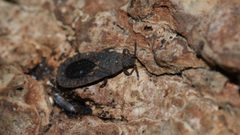
Body strongly dorsoventrally flattened, an for inhabiting tight spaces under bark. with four segments. Wing pads present in forms or reduced in brachypterous forms. Coloration generally dark brown to black, providing camouflage against bark and decaying wood substrates.
Habitat
Found under bark of dead or decaying trees and in rotting wood, where humidity remains high and fungal growth is abundant. Specific tree associations have not been documented.
Distribution
Recorded from North America; precise range boundaries within this region are undefined due to limited collection records and taxonomic study.
Similar Taxa
- Neuroctenus simplexOverlapping North American distribution and similar flattened body form; distinguished by male genitalia and subtle pronotal differences.
- Neuroctenus pseudonymusCongeneric with similar preferences; separation requires detailed morphological examination.
More Details
Taxonomic note
The has been subject to limited modern taxonomic revision; current identification relies primarily on Heidemann's 1904 description and subsequent comparative work within the .
Data deficiency
With only 19 iNaturalist observations and sparse literature records, most aspects of this ' remain undocumented.