
Neophyllura arbuti
(Schwarz, 1904)
Pacific Madrone Psyllid
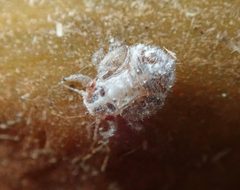
Neophyllura arbuti is a in the Liviidae, commonly known as the Pacific Madrone Psyllid. It is associated with Pacific madrone (Arbutus menziesii), a broadleaf evergreen tree native to western North America. The species was originally described as Euphyllura arbuti by Schwarz in 1904 and later transferred to the Neophyllura. Records indicate occurrence in California, Oregon, and British Columbia.
Pronunciation
How to pronounce Neophyllura arbuti: /ˌneɪoʊˈfɪljʊrə ˈɑrbjuˌtaɪ/
These audio files are automatically generated. While they are not always 100% accurate, they are a good starting point.
Identification
Distinguished from other psyllids by its association with Arbutus menziesii as plant. Specific morphological characters for field identification are not well documented in available sources. Molecular or detailed morphological examination may be required for definitive identification beyond host association.
Images
Habitat
Associated with Pacific madrone (Arbutus menziesii), occurring in coastal and montane forests where this tree grows. Found in mixed evergreen and conifer-hardwood forest of the Pacific Northwest and California.
Distribution
Pacific coastal region of western North America. Documented from California, Oregon, and British Columbia based on GBIF distribution records.
Diet
Feeds on phloem sap of Pacific madrone (Arbutus menziesii). Specific feeding habits or plant parts preferred are not documented.
Host Associations
- Arbutus menziesii - Pacific madrone, primary plant
Ecological Role
Herbivore on Pacific madrone. Potential role in nutrient cycling and as prey for other insects, though specific ecological interactions are undocumented.
Human Relevance
Minor relevance; not known as a significant agricultural or forestry pest. May be of interest to researchers studying diversity and -plant relationships in western North American .
Similar Taxa
- Other Neophyllura speciesCongeneric may share similar and require examination of association or detailed morphological characters for separation
- Other Liviidae on ArbutusOther psyllids in the same may occur on related plants; host specificity and genitalia are key distinguishing features