
People usually talk about aphids like they are already explained. Tiny green bugs. Bad for the roses. Spray them, squish them, move on. That is not wrong. It is just a very small version of the story.
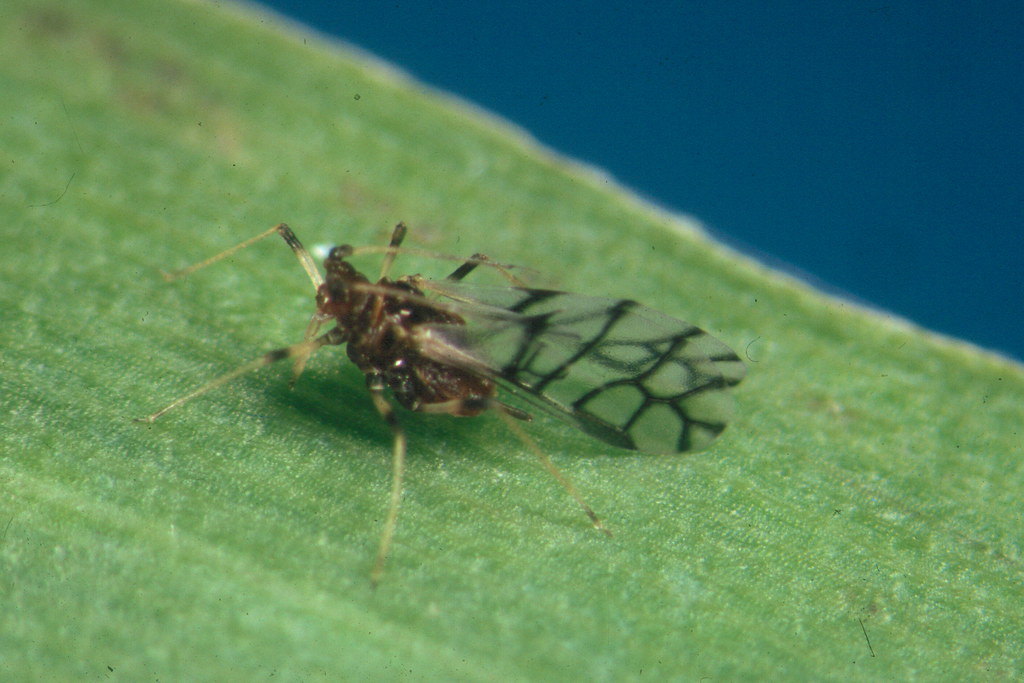
Melanoliarus altanatus is a species of planthopper in the family Cixiidae, first described by Caldwell in 1951 as Sonorium altanatum and later transferred to the genus Melanoliarus. The species belongs to the tribe Pentastirini within the subfamily Cixiinae. Cixiid planthoppers are small to medium-sized insects characterized by their membranous wings and association with plant hosts, though specific biological details for this species remain poorly documented.
Melanoliarus arizonensis is a species of planthopper in the family Cixiidae, first described by Mead and Kramer in 1982. As a member of the order Hemiptera, it possesses piercing-sucking mouthparts typical of true bugs. The genus Melanoliarus belongs to the planthopper infraorder Fulgoromorpha, a group of sap-feeding insects often associated with woody plants. The specific epithet "arizonensis" indicates the species was described from or is associated with Arizona. Like other cixiids, it likely has brachypterous (short-winged) or macropterous (long-winged) forms, though specific morphological details for this species remain poorly documented in available sources.
Melanoliarus catus is a species of planthopper in the family Cixiidae, first described by Caldwell in 1947. It belongs to the tribe Pentastirini within the subfamily Cixiinae. The species was originally described as Oliarus catus before being transferred to the genus Melanoliarus. Like other cixiid planthoppers, it is likely associated with plant hosts, though specific biological details remain poorly documented.
Melanoliarus eximus is a species of planthopper in the family Cixiidae, a group of small, often inconspicuous insects associated with plant roots. The species was described by Caldwell in 1947. Like other cixiids, it likely possesses membranous wings held roof-like over the body and a piercing-sucking mouthpart adapted for feeding on plant vascular fluids. Members of this genus are generally found in North America.
Melanoliarus humilis is a species of planthopper in the family Cixiidae, first described by Thomas Say in 1830 under the basionym Flata humilis. As a member of the Hemiptera, it belongs to a diverse group of true bugs characterized by piercing-sucking mouthparts. The genus Melanoliarus contains multiple species of planthoppers distributed across North America. Specific ecological details for M. humilis remain limited in available literature.
Melanoliarus lobatus is a species of planthopper in the family Cixiidae, described by Caldwell in 1938. The genus Melanoliarus belongs to the order Hemiptera, suborder Auchenorrhyncha, and is part of the diverse assemblage of cixiid planthoppers found in the New World. Species in this genus are generally small to medium-sized planthoppers with characteristic wing venation and body shape typical of the family.
Melanoliarus montanus is a planthopper species in the family Cixiidae, described by Metcalf in 1923. Members of this genus are small, delicate insects commonly found in North America. Cixiid planthoppers are known for their association with host plants and their role as vectors of plant pathogens.
Melanoliarus pygmaeus is a species of planthopper in the family Cixiidae, described by Ball in 1937. The genus Melanoliarus belongs to the order Hemiptera, suborder Auchenorrhyncha, and infraorder Fulgoromorpha. Cixiidae planthoppers are typically small to medium-sized insects associated with woody vegetation. The specific epithet "pygmaeus" (meaning dwarf or pygmy) suggests this species is notably small even within its genus.
Melanoliarus sylvaticus is a species of planthopper in the family Cixiidae, originally described by Caldwell in 1947 as Sonorium sylvaticum. The species was later transferred to the genus Melanoliarus. It belongs to the tribe Pentastirini within the subfamily Cixiinae. As with other members of Cixiidae, it is a small, often inconspicuous planthopper with nymphs typically associated with plant roots.
Melanoliarus texanus is a species of planthopper in the family Cixiidae, order Hemiptera. The species was described by Metcalf in 1923. As a member of Cixiidae, it belongs to a family of small to medium-sized planthoppers characterized by their brachypterous (short-winged) or macropterous (long-winged) forms and association with host plants. The genus Melanoliarus is part of the diverse planthopper fauna of North America.
Melanoliarus truncatus is a species of planthopper in the family Cixiidae, described by Van Duzee in 1929. Cixiidae are small to medium-sized planthoppers commonly known as cixiid planthoppers, characterized by their elongated bodies and wings held roof-like over the body. Members of the genus Melanoliarus are found in North America, particularly in western regions. The specific epithet 'truncatus' refers to a truncated or shortened feature, likely describing a morphological characteristic of the species.
Melanoliarus vicarius is a planthopper species in the family Cixiidae, first described by Francis Walker in 1851 under the name Cixius vicaria. The species belongs to a genus of small, often dark-colored cixiids found primarily in the Neotropical region. Like other members of Cixiidae, it is presumed to have brachypterous or macropterous forms and nymphal stages associated with soil or root habitats.
redcoat seed bug
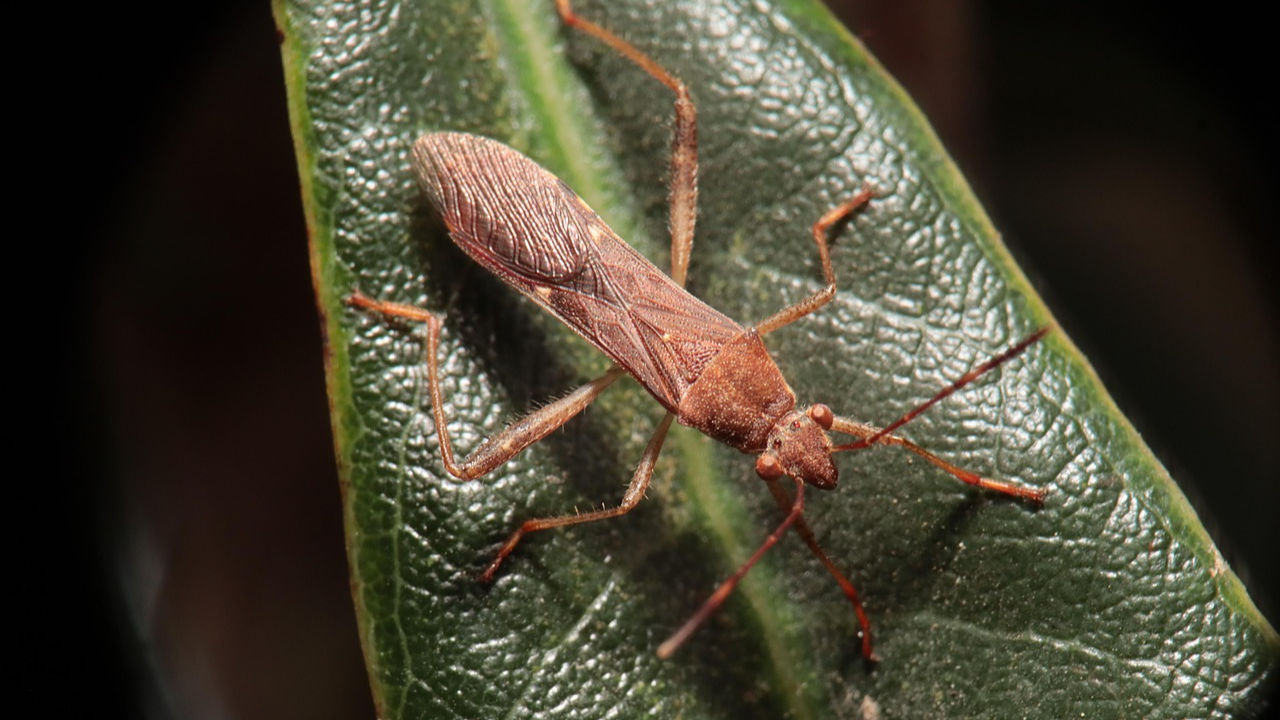
Melanopleurus belfragei, commonly known as the redcoat seed bug, is a species of true bug in the family Lygaeidae. It is distributed across Central America and North America. The species is a member of the seed bug group within the family, which are generally associated with feeding on seeds. It was originally described as Lygaeus belfragei by Stål in 1874 before being transferred to the genus Melanopleurus.
Melanopleurus tenor is a species of seed bug in the family Lygaeidae, described by Brailovsky in 1979. The genus Melanopleurus belongs to the true bugs (Heteroptera), a group characterized by piercing-sucking mouthparts and incomplete metamorphosis. As a member of Lygaeidae, this species is likely associated with seed-feeding habits typical of the family, though specific ecological data remain limited. The species has been recorded in North America.
Melanorhopala clavata is a species of lace bug in the family Tingidae. It is a true bug (Hemiptera) native to North America, with records spanning much of the continent including Canada and the United States. As a lace bug, it possesses the characteristic reticulated, lace-like wing covers typical of the family Tingidae. Specific biological details regarding its host plants, life history, and ecological role remain poorly documented in the available literature.
West Indian Flatid Planthopper
Melormenis basalis is a species of flatid planthopper in the family Flatidae, commonly known as the West Indian Flatid Planthopper. It belongs to the order Hemiptera, the true bugs, and is characterized by the flattened, often leaf-like body form typical of the family Flatidae. The species has been recorded from several Caribbean islands and has established populations in Florida and Hawaii, indicating potential for human-mediated dispersal. Like other planthoppers, it feeds on plant sap using piercing-sucking mouthparts.
Melymacra apicalis is a species of plant bug in the family Miridae, first described by Van Duzee in 1916. It belongs to the genus Melymacra, which is part of the diverse and speciose family of true bugs commonly known as plant bugs or capsid bugs. The species is documented from the southwestern United States, specifically Arizona and California.
treehoppers, thorn bugs, typical treehoppers
Membracidae, commonly called treehoppers or thorn bugs, is a family of approximately 3,200–3,500 species in over 400 genera within the order Hemiptera. The family is distinguished by extraordinary morphological diversity, particularly the pronounced enlargement and modification of the pronotum—the dorsal plate of the first thoracic segment—which can form thorns, horns, keels, or bizarre projections that often obscure the body and wings. This family represents the most diverse lineage within the superfamily Membracoidea, with its center of diversity in the New World tropics. Most species exhibit phytophagous habits, feeding on plant sap with piercing-sucking mouthparts. Many species engage in mutualistic relationships with ants, which protect them from predators in exchange for honeydew.
Memnonia purpurea is a species of leafhopper in the family Cicadellidae, first described by Ball in 1933. It belongs to the tribe Hecalini within the subfamily Deltocephalinae. The species is known from limited observations in Arizona. As with other leafhoppers in this family, it is presumed to be a plant-feeding insect with piercing-sucking mouthparts, though specific biological details remain poorly documented.
Meristopsis melanosteptos is a species of planthopper in the family Delphacidae, described from specimens collected in Florida and Oaxaca, Mexico. The species belongs to a genus of small delphacid planthoppers characterized by reduced wing venation and distinctive male genitalia. It was formally described in 2012 as part of a taxonomic revision of New World delphacine genera. Like other members of Delphacidae, it is presumed to feed on monocotyledonous plants, though specific host associations remain undocumented.
leaf-footed bugs
Merocoris is a genus of leaf-footed bugs in the family Coreidae, comprising approximately eight described species. Unlike typical leaf-footed bugs that possess flattened, leaf-like hind tibiae, members of this genus exhibit distinctive morphological modifications: notably curved hind tibiae and club-shaped (incrassate) hind femora. The genus has been documented across the Americas from North America through Central America to South America.
Merocoris curtatus is a species of leaf-footed bug in the family Coreidae, described by McAtee in 1919. It is native to North America with confirmed records from California. The genus Merocoris belongs to the subfamily Meropachyinae, a group of coreids that typically lack the expanded, leaf-like hind tibiae characteristic of many other leaf-footed bugs. Species in this genus are generally small, compact, and associated with herbaceous vegetation in grassland and open habitats.
Merocoris distinctus is a small, atypical leaf-footed bug (family Coreidae) found in grassland habitats across North and Central America. Unlike most coreids, it lacks the flattened, leaf-like hind tibiae characteristic of the family, instead possessing distinctly curved hind tibiae and club-shaped, enlarged hind femora. The species feeds on herbaceous plants including goldenrod (Solidago spp.) and lanceleaf tickseed (Coreopsis lanceolata), and has been documented engaging in thanatosis (death feigning) as an anti-predator defense. A notable record documents twelve individuals feeding gregariously on carrion, reflecting the extra-phytophagous feeding habits occasionally observed in Coreidae.
leaf-footed bugs
Meropachyinae is a subfamily of leaf-footed bugs within the family Coreidae, containing at least 50 described species across approximately 25-27 genera. The subfamily is distributed throughout the Americas, with records from North, Central, and South America. A documented case of thanatosis (death feigning) in Merocoris (Corynocoris) distinctus suggests anti-predator defense behaviors occur within this subfamily. The subfamily has undergone taxonomic revision regarding its spelling, with 'Meropachyinae' now accepted as correct over the former 'Meropachydinae'.
velvet water bugs
Merragata is a genus of small aquatic true bugs in the family Hebridae, commonly known as velvet water bugs. The genus contains seven described species distributed primarily in tropical and subtropical regions. Members of this genus inhabit moist, vegetated shoreline habitats where they prey on small invertebrates.
velvet water bug
Merragata hebroides is a species of velvet water bug in the family Hebridae, a group of small predatory true bugs associated with moist or aquatic habitats. The species has a remarkably broad geographic distribution spanning multiple continents and oceanic regions. It is one of the more widely recorded species within its genus.
Mesamia diana is a species of leafhopper in the family Cicadellidae, subfamily Deltocephalinae, described by Van Duzee in 1925. It belongs to the tribe Platymetopiini, a group of leafhoppers within the large and diverse family Cicadellidae. The genus Mesamia is part of the leafhopper superfamily Membracoidea, which includes some of the most economically significant plant-feeding insects. Very little specific information is available about the biology or ecology of this particular species.
Mesovelia polhemusi is a marine water treader (family Mesoveliidae) described from Belize in 1990. It occupies a highly specialized habitat in tidal mangrove forests, an environment where few other aquatic insects occur. The species has been documented in southern Florida, expanding its known range beyond the type locality. It was named in honor of heteropteran specialist John T. Polhemus.
Green Stilt Bug
Metacanthus multispinus is a stilt bug in the family Berytidae, commonly known as the Green Stilt Bug. It has a broad distribution across the Americas, ranging from the southern United States through Mexico, Central America, and into northern South America. The species is characterized by the elongated, slender legs typical of stilt bugs, which elevate the body above the substrate.
delphacid planthopper
Metadelphax propinqua is a species of delphacid planthopper in the family Delphacidae with a remarkably broad global distribution spanning six continents. It has been introduced to the Nearctic and Neotropical regions. Laboratory studies on a Turkish population maintained at 22°C documented an egg stage of 12 days, nymphal development of 19 days through five instars, and adult female longevity of 51 days, with fecundity averaging 1112 eggs per female. Adults exhibit wing dimorphism, occurring as macropters, brachypters, or intermediary forms.
Metatropiphorus is a genus of damsel bugs in the family Nabidae, established by Reuter in 1872. The genus contains at least four described species distributed across North America. Members of this genus are predatory true bugs that inhabit vegetation.
Metopoplax is a genus of true bugs (Hemiptera: Heteroptera) in the family Oxycarenidae, established by Fieber in 1860. The genus contains at least three described species: M. ditomoides, M. fuscinervis, and M. origani. Members of this genus are small heteropterans classified within the superfamily Lygaeoidea.
plant bugs
Metriorrhynchomiris is a genus of plant bugs in the family Miridae, containing at least three described species. The genus is most well-documented through Metriorrhynchomiris dislocatus, a widespread North American species known for extreme color polymorphism. Members are associated with woodland habitats and diverse plant hosts.
Metriorrhynchomiris fallax is a species of plant bug in the family Miridae. It is native to North America, with records from Pennsylvania and West Virginia in the United States. As a member of the genus Metriorrhynchomiris, it belongs to a group of mirid plant bugs known for exhibiting considerable color polymorphism, though specific details about M. fallax remain poorly documented in the scientific literature.
Metrobates anomalus is a water strider species in the family Gerridae, described by Hussey in 1948. It belongs to the genus Metrobates, a group of semiaquatic bugs known for their ability to walk on water surfaces using hydrophobic leg adaptations. The species is part of the subfamily Trepobatinae and tribe Metrobatini, which are primarily associated with running water habitats. Very little specific biological information is documented for this particular species.
Metrobates hesperius is a water strider (family Gerridae) distributed across eastern North America and the Caribbean. It belongs to the subfamily Trepobatinae, a group of semiaquatic bugs that inhabit flowing water habitats. The species was described by Uhler in 1871 and includes three recognized subspecies with distinct geographic distributions.
Mexicomiris texanus is a species of plant bug in the family Miridae, described by Carvalho in 1986. It is a member of the diverse and speciose family of true bugs commonly known as plant bugs or leaf bugs. The species is known from Texas and has been recorded in North America.
flat bug
Mezira emarginata is a species of flat bug in the family Aradidae. The species was described by Say in 1832. It occurs in Central America and North America. Flat bugs in this family are typically associated with decaying wood and fungal habitats.
Mezira granulata is a species of flat bug in the family Aradidae, characterized by its dorsoventrally flattened body form. The species is distributed across the Caribbean, Central America, and North America. Like other members of Aradidae, it is associated with decaying wood and fungal habitats. The specific epithet 'granulata' refers to a granular or roughened body surface texture.
Mezira lobata is a species of flat bug in the family Aradidae, commonly known as bark bugs. The species was described by Thomas Say in 1832. It occurs in Central America and North America. Like other aradids, it has a strongly flattened body form adapted for living in tight spaces under bark.
Mezira reducta is a species of flat bug in the family Aradidae, first described by Van Duzee in 1927. Members of the genus Mezira are typically associated with decaying wood and fungal habitats. The species is known from North America, with observational records from the United States.
Mezira sayi is a species of flat bug in the family Aradidae, a group of true bugs (Hemiptera: Heteroptera) characterized by their dorsoventrally flattened bodies. The species was described by Kormilev in 1982. It is native to North America. Flat bugs in this family are typically associated with decaying wood and fungal habitats.
Micracanthia bergrothi is a species of shore bug in the family Saldidae. It has been recorded across Europe, Northern Asia (excluding China), and North America. As a member of the Saldidae, it is associated with moist shoreline habitats. The species was described by Jakovlev in 1893.
Florida shore bug
Micracanthia floridana is a species of shore bug in the family Saldidae, first described by Drake and Chapman in 1953. As a member of this family, it is adapted to life along shorelines and wet margins. The species is known from North America, though specific details about its biology and ecology remain poorly documented in available literature.
shore bug
Micracanthia humilis is a species of shore bug in the family Saldidae, first described by Thomas Say in 1832. The species has a broad geographic distribution spanning the Caribbean Sea, Central America, North America, Oceania, and South America. As a member of the shore bug family, it inhabits marginal aquatic environments. The species is represented by 31 observations on iNaturalist, indicating it is documented but not frequently encountered.
Micracanthia quadrimaculata is a species of shore bug in the family Saldidae, first described by Champion in 1900. It belongs to the genus Micracanthia, a group of small predatory true bugs typically found in moist shoreline habitats. The species epithet "quadrimaculata" (meaning "four-spotted") likely refers to distinctive markings on the body or wings.
Microcentrus is a genus of treehoppers in the family Membracidae, containing approximately 10 described species. The genus belongs to the tribe Microcentrini within the subfamily Stegaspidinae. Species in this genus are found in North America and Mexico, including the hickory stegaspidine treehopper (M. caryae). The genus was established by Stål in 1870.
Microledrida flava is a species of planthopper in the family Cixiidae, first described by Metcalf in 1923. The specific epithet "flava" (Latin for yellow) likely refers to its coloration. Records indicate this species occurs in parts of southern North America, specifically Texas in the United States and Tamaulipas in Mexico. As a member of the Cixiidae, it belongs to a family of small to medium-sized planthoppers that feed on plant phloem sap using piercing-sucking mouthparts.
Microparsus olivei is a species of aphid in the family Aphididae, described by Smith & Tuatay in 1960. It belongs to the tribe Macrosiphini, a group of aphids characterized by long antennae and siphunculi. The genus Microparsus contains species associated with various host plants, though specific ecological details for M. olivei remain poorly documented. The species is recognized in taxonomic databases including GBIF and iNaturalist, though observations are extremely limited.
Desmodium Aphid
Microparsus variabilis is a species of aphid in the family Aphididae, first described by Patch in 1909. It is commonly known as the Desmodium Aphid, reflecting its association with plants in the genus Desmodium. As a member of the Sternorrhyncha suborder, it possesses piercing-sucking mouthparts adapted for feeding on plant phloem. The species belongs to the genus Microparsus, which is classified within the tribe Macrosiphini.