
Metrobates anomalus
Hussey, 1948
Metrobates anomalus is a water strider in the Gerridae, described by Hussey in 1948. It belongs to the Metrobates, a group of semiaquatic bugs known for their ability to walk on water surfaces using hydrophobic leg adaptations. The species is part of the Trepobatinae and tribe Metrobatini, which are primarily associated with running water . Very little specific biological information is documented for this particular species.
Pronunciation
How to pronounce Metrobates anomalus: /ˌmɛtroʊˈbeɪtiːz əˈnɒmələs/
These audio files are automatically generated. While they are not always 100% accurate, they are a good starting point.
Identification
Metrobates anomalus can be distinguished from other Metrobates by genitalic and other subtle morphological features described in Hussey's 1948 original description. The Metrobates is characterized by specific wing venation patterns and male genitalic structures that differ from related genera such as Trepobates and Rheumatobates. Accurate identification to species level requires examination of or detailed comparison with original descriptive material, as few subsequent diagnostic resources exist.
Images
Appearance
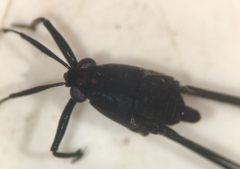
As a member of Gerridae, Metrobates anomalus possesses the characteristic elongated body form and long, slender legs adapted for surface locomotion on water. The middle and hind legs are disproportionately long relative to the body, with dense hydrophobic setae that distribute weight and enable on water surface tension. The body is typically dorsoventrally flattened. Specific coloration and body proportions for M. anomalus are not well documented in available sources.
Habitat
Metrobates are typically associated with lotic (flowing water) including streams and rivers. The specific microhabitat preferences of M. anomalus are not documented, but are generally found on the water surface of moderate to fast-flowing streams, often in areas with reduced current such as pool margins or backwaters.
Distribution
Documented from North America. The precise range within North America is not specified in available sources, though the Metrobates has its center of diversity in the Nearctic region with distributed across North America.
Behavior
As with other gerrids, Metrobates anomalus is presumed to be predatory, capturing small arthropods and other prey items that fall onto the water surface. The likely exhibits the characteristic surface-skimming locomotion and territorial documented in related water strider species, though specific behavioral observations are not recorded.
Ecological Role
As a surface-dwelling in aquatic , Metrobates anomalus likely contributes to top-down regulation of small in stream and river . Gerrids serve as both predators and prey, linking aquatic and terrestrial food webs through their surface-dwelling habits.
Similar Taxa
- Metrobates hesperius with similar preferences and ; requires examination of male genitalia and wing characteristics for definitive separation.
- Trepobates speciesRelated within Trepobatinae with similar overall body plan and ; distinguished by wing venation patterns and male genitalic structures.
- Rheumatobates speciesRelated in same ; differs in leg proportions and genitalic .
More Details
Taxonomic history
Metrobates anomalus was described by Hussey in 1948, but has received limited subsequent taxonomic attention. The Metrobates was revised by several in the mid-20th century, though many remain poorly known biologically.
Collection status
The is represented by very few observations in biodiversity databases (iNaturalist records: 1), suggesting it is either genuinely rare, undercollected, or difficult to identify without expertise.