
Metrobates hesperius
Uhler, 1871
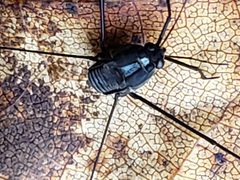
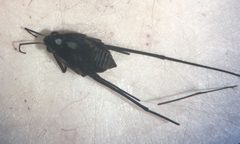
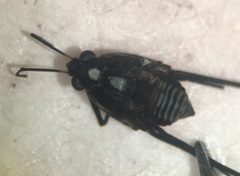
Metrobates hesperius is a water strider ( Gerridae) distributed across eastern North America and the Caribbean. It belongs to the Trepobatinae, a group of semiaquatic bugs that inhabit flowing water . The was described by Uhler in 1871 and includes three recognized with distinct geographic distributions.
Pronunciation
How to pronounce Metrobates hesperius: /mɛˈtroʊbeɪtiːz hɛsˈpɪəriəs/
These audio files are automatically generated. While they are not always 100% accurate, they are a good starting point.
Identification
As a member of Trepobatinae, Metrobates hesperius can be distinguished from common pond-dwelling Gerridae by its association with flowing water rather than still water. The Metrobates is characterized by features of the male genitalia and body proportions that differ from related genera such as Trepobates. Specific diagnostic characters for M. hesperius include subtle differences in body size and coloration compared to , though precise field identification to level often requires examination of male specimens.
Images
Habitat
Inhabits flowing water systems including streams and rivers. Unlike many Gerridae that occupy lentic such as ponds and lakes, members of the Trepobatinae are specialized for lotic environments.
Distribution
Eastern North America and the Caribbean. Specific have more restricted ranges: M. h. hesperius in the northern part of the range, M. h. depilatus in the southeastern United States, and M. h. ocalensis in Florida.
Ecological Role
As a surface-dwelling in aquatic , contributes to dynamics in stream and river . Its presence in lotic systems indicates functioning surface water communities.
Similar Taxa
- TrepobatesCongeneric trepobatine water striders that share lotic preferences; Metrobates differs in male genitalic structure and body proportions.
- Aquarius and GerrisCommon pond-dwelling Gerridae that occupy lentic ; Metrobates hesperius is distinguished by its restriction to flowing water systems.
More Details
Subspecies
Three are recognized: M. h. hesperius (nominate, described 1871), M. h. depilatus (southeastern US, described 1949), and M. h. ocalensis (Florida, described 1949). The subspecific distinctions reflect geographic variation in body pilosity and other morphological characters.
Taxonomic history
Originally described by Philip R. Uhler in 1871, with additional described by Hussey & Herring in 1949 based on material from the southeastern United States.