
Mesovelia polhemusi
Spangler, 1990
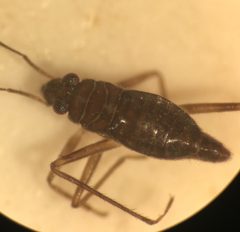
Mesovelia polhemusi is a marine water treader ( Mesoveliidae) described from Belize in 1990. It occupies a highly specialized in tidal mangrove forests, an environment where few other aquatic insects occur. The has been documented in southern Florida, expanding its known range beyond the type locality. It was named in honor of heteropteran John T. Polhemus.

Pronunciation
How to pronounce Mesovelia polhemusi: /ˌmɛsoʊˈviːliə pɒlˈhiːmjuːs/
These audio files are automatically generated. While they are not always 100% accurate, they are a good starting point.
Identification
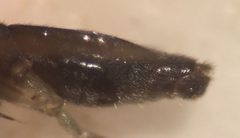
As a member of Mesoveliidae, likely shares traits including elongated body form, long slender legs adapted for on water surface film, and longer than . Specific diagnostic features distinguishing it from are not documented in available sources. Identification to requires examination of male genitalia or other subtle morphological characters typical of the .
Images
Habitat
Tidal mangrove forests. Occupies marine intertidal zones where it has been observed in mangrove-associated aquatic . This represents an unusual habitat for aquatic insects, which are generally rare in marine environments.
Distribution
Originally described from Belize. Subsequently recorded from southern Florida, USA. GBIF records indicate presence in Middle America.
Behavior
Walks on water surface film, typical of Mesoveliidae. Occupies tidal mangrove where it has been observed in association with mangrove root systems and intertidal pools.
Ecological Role
One of few aquatic insect adapted to marine tidal environments. Likely functions as a or scavenger in mangrove intertidal , though specific ecological interactions are undocumented.
Human Relevance
Named for John T. Polhemus, recognized authority on aquatic and semi-aquatic Heteroptera. No direct economic or medical significance documented. Of interest to entomologists studying marine insect adaptations and mangrove biodiversity.
Similar Taxa
- Other Mesovelia species share general body plan and preferences in freshwater systems; M. polhemusi distinguished by marine tidal mangrove habitat and geographic distribution, though morphological differentiation requires detailed examination
- Other Mesoveliidae (e.g., Mesoveloidea, Cryptovelia)Share characteristics of surface-dwelling habits; M. polhemusi belongs to nominate Mesoveliinae, differing from Mesoveloidea in wing venation and other structural features
More Details
Etymology
Specific epithet honors John T. Polhemus (1932–2021), American entomologist who made substantial contributions to the of aquatic Heteroptera, particularly Gerridae, Veliidae, and related groups.
Marine adaptation
Among the few truly marine insects, representing an exceptional ecological shift for the primarily freshwater infraorder Dipsocoromorpha. of salinity and tidal inundation distinguishes it from most Mesoveliidae.
Taxonomic history
Described by Philip J. Spangler in 1990 based on material from Belize. The Florida records represent a notable range extension for a initially considered restricted to Central America.