Coleoptera
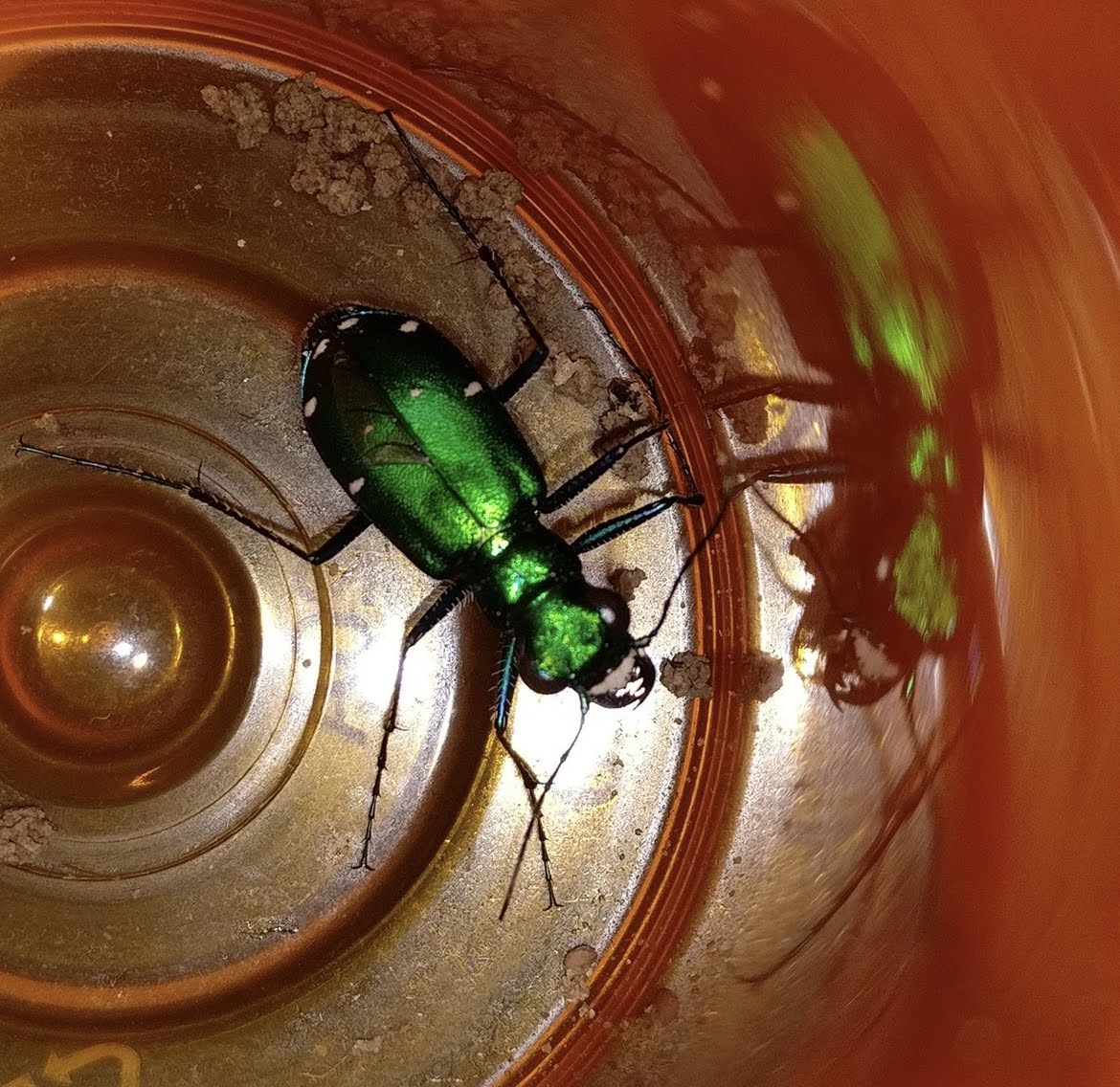
- Tiger beetles are some of the most charismatic insects on Earth: metallic, sharp-eyed, absurdly fast, and every bit as predatory as their name suggests. Come learn how they hunt, why their larvae live like tiny trapdoor monsters in the soil, and what their decline says about the fragile open habitats many other species need too.
Guides
Asiopus minimus
Asiopus minimus is a species of darkling beetle (family Tenebrionidae) within the order Coleoptera. The genus Asiopus is part of the diverse tenebrionid fauna, though specific biological details for this species remain poorly documented in accessible literature. Based on family-level characteristics, members of this group are generally associated with arid or semi-arid environments and are often nocturnal or crepuscular in activity patterns.
Aspidoglossa
Aspidoglossa is a genus of ground beetles (family Carabidae) established by Putzeys in 1846. The genus comprises approximately 26 described species distributed primarily in the Neotropics, with a single species, Aspidoglossa subangulata, extending into the southern United States. These beetles belong to the subtribe Ardistomina within the tribe Clivinini, a group characterized by fossorial (burrowing) adaptations. The genus has been documented through 629 iNaturalist observations, indicating moderate levels of citizen science engagement.
Aspidoglossa subangulata
Lesser Tail-light Carabid
Aspidoglossa subangulata is a small ground beetle in the subfamily Scaritinae, first described by Maximilien Chaudoir in 1843. It is commonly known as the Lesser Tail-light Carabid. The species has been documented across parts of North America, Middle America, and Japan. It belongs to the tribe Clivinini and is placed in the subtribe Ardistomina.
Asydates grandiceps
Asydates grandiceps is a species of soft-winged flower beetle in the family Melyridae. The genus Asydates is part of a diverse group of beetles commonly known as soft-winged flower beetles, characterized by their soft elytra and frequent association with flowers. Limited specific information is available for this particular species.
Asydates vandykei
Asydates vandykei is a species of soft-bodied plant beetle in the family Melyridae. The genus Asydates is classified within the diverse beetle family Melyridae, which is characterized by soft elytra and often metallic coloration. No specific ecological or behavioral details have been documented for this particular species.
Ataeniopsis figurator
Ataeniopsis figurator is an aphodiine dung beetle described by Harold in 1874. As a member of the tribe Eupariini within the subfamily Aphodiinae, it belongs to a group of scarab beetles commonly associated with decomposing organic matter. The species has been documented across a broad North American range with additional records from Central America.
Ataenius apicalis
A small scarab beetle in the dung beetle group Aphodiinae, described by Hinton in 1936. The species occurs across the southern United States and Mexico, with records from both Nearctic and Neotropical regions. Like other members of Ataenius, it is likely associated with decomposing organic matter, though specific ecological details remain poorly documented.
Ataenius cognatus
slender dung beetle
Ataenius cognatus, commonly known as the slender dung beetle, is a species of aphodiine dung beetle in the family Scarabaeidae. First described by LeConte in 1858, this small scarab beetle has a broad geographic distribution spanning North America, Central America, and Oceania. It belongs to the tribe Eupariini within the subfamily Aphodiinae, a group often associated with dung and decaying organic matter.
Ataenius confertus
Ataenius confertus is a small aphodiine dung beetle in the family Scarabaeidae. The species was described by Fall in 1909 and is known from arid and semi-arid regions of the southwestern United States and northwestern Mexico. Like other members of the genus Ataenius, it is likely associated with decomposing organic matter, though specific ecological details remain poorly documented.
Ataenius hirsutus
Ataenius hirsutus is a small aphodiine dung beetle in the family Scarabaeidae, first described by Horn in 1871. It occurs across the southwestern United States and Mexico, with records from Arizona, Kansas, New Mexico, Texas, and multiple Mexican states including Baja California Sur, Chihuahua, and Veracruz. As a member of the tribe Eupariini, it belongs to a group of beetles typically associated with decomposing organic matter and soil habitats.
Ataenius oklahomensis
Ataenius oklahomensis is a small scarab beetle in the subfamily Aphodiinae, described by Brown in 1930. The species is endemic to the south-central United States, with records from Oklahoma, Texas, Arkansas, and Louisiana. Like other members of the genus Ataenius, it is likely associated with soil and decaying organic matter, though specific ecological details remain poorly documented. The species name reflects its type locality in Oklahoma.
ColeopteraScarabaeidaeAphodiinaeAtaeniusNearcticOklahoma-endemicsoil-dwelling-beetle1930-descriptionsouth-central-United-Statesscarab-beetledung-beetle-relativeEupariinisaprophagous-beetleundocumented-ecologyrarely-collectedtype-locality-OklahomaTexas-faunaArkansas-faunaLouisiana-faunaturfgrass-habitat-possiblegrassland-insectprairie-insectgypsum-soil-habitat-possiblemesquite-associated-fauna-possibleProsopis-associated-beetles-possibleCeltis-associated-beetles-possiblehackberry-associated-beetles-possiblesoapberry-associated-beetles-possibleSapindus-associated-beetles-possibleearly-season-activity-possibleMay-activity-observed-in-regioncool-weather-tolerance-possibleGloss-Mountain-State-Park-fauna-possiblegypsum-capped-mesa-fauna-possiblenorthwestern-Oklahoma-faunawestern-Oklahoma-insectmixed-grass-prairie-insectshortgrass-prairie-insectcross-timbers-fauna-possibleBlack-Mesa-fauna-possibleCimarron-County-fauna-possibleMajor-County-fauna-possibleEllis-County-fauna-possibleBeaver-County-fauna-possibleOklahoma-Panhandle-faunaRed-River-Valley-fauna-possibleArkansas-River-Valley-fauna-possiblesouthwestern-Arkansas-faunanorthwestern-Louisiana-faunanortheastern-Texas-faunanorth-central-Texas-faunaRed-River-faunadecaying-organic-matter-feeder-likelydetritivore-likelyhumus-feeder-likelyroot-feeding-larvae-possible-but-unconfirmedturfgrass-pest-status-unconfirmedgolf-course-fauna-possiblesod-farm-fauna-possiblelawn-fauna-possibleathletic-field-fauna-possiblemowing-height-sensitivity-unknowninsecticide-susceptibility-unknownpredator-interactions-unknownnatural-enemy-relationships-unknownparasitoid-associations-unknownnematode-associations-unknownfungal-pathogen-associations-unknownmicrobial-symbionts-unknowngut-microbiome-unknownmolecular-phylogeny-unstudiedgenomic-resources-absentbarcode-data-sparsemuseum-specimens-limitedcollection-bias-probableundersampled-speciesdata-deficient-speciesIUCN-status-unevaluatedconservation-status-unknownpopulation-trends-unknownhabitat-specificity-unknownhost-plant-specificity-unknownaltitudinal-range-unknownmicrohabitat-preferences-unknowndiurnal-activity-pattern-unknownnocturnal-activity-possiblecrepuscular-activity-possibleflight-capability-assumeddispersal-ability-unknowncolonization-ability-unknownmetapopulation-dynamics-unknowngenetic-structure-unknowngene-flow-patterns-unknownlocal-adaptation-possiblecryptic-species-status-unassessedmorphological-variation-unstudiedsexual-dimorphism-unknownallometry-unstudieddevelopmental-plasticity-unknownvoltinism-unknownunivoltine-possiblebivoltine-possiblemultivoltine-possibleoverwintering-stage-unknownlarval-morphology-unknownpupal-morphology-unknownadult-longevity-unknownfecundity-unknownoviposition-behavior-unknownegg-morphology-unknownembryonic-development-unknownlarval-instars-unknownlarval-feeding-behavior-unknownlarval-habitat-unknownprepupal-behavior-unknownpupal-habitat-unknownadult-emergence-cues-unknownmating-behavior-unknownmate-location-unknownpheromone-communication-unknownacoustic-communication-unlikelyvisual-communication-possibletactile-communication-possiblechemoreception-important-likelyolfactory-orientation-likelygustatory-receptors-importantmechanoreception-importantthermoreception-importanthygroreception-importantphototaxis-unknowngeotaxis-likely-negative-in-adultsthigmotaxis-likelystarvation-resistance-unknowndesiccation-resistance-unknowncold-hardiness-unknownheat-tolerance-unknownmetabolic-rate-unknownrespiratory-physiology-unknownwater-balance-physiology-unknownexcretory-physiology-unknowndigestive-physiology-unknownreproductive-physiology-unknownendocrine-regulation-unknownneurobiology-unknownsensory-ecology-unknownforaging-ecology-unknownmovement-ecology-unknownspatial-memory-unlikelylearning-capacity-unknowncognitive-abilities-unknownbehavioral-plasticity-unknownstress-responses-unknownimmune-function-unknownlongevity-determinants-unknownsenescence-patterns-unknownaging-biology-unknownlife-history-evolution-unstudiedr/K-selection-status-unknownbet-hedging-strategy-unknowniteroparity-assumedsemelparity-unlikelyparental-care-absentmaternal-investment-unknownpaternal-investment-absentsibling-competition-unknownkin-recognition-unlikelysocial-behavior-absentaggregation-behavior-possibleterritoriality-unlikelyaggression-levels-unknownmating-system-unknownsexual-selection-unknownsperm-competition-unknowncryptic-female-choice-unknownreproductive-interference-unknownhybridization-potential-unknownintrogression-risk-unknownrange-expansion-possiblerange-contraction-possiblerange-shift-possibleclimate-change-vulnerability-unknownhabitat-fragmentation-sensitivity-unknownurbanization-tolerance-unknownagricultural-intensification-sensitivity-unknownpesticide-exposure-effects-unknownheavy-metal-tolerance-unknownsalinity-tolerance-unknownpH-tolerance-unknownsoil-texture-preferences-unknownsoil-moisture-requirements-unknownsoil-organic-matter-requirements-unknownsoil-nitrogen-sensitivity-unknownsoil-phosphorus-sensitivity-unknownsoil-potassium-sensitivity-unknownsoil-micronutrient-requirements-unknownsoil-biota-interactions-unknownmycorrhizal-associations-absentplant-root-associations-possible-but-unconfirmedrhizosphere-inhabitant-possiblelitter-layer-inhabitant-possiblesoil-core-inhabitant-possibleburrowing-behavior-likelysoil-mixing-ecosystem-service-possiblenutrient-cycling-contribution-unknowncarbon-sequestration-contribution-unknownnitrogen-mineralization-contribution-unknownphosphorus-mobilization-contribution-unknownsoil-structure-improvement-possiblebioturbation-effects-unknownseed-dispersal-role-absentpollination-role-absentherbivory-role-unlikelypredation-role-unlikelyparasitism-role-unlikelymutualism-role-unknowncommensalism-role-possibleamensalism-role-unknowncompetition-interactions-unknownapparent-competition-unknownexploitative-competition-possibleinterference-competition-possibleresource-partitioning-unknownniche-breadth-unknownniche-overlap-with-congeners-unknowncoexistence-mechanisms-unknownassembly-rules-unknownmetacommunity-dynamics-unknownbeta-diversity-patterns-unknownalpha-diversity-contribution-unknowngamma-diversity-contribution-unknownendemism-significance-regionalbiodiversity-value-unknownecosystem-service-value-unknowneconomic-value-absentaesthetic-value-minimalcultural-value-minimalscientific-value-moderateeducational-value-minimalbiocontrol-potential-unknownbioremediation-potential-unknownbioindicator-potential-unknownenvironmental-monitoring-utility-unknownconservation-priority-lowresearch-priority-moderateinventory-priority-moderatetaxonomy-stability-stablenomenclatural-issues-absenttype-specimen-location-unknowntype-locality-Oklahoma-specifiedoriginal-description-accessiblesubsequent-redescriptions-absentphylogenetic-revision-neededmonographic-treatment-neededfield-guide-coverage-absentwebsite-coverage-minimaldatabase-coverage-sparsecitizen-science-records-minimaliNaturalist-observations-sparsesocial-media-mentions-minimalpopular-press-coverage-absentscientific-literature-sparseagricultural-extension-literature-absentintegrated-pest-management-relevance-minimalquarantine-significance-absentinvasive-potential-absentnative-range-restrictednaturalized-range-absentintroduced-range-absentcryptogenic-status-not-applicablecosmopolitan-distribution-absentwidespread-distribution-absentdisjunct-distribution-pattern-absentrelict-distribution-pattern-absentrefugial-distribution-possiblePleistocene-history-unknownHolocene-history-unknownAnthropocene-responses-unknownhistorical-biogeography-unstudiedphylogeography-unstudiedmolecular-clock-dating-absentfossil-record-absentsubfossil-record-absentamber-inclusions-absentcopal-inclusions-absentsedimentary-record-absentarchaeological-record-absentpaleoecological-reconstructions-impossiblepaleoclimatic-niche-unknownniche-conservatism-unknownniche-evolution-unknownadaptive-radiation-context-absentspeciation-mode-unknownreproductive-isolation-mechanisms-unknownhybrid-zone-dynamics-absentcontact-zone-dynamics-absentsympatric-speciation-unlikelyallopatric-speciation-possibleperipatric-speciation-possibleparapatric-speciation-possibleecological-speciation-possiblemutation-order-speciation-unlikelyreinforcement-absentreproductive-character-displacement-absentecological-character-displacement-unknowncompetitive-exclusion-unlikelyapparent-competition-with-congeners-unknownshared-natural-enemies-unknownshared-resources-unknownresource-competition-unknowninterference-competition-unknownexploitation-competition-unknownfacilitation-interactions-unknownindirect-interactions-unknowninteraction-network-position-unknownfood-web-connectivity-unknowntrophic-level-detritivore-assumedtrophic-position-basal-assumedenergy-flow-contribution-unknownmaterial-cycling-contribution-unknownecosystem-engineering-effects-unknownkeystone-species-status-unlikelyfoundation-species-status-unlikelydominant-species-status-unlikelysubordinate-species-status-likelytransient-species-status-possiblecore-species-status-unknownsatellite-species-status-possiblemetapopulation-source-sink-dynamics-unknownrescue-effect-unknownmass-effect-unknownmainland-island-dynamics-unknownstepping-stone-dynamics-unknowncorridor-use-unknownbarrier-effects-unknownedge-effects-sensitivity-unknownmatrix-habitat-tolerance-unknownhabitat-patch-size-requirements-unknownhabitat-patch-isolation-effects-unknownhabitat-quality-thresholds-unknownhabitat-degradation-responses-unknownhabitat-restoration-potential-unknownhabitat-creation-potential-unknownmanaged-relocation-suitability-unknownex-situ-conservation-potential-unknowncaptive-breeding-potential-unknowncryopreservation-potential-unknownseed-bank-analog-absenttissue-culture-potential-unknowngenetic-resource-banking-potential-unknownbiobanking-potential-unknownsynthetic-biology-applications-absentde-extinction-relevance-absentgenome-editing-applications-absentbiotechnology-applications-absentbiomimicry-applications-absentbioinspiration-potential-minimaltraditional-knowledge-absentindigenous-knowledge-absentlocal-ecological-knowledge-sparsecitizen-science-potential-moderatestakeholder-engagement-minimalpolicy-relevance-minimalregulatory-framework-absentinternational-agreements-coverage-absentnational-legislation-coverage-absentsubnational-legislation-coverage-absentinstitutional-mandates-absentfunding-streams-absentresearch-infrastructure-needs-moderatecapacity-building-needs-moderatetaxonomic-expertise-needs-moderatesystematic-biology-contribution-minimalevolutionary-biology-contribution-minimalecology-contribution-minimalbehavioral-biology-contribution-minimalphysiology-contribution-minimaldevelopmental-biology-contribution-minimalgenetics-contribution-minimalgenomics-contribution-minimaltranscriptomics-contribution-minimalproteomics-contribution-minimalmetabolomics-contribution-minimalphenomics-contribution-minimalmorphometrics-contribution-minimalecophysiology-contribution-minimalbiomechanics-contribution-minimalneuroethology-contribution-minimalchemical-ecology-contribution-minimalmolecular-ecology-contribution-minimallandscape-ecology-contribution-minimalconservation-biology-contribution-minimalrestoration-ecology-contribution-minimalagroecology-contribution-minimalurban-ecology-contribution-minimalclimate-change-biology-contribution-minimalinvasion-biology-contribution-minimaldisease-ecology-contribution-minimalmicrobiome-science-contribution-minimalsymbiosis-research-contribution-minimalfood-web-ecology-contribution-minimalecosystem-ecology-contribution-minimalglobal-change-biology-contribution-minimalsustainability-science-contribution-minimalOne-Health-relevance-minimalplanetary-health-relevance-minimalecosystem-services-assessment-minimalnatural-capital-valuation-minimalgreen-economy-relevance-minimalblue-economy-relevance-absentcircular-economy-relevance-minimalbioeconomy-relevance-minimalsustainable-development-goals-relevance-minimalinterdisciplinary-research-potential-moderatetransdisciplinary-research-potential-minimalparticipatory-research-potential-minimalaction-research-potential-minimaltransformative-research-potential-minimalpost-normal-science-relevance-minimalmode-2-science-relevance-minimaltriple-helix-innovation-potential-minimalquadruple-helix-innovation-potential-minimalresponsible-research-and-innovation-relevance-minimalopen-science-potential-moderatedata-sharing-potential-moderatesoftware-sharing-potential-minimalhardware-sharing-potential-minimalprotocol-sharing-potential-moderatereagent-sharing-potential-minimalspecimen-sharing-potential-moderateknowledge-sharing-potential-moderatecapacity-sharing-potential-minimalinfrastructure-sharing-potential-minimaltraining-sharing-potential-minimalnetwork-building-potential-moderatepartnership-potential-moderatecollaboration-potential-moderateco-creation-potential-minimalco-design-potential-minimalco-production-potential-minimalco-dissemination-potential-minimalco-implementation-potential-minimalco-evaluation-potential-minimalco-learning-potential-moderateco-governance-potential-minimalco-management-potential-minimaladaptive-governance-potential-minimaltransformative-governance-potential-minimalenvironmental-governance-contribution-minimalscience-policy-interface-relevance-minimalscience-society-interface-relevance-minimalscience-business-interface-relevance-minimalscience-media-interface-relevance-minimalscience-education-interface-relevance-moderatescience-arts-interface-relevance-minimalscience-humanities-interface-relevance-minimalscience-religion-interface-relevance-absentscience-ethics-interface-relevance-minimalscience-law-interface-relevance-minimalscience-security-interface-relevance-minimalscience-defense-interface-relevance-absentdiplomacy-relevance-absentsoft-power-relevance-absenthard-power-relevance-absentsmart-power-relevance-absentcultural-diplomacy-relevance-absentscience-diplomacy-relevance-absenttrack-II-diplomacy-relevance-absentmultilateral-relations-relevance-absentbilateral-relations-relevance-absentregional-relations-relevance-minimalglobal-relations-relevance-minimalnorth-south-relations-relevance-minimalsouth-south-cooperation-relevance-minimaltriangular-cooperation-relevance-minimaldevelopment-cooperation-relevance-minimalhumanitarian-assistance-relevance-absentdisaster-risk-reduction-relevance-minimalpeacebuilding-relevance-absentconflict-prevention-relevance-absentconflict-resolution-relevance-absentpost-conflict-reconstruction-relevance-absentstatebuilding-relevance-absentnationbuilding-relevance-absentcommunity-building-relevance-minimalsocial-cohesion-relevance-minimalsocial-capital-relevance-minimalsocial-innovation-relevance-minimalsocial-entrepreneurship-relevance-minimalsocial-enterprise-relevance-minimalsocial-finance-relevance-minimalimpact-investing-relevance-minimalblended-finance-relevance-minimalgreen-bonds-relevance-absentblue-bonds-relevance-absentsocial-bonds-relevance-absentsustainability-bonds-relevance-absentclimate-bonds-relevance-absentbiodiversity-bonds-relevance-absentnature-performance-bonds-relevance-absentdebt-for-nature-swaps-relevance-absentpayments-for-ecosystem-services-relevance-minimalcarbon-markets-relevance-absentbiodiversity-offsets-relevance-minimalhabitat-banking-relevance-minimalspecies-banking-relevance-absentmitigation-banking-relevance-minimalconservation-banking-relevance-minimalwetland-banking-relevance-absentstream-banking-relevance-absentnutrient-banking-relevance-absentsediment-banking-relevance-absentwater-quality-trading-relevance-absentair-quality-trading-relevance-absentbiodiversity-credits-relevance-minimalnature-credits-relevance-minimalcarbon-credits-relevance-absentrenewable-energy-credits-relevance-absentgreen-certificates-relevance-absenteco-labels-relevance-absentsustainability-certifications-relevance-absentfair-trade-relevance-absentorganic-certification-relevance-absentregenerative-agriculture-relevance-minimalagroecology-relevance-minimalpermaculture-relevance-minimalbiodynamic-agriculture-relevance-absentnatural-farming-relevance-minimalconservation-agriculture-relevance-minimalclimate-smart-agriculture-relevance-minimalprecision-agriculture-relevance-minimaldigital-agriculture-relevance-minimalsmart-farming-relevance-minimalvertical-farming-relevance-absenturban-farming-relevance-minimalcontrolled-environment-agriculture-relevance-absenthydroponics-relevance-absentaeroponics-relevance-absentaquaponics-relevance-absentintegrated-multi-trophic-aquaculture-relevance-absentrecirculating-aquaculture-systems-relevance-absentsustainable-intensification-relevance-minimalecological-intensification-relevance-minimalagricultural-diversification-relevance-minimalagroforestry-relevance-minimalsilvopasture-relevance-minimalalley-cropping-relevance-absentriparian-buffers-relevance-minimalwindbreaks-relevance-minimalshelterbelts-relevance-minimalliving-fences-relevance-absenthedgerows-relevance-minimalfield-margins-relevance-minimalbeetle-banks-relevance-minimalwildflower-strips-relevance-minimalpollinator-strips-relevance-minimalnatural-enemy-strips-relevance-minimalconservation-headlands-relevance-minimaluncultivated-patches-relevance-minimalset-aside-relevance-minimalecological-focus-areas-relevance-minimalgreen-infrastructure-relevance-minimalblue-infrastructure-relevance-absentgrey-infrastructure-relevance-minimalnature-based-solutions-relevance-minimalecosystem-based-adaptation-relevance-minimalecosystem-based-disaster-risk-reduction-relevance-minimalecosystem-based-mitigation-relevance-minimalgreen-gray-infrastructure-relevance-minimalsponge-city-concepts-relevance-absentsustainable-drainage-systems-relevance-minimalbioswales-relevance-minimalrain-gardens-relevance-minimalgreen-roofs-relevance-absentgreen-walls-relevance-absenturban-wetlands-relevance-minimalurban-forests-relevance-minimalurban-grasslands-relevance-minimalurban-meadows-relevance-minimalurban-scrub-relevance-minimalurban-heath-relevance-absenturban-mosaics-relevance-minimalrural-urban-gradients-relevance-minimalperi-urban-areas-relevance-minimalrural-areas-relevance-moderateagricultural-landscapes-relevance-moderateforest-landscapes-relevance-minimalgrassland-landscapes-relevance-moderatewetland-landscapes-relevance-minimaldryland-landscapes-relevance-moderatemountain-landscapes-relevance-minimalcoastal-landscapes-relevance-absentmarine-landscapes-relevance-absentfreshwater-landscapes-relevance-minimalriverine-landscapes-relevance-minimallacustrine-landscapes-relevance-minimalpalustrine-landscapes-relevance-minimalestuarine-landscapes-relevance-absentdeltaic-landscapes-relevance-absentkarst-landscapes-relevance-minimalgypsum-landscapes-relevance-possiblesaline-landscapes-relevance-absentsodic-landscapes-relevance-absentalkaline-landscapes-relevance-unknownacidic-landscapes-relevance-unknownnutrient-poor-landscapes-relevance-unknownnutrient-rich-landscapes-relevance-unknowndisturbed-landscapes-relevance-possibledegraded-landscapes-relevance-possiblerestored-landscapes-relevance-possiblereconstructed-landscapes-relevance-possiblerehabilitated-landscapes-relevance-possiblereclaimed-landscapes-relevance-possibleremediated-landscapes-relevance-possiblereforested-landscapes-relevance-minimalafforested-landscapes-relevance-minimaldeforested-landscapes-relevance-minimalfragmented-landscapes-relevance-minimalconnected-landscapes-relevance-minimalpermeable-landscapes-relevance-minimalresilient-landscapes-relevance-minimalvulnerable-landscapes-relevance-minimaladaptive-landscapes-relevance-minimaltransformative-landscapes-relevance-minimalsustainable-landscapes-relevance-minimalregenerative-landscapes-relevance-minimalrestorative-landscapes-relevance-minimalhealing-landscapes-relevance-minimaltherapeutic-landscapes-relevance-minimalsacred-landscapes-relevance-minimalcultural-landscapes-relevance-minimalhistorical-landscapes-relevance-minimalarchaeological-landscapes-relevance-minimalheritage-landscapes-relevance-minimalgeoparks-relevance-minimalbiosphere-reserves-relevance-minimalworld-heritage-sites-relevance-minimalRamsar-sites-relevance-minimalimportant-bird-areas-relevance-minimalimportant-plant-areas-relevance-minimalkey-biodiversity-areas-relevance-minimalprotected-areas-relevance-minimalconservation-areas-relevance-minimalnature-reserves-relevance-minimalwildlife-sanctuaries-relevance-minimalnational-parks-relevance-minimalstate-parks-relevance-possibleprovincial-parks-relevance-absentregional-parks-relevance-minimallocal-parks-relevance-minimalcommunity-conserved-areas-relevance-minimalindigenous-protected-areas-relevance-absentprivate-protected-areas-relevance-minimalconservation-easements-relevance-minimalland-trusts-relevance-minimalconservation-covenants-relevance-absentstewardship-agreements-relevance-minimalmanagement-agreements-relevance-minimalco-management-arrangements-relevance-minimaljoint-management-arrangements-relevance-absenttransboundary-conservation-relevance-absentpeace-parks-relevance-absentcorridors-relevance-minimalnetworks-relevance-minimalmosaics-relevance-minimal,Ataenius setiger
Ataenius setiger is a species of aphodiine dung beetle in the family Scarabaeidae. It occurs in Central America and North America, with records from Mexico and the southwestern United States. As a member of the genus Ataenius, it belongs to a group of small scarab beetles commonly associated with dung and decomposing organic matter.
Ataenius strigatus
Ataenius strigatus is a small aphodiine dung beetle in the family Scarabaeidae. The species was originally described by Thomas Say in 1823 as Aphodius strigatus. It occurs across much of North America and extends into Central America. Like other members of the genus, it is associated with decomposing organic matter.
Atalantycha
Soldier beetles
Atalantycha is a genus of soldier beetles (family Cantharidae) established by Kazantsev in 2005. The genus contains at least four described species, including Atalantycha bilineata, commonly known as the two-lined cantharid. Atalantycha bilineata has been documented visiting apple flowers, contributing to nocturnal pollination services in agricultural settings.
Atalantycha neglecta
Neglected Soldier Beetle
Atalantycha neglecta is a species of soldier beetle in the family Cantharidae. It occurs in North America, with records from the United States and southern Canada (Ontario, Quebec, Vermont). The species has been documented visiting apple flowers in pollination studies, where it was observed as a nocturnal visitor. Adults are active during spring and early summer. Like other soldier beetles, it likely has soft, flexible elytra compared to many beetles.
Ateuchus texanus
Ateuchus texanus is a dung beetle species in the family Scarabaeidae, described by Robinson in 1948. It belongs to a genus known for dung-rolling and tunneling behaviors. The species occurs in parts of the southern United States and Mexico.
Atheta pennsylvanica
Atheta pennsylvanica is a species of rove beetle described by Bernhauer in 1907. It belongs to the large genus Atheta within the subfamily Aleocharinae. The species is known from eastern North America, with records spanning Canada and the northeastern United States. Like other aleocharine rove beetles, it is small-bodied and associated with soil and leaf litter habitats.
Atheta prudhoensis
Atheta prudhoensis is a rove beetle species in the family Staphylinidae, described by Lohse in 1990. The species has been documented across northern North America, including extensive Canadian provinces and territories as well as parts of the northeastern United States. It was among the beetle species contributing to the substantial increase in documented fauna for New Brunswick, Canada, where beetle species counts rose from 1,365 in 1991 to 3,062 by 2016.
Atholus americanus
clown beetle
Atholus americanus is a small clown beetle (family Histeridae) native to North America. Adults measure 2.7–4.2 mm in length. The species is distinguished from congeners by its united 5th dorsal and sutural striations and the complete absence of subhumeral striations. It occupies a geographic range extending from the eastern foothills of the Rocky Mountains eastward to central Quebec, with its southern distribution limits remaining poorly documented.
Atholus falli
Atholus falli
Atholus falli is a species of clown beetle in the family Histeridae, first described by Bickhardt in 1912. It is known from North America with documented records across Canada and the United States. As a member of Histeridae, it belongs to a group of beetles commonly associated with decaying organic matter and carrion.
Atholus relictus
clown beetle
Atholus relictus is a species of clown beetle in the family Histeridae. It is found in North America, with records from Canada and the United States. The species was described by Marseul in 1870. As a member of Histeridae, it belongs to a group of beetles commonly associated with decomposing organic matter.
Athous rufiventris rectithorax
Athous rufiventris rectithorax is a subspecies of click beetle described by Reitter in 1908. It belongs to the genus Athous within the family Elateridae, a diverse group of beetles commonly known as click beetles due to their ability to right themselves using a prosternal process. The subspecies epithet 'rectithorax' suggests a characteristic related to thorax shape, though specific morphological distinctions from the nominate subspecies have not been documented in available sources. Very limited information exists regarding its biology, distribution, or ecological preferences.
Athous rufiventris rufiventris
Athous rufiventris rufiventris is a subspecies of click beetle in the family Elateridae, first described by Eschscholtz in 1822. The nominate subspecies is characterized by its reddish-orange ventral coloration, a trait reflected in its species epithet. As a member of the genus Athous, it possesses the family's characteristic elongated body form and the ability to perform the 'click' mechanism for righting itself when overturned. The subspecies is part of a complex that includes additional subspecies with variable coloration and distribution patterns.
Athous scapularis
Red-shouldered Click Beetle
Athous scapularis is a click beetle species in the family Elateridae, commonly known as the Red-shouldered Click Beetle. The species was described by Thomas Say in 1839. Click beetles are characterized by a unique clicking mechanism used to right themselves when flipped on their backs. The common name refers to reddish coloration on the pronotum or shoulder region.
Athous sierrae varius
Athous sierrae varius is a subspecies of click beetle described by Lane in 1971. It belongs to the family Elateridae, a large group of beetles characterized by their ability to spring into the air using a specialized prosternal process. As a member of the genus Athous, this taxon is part of a diverse Palearctic and Nearctic group of click beetles. The subspecies epithet "varius" suggests some degree of morphological variation from the nominate subspecies, though specific distinguishing features have not been documented in the available sources.
Athrostictus
Athrostictus is a genus of ground beetles in the family Carabidae, established by Henry Walter Bates in 1878. The genus comprises 18 described species. As members of the tribe Harpalini within the subfamily Harpalinae, these beetles are part of a diverse group of predominantly ground-dwelling predatory beetles.
Atimia confusa
Small Cedar Borer, Small Cedar-bark Borer
Atimia confusa is a species of long-horned beetle in the family Cerambycidae. It is native to North America and has been documented in both Canada and the United States. The species was first described by Thomas Say in 1827. It belongs to the small tribe Atimiini within the diverse cerambycid family.
Atomaria
silken fungus beetles
Atomaria is a genus of silken fungus beetles in the family Cryptophagidae, comprising more than 160 described species. These small beetles are associated with fungal habitats and are part of the diverse beetle fauna found in decaying organic matter. The genus was established by Stephens in 1829 and remains taxonomically active with ongoing species descriptions.
Atomaria apicalis
silken fungus beetle
Atomaria apicalis is a species of silken fungus beetle in the family Cryptophagidae. It has a Holarctic distribution, occurring in Europe, Northern Asia (excluding China), and North America. The species is one of many small beetles in the genus Atomaria that are associated with fungal habitats.
Atomaria atrata
A small beetle in the silken fungus beetle family Cryptophagidae, described by Reitter in 1875. The species epithet "atrata" refers to its dark coloration. As a member of Atomaria, it belongs to a genus of minute beetles commonly associated with fungal substrates. Specific biological details for this species remain poorly documented in accessible literature.
Atomaria fuscata
silken fungus beetle
Atomaria fuscata is a silken fungus beetle in the family Cryptophagidae. It has a broad distribution spanning Europe, Northern Asia (excluding China), North America, and Southern Asia. As a member of the Cryptophagidae, it is associated with fungal habitats. The species was described by Schönherr in 1808.
Atomaria lederi
silken fungus beetle
Atomaria lederi is a species of silken fungus beetle in the family Cryptophagidae, described by Johnson in 1970. The species has a broad geographic distribution spanning three continents: Europe and Northern Asia (excluding China), North America, and Southern Asia. As a member of the Cryptophagidae, it belongs to a family commonly known as silken fungus beetles due to their association with fungal growth and the silky secretions produced by some species.
Atomaria lewisi
silken fungus beetle
Atomaria lewisi is a species of silken fungus beetle in the family Cryptophagidae. The species was described by Reitter in 1877 and is native to Europe. It belongs to a family commonly associated with fungal habitats.
Atomaria lineola
Atomaria lineola is a small beetle species in the family Cryptophagidae, known as silken fungus beetles. The genus Atomaria is recognized by the distinctive 'tuning fork' branching pattern in one of the wing veins. This species was described by Notman in 1920 and occurs in North America. Members of this genus are typically associated with fungi and decaying organic matter.
Atomaria subangulata
Atomaria subangulata is a species of silken fungus beetle in the family Cryptophagidae, described by J. Sahlberg in 1926. The genus Atomaria comprises small beetles commonly associated with fungal habitats. This species is documented from northern Europe, with confirmed records from Denmark, Norway, and Sweden. Like other members of Cryptophagidae, it is presumed to inhabit decaying organic matter and fungal environments, though specific ecological details for this species remain limited.
Atomaria testacea
silken fungus beetle
Atomaria testacea is a species of silken fungus beetle in the family Cryptophagidae. It has a broad geographic distribution spanning Africa, Europe and Northern Asia (excluding China), and North America. The species was described by Stephens in 1830. As a member of the Cryptophagidae, it is associated with fungal habitats, though specific ecological details for this species remain limited in the available literature.
Atomaria wollastoni
silken fungus beetle
Atomaria wollastoni is a species of silken fungus beetle in the family Cryptophagidae, a group of small beetles associated with fungal substrates. The species has a Holarctic distribution, occurring in Europe, Northern Asia (excluding China), and North America. Like other members of its family, it is presumed to inhabit decaying organic matter and fungal environments, though specific ecological details remain poorly documented.
Atractelmis wawona
Wawona Riffle Beetle
Atractelmis wawona is a species of riffle beetle in the family Elmidae, described by Chandler in 1954. The common name 'Wawona Riffle Beetle' references Wawona, a location in California's Sierra Nevada. Like other elmids, it inhabits aquatic environments with flowing water. Very few observations or detailed studies of this species have been published.
Atrecus americanus
Atrecus americanus is a species of rove beetle in the family Staphylinidae, described by Casey in 1906. It belongs to the tribe Othiini within the subfamily Staphylininae. The species is known from eastern North America, with records spanning from southeastern Canada through the northeastern and north-central United States.
Attagenus bicolor
carpet beetle
Attagenus bicolor is a species of carpet beetle in the family Dermestidae, subfamily Attageninae. It is known from the southwestern and western United States, specifically Arizona, Colorado, Nevada, New Mexico, Utah, and Wyoming. Like other members of its genus, it is likely associated with dried organic materials, though specific ecological details for this species remain poorly documented.
Attagenus rufipennis
Attagenus rufipennis is a carpet beetle species in the family Dermestidae. It occurs in North America. Like other Attagenus species, it is likely associated with dried organic materials, though specific details about its biology remain poorly documented in available sources.
Attalus cinctus
Attalus cinctus is a species of soft-bodied plant beetle in the family Melyridae. The 'cf.' designation indicates a specimen resembling A. cinctus but not conclusively identified. Members of this genus are often found in association with flowers and vegetation.
Attalus humeralis
Attalus humeralis is a species of soft-bodied plant beetle in the family Melyridae, described by John Lawrence LeConte in 1866. The species epithet "humeralis" refers to the shoulder region of the elytra, suggesting distinctive markings or characteristics on the humeral angles. Like other members of the genus Attalus, it belongs to the subfamily Malachiinae, a group commonly known as malachite beetles or soft-winged flower beetles. The genus Attalus is diverse and widespread, with species found across multiple continents.
Attalus nigripes
Attalus nigripes is a species of soft-winged flower beetle in the family Melyridae. The species epithet 'nigripes' refers to its black legs. It belongs to a genus of small, often brightly colored beetles commonly found on flowers. Specific ecological details remain limited in published literature.
Attalus oregonensis
Attalus oregonensis is a species of soft-winged flower beetle (family Melyridae) in the order Coleoptera. The species epithet suggests an association with Oregon, though detailed geographic and ecological information is sparse. The genus Attalus comprises numerous species, many of which are found in western North America. Like other melyrids, members of this genus are typically associated with flowers and vegetation where they feed on pollen, nectar, and small arthropods.
Attalus rufiventris
Red-sutured Attalus
Attalus rufiventris is a species of soft-winged flower beetle in the family Melyridae, commonly known as the Red-sutured Attalus. The species belongs to a large genus of predatory beetles frequently found on flowers. As a member of Melyridae, it possesses the characteristic soft elytra and flexible body typical of the family. The specific epithet rufiventris refers to the reddish coloration of the ventral surface.
Attalus sp-one-florida
Attalus sp-one-florida is an undescribed species within the genus Attalus, a group of soft-bodied beetles in the family Melyridae (checkered beetles). The informal designation "sp-one-florida" indicates this taxon is known from Florida and has been recognized as a distinct species pending formal description. Members of Attalus are generally small, often brightly colored beetles associated with flowers and vegetation. This species appears to represent a Florida-endemic or regionally restricted population.
Attelabidae
Leaf-rolling Weevils, Giraffe Weevils
Attelabidae is a widespread family of primitive weevils characterized by straight antennae inserted near the base of the rostrum. The family includes approximately 2,500 species globally, with subfamilies exhibiting distinct reproductive behaviors. Attelabinae are true leaf rollers, where females cut and roll leaves to create cradles for egg deposition and larval development. Rhynchitinae (sometimes treated as a separate family) have larvae that develop in flower buds, fruits, terminal shoots, or as leaf miners. Some members, particularly in the genus Trachelophorus, possess elongated necks and are known as giraffe weevils.
Attelabinae
leaf-rolling weevils
Attelabinae is a subfamily of leaf-rolling weevils within the beetle family Attelabidae. It comprises at least 20 genera and over 690 described species. Members are characterized by specialized leaf-rolling behaviors used in reproduction, where females construct leaf rolls to protect eggs and developing larvae. The subfamily is distributed across North America from Canada to Panama, with documented host associations including chestnuts (Castanea) and various flowering plants.
Augyles
variegated mud-loving beetles
Augyles is a genus of variegated mud-loving beetles in the family Heteroceridae, established by Schiødte in 1866. The genus exhibits an almost cosmopolitan distribution and is classified in the tribe Augylini. Species within this genus have been documented across diverse regions including European Russia, the Caucasus, and East Asia, with ongoing taxonomic work revealing new regional records.