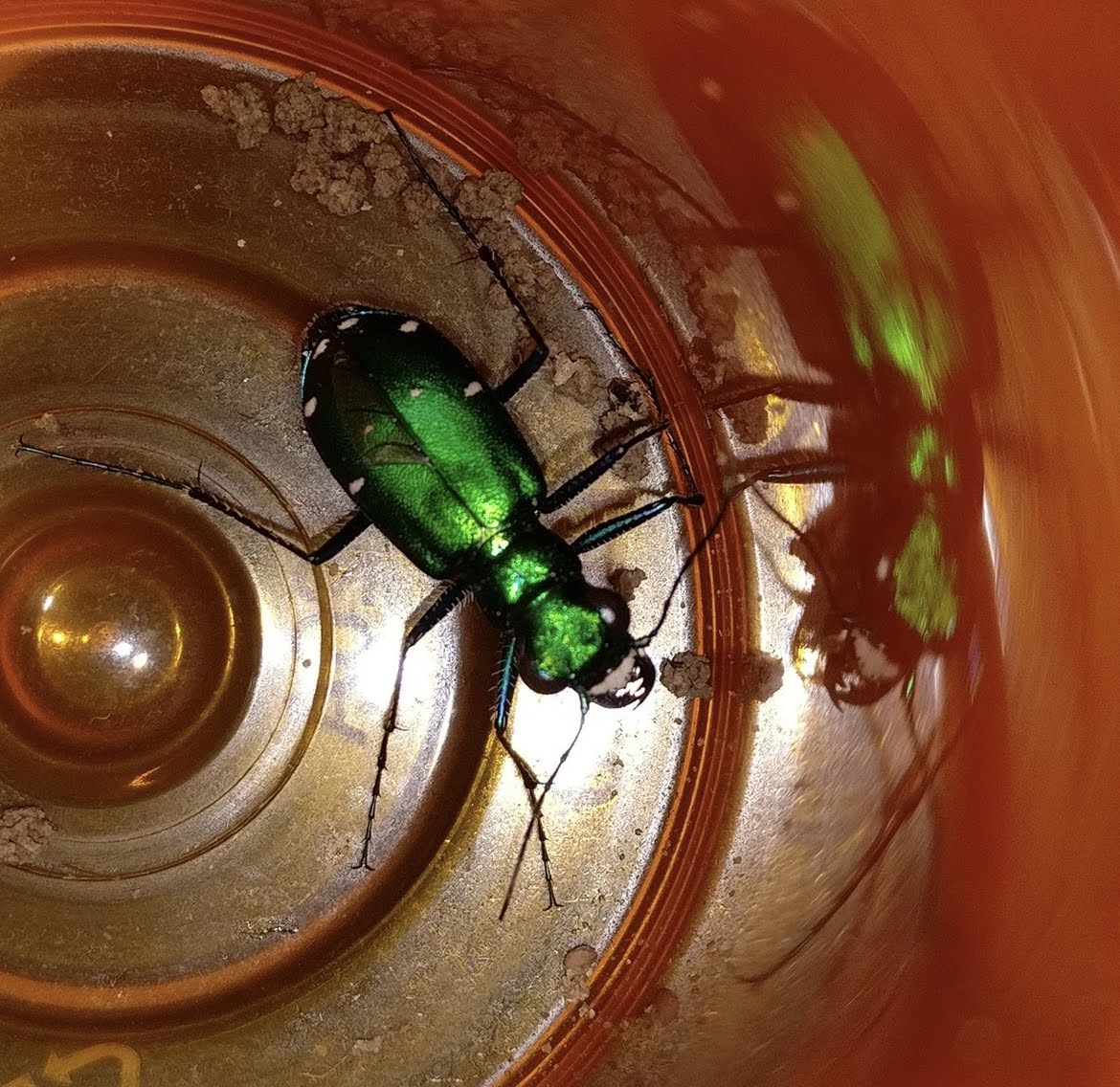
Aphanisticus congener is a species of jewel beetle in the family Buprestidae, described by Saunders in 1875. It belongs to a genus of minute buprestids characterized by their small size and reduced elytral sculpturing. The species epithet 'congener' suggests its close relationship to other members of the genus. Like other Aphanisticus species, it is likely associated with monocotyledonous plants, particularly grasses and sedges, though specific host records for this species are limited.
Aphelosternus interstitialis is a species of clown beetle in the family Histeridae, first described by John L. LeConte in 1851. The species is native to western North America, with confirmed records from California. Like other members of the subfamily Saprininae, it is likely associated with decomposing organic matter and carrion, though specific ecological details remain poorly documented. The genus Aphelosternus is a small group within the diverse Histeridae, and species-level biology for most members is not well studied.
Aphonus castaneus is a species of rhinoceros beetle in the family Scarabaeidae. It belongs to the subfamily Dynastinae, a group known for species with prominent horns or tubercles. The species is distributed across eastern North America, from Quebec southward through the eastern United States. Records indicate it has been collected in 18 U.S. states and the District of Columbia.
Aphonus texanus is a species of rhinoceros beetle in the family Scarabaeidae, described by Gill and Howden in 1985. It belongs to the subfamily Dynastinae, which includes the well-known rhinoceros and Hercules beetles. The species is native to the south-central United States.
Black-backed Handsome Fungus Beetle
Aphorista laeta is a species of handsome fungus beetle in the family Endomychidae. It is known from North America, with records from British Columbia, Canada. The common name "Black-backed Handsome Fungus Beetle" distinguishes it from other members of this group of beetles associated with fungal habitats.
Aphorista vittata is a species of handsome fungus beetle in the family Endomychidae. It has been documented in North America and Southern Asia. As a member of Endomychidae, it belongs to a family commonly associated with fungal habitats.
Aphricus luteipennis is a species of click beetle in the family Elateridae. The species is known from a single iNaturalist observation, indicating it is either rare, poorly documented, or restricted in distribution. Click beetles are characterized by their ability to right themselves using a prosternal spine that fits into a mesosternal groove, producing an audible click. The specific epithet 'luteipennis' refers to yellowish wing covers.
sugarcane rootstock weevil
Apinocis deplanatus, commonly known as the sugarcane rootstock weevil, is a sporadic pest of sorghum and sugarcane in the southern United States. The species is associated with dry conditions and fields where johnsongrass is abundant. Adults overwinter beneath plant residues and infest wild grasses in spring before moving to cultivated sorghum. Larval tunneling in stalks near the soil surface causes the most significant damage, often resulting in lodging and secondary pathogen infection. Economic thresholds have not been established, and chemical control is rarely required.
Apinocis punctiger is a species of weevil in the family Curculionidae. The genus Apinocis is closely related to Anacentrinus, with some sources treating them as synonymous. No specific information about this species' biology, distribution, or ecology has been documented in available literature. The genus is known to include species associated with grasses and sedges.
Apinocis validulus is a species of weevil in the family Curculionidae. The genus Apinocis includes species associated with grasses, with the sugarcane rootstock weevil (Apinocis deplanatus) being a documented pest of sorghum in Texas. Specific information about A. validulus is extremely limited in available sources.
Apion is a genus of small weevils in the family Brentidae, historically classified in Apionidae. The genus was established by Johann Friedrich Wilhelm Herbst in 1797. Species in this genus are associated with various host plants, with some exhibiting narrow host specificity. The genus has been involved in notable nomenclatural complications, particularly regarding the name Eurhinus which was originally applied to a different apionine genus by Kirby in 1819 before being transferred to the baridine genus Eurhin.
Apion carrorum is a species of minute seed weevil in the family Apionidae, described by Anderson and Alonso-Zarazaga in 2019. The genus Apion belongs to the weevil superfamily Curculionoidea, with members typically characterized by their small size and association with specific host plants. As a recently described species, detailed biological information remains limited.
Pear-shaped Weevils, Seed Weevils, Clover Weevils
Apioninae is a subfamily of small weevils within the family Brentidae, commonly known as pear-shaped weevils, seed weevils, or clover weevils. The subfamily contains at least 20 genera and approximately 80 described species, though diversity is likely higher. Members are characterized by their compact, pear-shaped body form and elongated rostrum. All species are phytophagous, with many exhibiting specialized associations with particular host plant families, particularly Fabaceae, Asteraceae, Malvaceae, and Polygonaceae. Some species are significant agricultural pests of legumes and jute, while others have been employed as biological control agents for invasive plants.
Aplastini is a tribe of click beetles (Elateridae) within the order Coleoptera. Members of this tribe are characterized by morphological features that distinguish them from other elaterid tribes, though detailed biological information remains limited. The tribe contains relatively few described species compared to larger elaterid tribes. Observations suggest they occupy diverse terrestrial habitats across their range.
Aplastus productus is a species of rove beetle in the family Staphylinidae. Information regarding this species is extremely limited in the provided source material. The genus Aplastus belongs to the large and diverse rove beetle family, whose members are characterized by shortened elytra that leave most of the abdomen exposed. No specific observations, habitat associations, or behavioral details for A. productus are documented in the available context.
Apocellus is a genus of spiny-legged rove beetles in the family Staphylinidae, containing approximately 11 described species. These beetles are characterized by their elongated bodies and relatively short elytra typical of rove beetles. The genus was established by Erichson in 1839 and occurs primarily in the Americas, with records from North and South America.
spiny-legged rove beetle
Apocellus sphaericollis is a species of rove beetle in the family Staphylinidae, subfamily Oxytelinae. It is one of the larger species in the genus Apocellus and has been documented across a broad geographic range spanning North and Central America. The species was first described by Thomas Say in 1831. Records indicate it occurs from southern Canada through the United States and into Mexico and Guatemala.
Apocryphini is a tribe of darkling beetles in the family Tenebrionidae, established by Lacordaire in 1859. The tribe comprises at least four genera distributed across North America, the Palearctic, and the Neotropics. Members are classified within the subfamily Tenebrioninae.
flower weevils
Apostasimerini is a large tribe of weevils within the family Curculionidae, commonly referred to as flower weevils. The tribe contains substantial diversity, with estimates ranging from 30+ genera and 70+ species to over 240 genera and nearly 1700 described species depending on taxonomic interpretation. Members are associated with flowering plants, though specific ecological relationships vary across the tribe. The group has been documented across multiple continents with notable representation in North America.
Apristus laticollis is a species of ground beetle in the family Carabidae. It occurs in North America, with records from the United States and Canada. The species was described by John Lawrence LeConte in 1851. As a member of the genus Apristus, it belongs to a group of small carabid beetles within the tribe Lebiini.
Apsectus hispidus is a small carpet beetle in the family Dermestidae, distributed across North America. The species belongs to a genus of beetles associated with decomposing organic material. Limited biological data are available for this species specifically.
Apsena grossa is a species of darkling beetle in the family Tenebrionidae, described by John Lawrence LeConte in 1866. As a member of this large and diverse family, it shares the characteristic hardened forewings (elytra) typical of beetles. The genus Apsena contains multiple species, though detailed biological information for A. grossa specifically remains limited in published literature.
Apsida is a genus of darkling beetles in the family Tenebrionidae, first described by Lacordaire in 1859. The genus is distributed across the Nearctic and Neotropical regions, with records from Colombia. As a member of the diverse Tenebrionidae family, these beetles are likely adapted to arid or semi-arid environments typical of many tenebrionid lineages.
hidden snout weevils
Apteromechus is a genus of weevils in the family Curculionidae, commonly referred to as hidden snout weevils. The genus was described by J. Faust in 1896 and contains more than 20 described species. Members belong to the subfamily Cryptorhynchinae, a group characterized by their ability to fold their rostrum into a ventral groove. The genus is part of the diverse weevil fauna found across various regions.
Apteromechus texanus is a species of hidden snout weevil in the beetle family Curculionidae, described by Fall in 1925. The species is found in North America and is part of the genus Apteromechus, which comprises weevils with reduced or absent wings (apterous condition). Very little specific information has been published about this species beyond its original description and basic distribution records.
Aptopus peregrinus is a species of click beetle in the family Elateridae. The genus Aptopus is part of the diverse click beetle lineage, characterized by the ability to right themselves when overturned through a distinctive clicking mechanism involving a prosternal spine and mesosternal groove. This species has been documented from limited observations, with records indicating a distribution in the southwestern United States and northern Mexico.
pale broad-nosed weevil
Aracanthus pallidus is a species of broad-nosed weevil in the beetle family Curculionidae. It was described by Thomas Say in 1831. The species is found in North America, with distribution records from Arkansas, Illinois, Iowa, Kentucky, and Mississippi. As a member of the Entiminae subfamily, it possesses the characteristic short, broad rostrum typical of broad-nosed weevils.
coffee bean weevil (A. fasciculatus)
Araecerus is a genus of fungus weevils in the family Anthribidae, containing several species including the economically significant coffee bean weevil. The genus includes both described species and multiple undescribed species discovered in Papua New Guinea. Species within this genus are primarily associated with seeds and fruits, with some exhibiting broad polyphagy on stored agricultural products.
Araeoderes is a monotypic genus of fungus weevils in the family Anthribidae, containing a single described species, A. texanus. The genus was established by Schaeffer in 1906. As members of Anthribidae, these beetles are associated with fungal associations rather than plant-feeding like true weevils (Curculionidae). The single species is known from Texas.
Araeoderes texanus is a species of fungus weevil in the family Anthribidae, described by Schaeffer in 1906. The species is provisionally accepted in taxonomic databases and is known from North America. As a member of the Anthribidae, it belongs to a group of weevils commonly known as fungus weevils, though specific details about its biology and ecology remain poorly documented in available literature.
Araeodontia is a genus of checkered beetles in the family Cleridae. The genus contains five described species, all native to North America. It was established by Barr in 1952. Species in this genus are relatively poorly known compared to other clerid genera.
toe-winged beetles
Araeopidius is a monotypic genus of toe-winged beetles (family Ptilodactylidae) containing the single species A. monachus. Adults are uncommon and occur along the western coast of North America. The genus is notable for its three-year life cycle and unusual larval diet of woody material.
Araeopidius monachus is the sole species in the subfamily Araeopidiinae within the beetle family Ptilodactylidae. It is endemic to western North America, where adults are rarely encountered. The species exhibits an unusual three-year life cycle among beetles, with larvae feeding on woody material while adults appear to be non-feeding. Its biology remains poorly understood due to the scarcity of specimens and limited field observations.
Aragnomus griseus is a species of broad-nosed weevil in the family Curculionidae. It was described by Horn in 1876. The species is native to North America, with confirmed records from the western United States. As a member of the Entiminae subfamily, it possesses the characteristic short, broad rostrum typical of this group.
Aramigus tessellatus is a species of broad-nosed weevil in the family Curculionidae, subfamily Entiminae. The species was originally described by Thomas Say in 1824 under the basionym Liparus tessellatus. It belongs to the tribe Naupactini, a group of weevils primarily distributed in the Americas. Distribution records indicate presence in Argentina, Brazil, and Chile, suggesting a South American range. As with many entimine weevils, adults likely feed on plant foliage, though specific host associations for this species remain poorly documented.
Archarius is a genus of weevils in the family Curculionidae, first described by Gistel in 1856. Species within this genus are distributed across Europe, Japan, and North America. The genus includes at least three recognized species: Archarius crux, Archarius pyrrhoceras, and Archarius salicivorus. It belongs to the suborder Polyphaga within the diverse beetle order Coleoptera.
Arctobyrrhus is a genus of pill beetles in the family Byrrhidae, established by Münster in 1902. The genus contains at least two described species: Arctobyrrhus dovrensis and Arctobyrrhus subcanus. These beetles are distributed in northern Europe and western North America, respectively. Pill beetles in this family are known for their ability to conglobate, or roll into a ball, as a defensive behavior.
Ardistomis schaumii is a species of ground beetle first described by John Lawrence LeConte in 1857. It belongs to the tribe Clivinini within the subfamily Scaritinae, a group characterized by fossorial (burrowing) adaptations. The species occurs in both North America and Central America. Published records remain sparse, with only 12 observations documented on iNaturalist as of the knowledge cutoff.
Argoporis is a genus of darkling beetles in the family Tenebrionidae, established by Horn in 1870. The genus contains more than 20 described species distributed across North America. Members of this genus are part of the diverse tenebrionid fauna characteristic of arid and semi-arid regions.
Argoporis alutacea is a species of darkling beetle in the family Tenebrionidae, described by Casey in 1890. The genus Argoporis is part of a diverse group of beetles commonly found in arid and semi-arid environments. Very little specific biological information has been published for this species. Records indicate a distribution in Mexico.
Argoporis rufipes is a species of darkling beetle in the family Tenebrionidae. The species name "rufipes" refers to reddish legs, a common diagnostic trait in this genus. Records indicate occurrence in Mexico. As a member of Tenebrionidae, it likely inhabits arid or semi-arid environments, though specific ecological details remain poorly documented in available sources.
Arianops gigantea is a species of rove beetle in the family Staphylinidae, described by Barr in 1974. It belongs to the subfamily Pselaphinae, a diverse group of small beetles often associated with leaf litter and soil habitats. The specific epithet "gigantea" suggests relatively large size compared to congeners, though absolute dimensions remain undocumented in available sources. The species is currently known from taxonomic catalogues with no verified observations in major biodiversity databases.
Ariotus quercicola is a species of ant-like leaf beetle in the family Aderidae, described by Schwarz in 1878. It is a small beetle with a distribution in North America. Members of this genus and family are characterized by their compact, ant-like appearance and association with decaying plant matter. The specific epithet "quercicola" suggests an association with oak (Quercus) habitats.
Armalia angularis is a species of darkling beetle in the family Tenebrionidae, described by Thomas L. Casey in 1907. The genus Armalia is a small group within this large family of beetles. Information regarding the biology, distribution, and ecology of this species is extremely limited in the available literature.
Armalia texana is a species of darkling beetle in the family Tenebrionidae, described by LeConte in 1866. The genus Armalia is a small group within this large family, and A. texana appears to be primarily associated with arid and semi-arid regions of the southwestern United States and adjacent Mexico. Like other tenebrionids, this species is likely nocturnal and adapted to xeric conditions. The specific epithet "texana" indicates the type locality or primary association with Texas.
Arrhenopeplus is a genus of rove beetles in the family Staphylinidae, subfamily Micropeplinae. The genus was established by Blackwelder in 1952. It contains at least one described species, Arrhenopeplus tesserula. Members of this genus are small beetles with the characteristic short elytra typical of rove beetles.
Arthrolips fasciata is a minute beetle species in the family Corylophidae, originally described by Erichson in 1842. Records indicate presence in Belgium with some uncertainty, and the species has been observed 18 times on iNaturalist. Like other members of this family, it is among the smallest beetles, typically associated with decaying organic matter and fungal habitats. The genus Arthrolips is part of the diverse microbeetle fauna that remains understudied due to its diminutive size.
false blister beetles
Asclerini is a tribe of false blister beetles within the family Oedemeridae, established by Gistel in 1848. The tribe encompasses more than 40 genera and over 200 described species. Members are soft-bodied beetles commonly associated with flowers and vegetation. Asclerini represents one of the major lineages within the Oedemeridae, a family known for containing the cantharidin-producing "false blister beetles."
Asiocnemis basalis is a species of false click beetle in the family Eucnemidae, described by John Lawrence LeConte in 1866. It is a small beetle species with limited documented information. Records indicate occurrence in British Columbia, Canada.
Asiocnemis nitens is a species of false click beetle in the family Eucnemidae, described by Horn in 1886. It belongs to a genus of beetles characterized by their distinctive morphology within the Eucnemidae family. The species has been recorded from British Columbia, Canada, with very limited observational data available.