
Apocellus
Erichson, 1839
Species Guides
2- Apocellus analis(spiny-legged rove beetle)
- Apocellus sphaericollis(spiny-legged rove beetle)
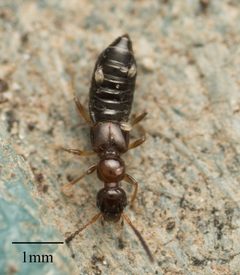
Apocellus is a of spiny-legged rove beetles in the Staphylinidae, containing approximately 11 described . These beetles are characterized by their elongated bodies and relatively short typical of rove beetles. The genus was established by Erichson in 1839 and occurs primarily in the Americas, with records from North and South America.
Pronunciation
How to pronounce Apocellus: /ˌæpoʊˈsɛləs/
These audio files are automatically generated. While they are not always 100% accurate, they are a good starting point.
Identification
Members of this can be recognized as rove beetles (Staphylinidae) by their short that leave most of the exposed. The 'spiny-legged' refers to characteristic leg modifications, though specific diagnostic features for the genus require examination of mouthpart and genitalic structures. -level identification within Apocellus requires knowledge and reference to original descriptions.
Images
Habitat
One , Apocellus andinus, has been documented from riparian areas of a mountain dam at 1355 m elevation in an unstable wetland environment. associations for most other species in the remain poorly documented.
Distribution
The occurs in the Americas. Documented distributions include: North America (A. analis, A. bicolor, A. brevipennis, A. cognatus, A. crassicornis, A. gracilicornis, A. niger, A. sphaericollis, A. stilicoides, A. ustulatus); Argentina and southwestern South America (A. andinus).
Behavior
Apocellus andinus has been observed in association with tolerant to human perturbations, suggesting some capacity for persistence in disturbed . Behavioral details for the otherwise remain undocumented.
Similar Taxa
- Other Oxytelini generaSimilar body plan and preferences; distinguished by genitalic and mouthpart requiring microscopic examination.
- Other small StaphylinidaeShort and exposed are shared traits; Apocellus distinguished by tribal characteristics of Oxytelini.