
Arthrolips fasciata
(Erichson, 1842)
Arthrolips fasciata is a minute beetle in the Corylophidae, originally described by Erichson in 1842. Records indicate presence in Belgium with some uncertainty, and the species has been observed 18 times on iNaturalist. Like other members of this family, it is among the smallest beetles, typically associated with decaying organic matter and fungal . The Arthrolips is part of the diverse microbeetle fauna that remains understudied due to its diminutive size.
Pronunciation
How to pronounce Arthrolips fasciata: /ɑːr.θroʊ.lɪps fæ.siˈɑː.tə/
These audio files are automatically generated. While they are not always 100% accurate, they are a good starting point.
Identification
Distinguishing Arthrolips fasciata from requires examination of microscopic morphological features, particularly details of antennal structure, pronotal and elytral microsculpture, and male genitalia. The name "fasciata" may indicate a banded pattern useful for preliminary field recognition, but definitive identification relies on dissection and comparison with type material. Separation from other European Corylophidae such as Corylophus or Orthoperus depends on subtle differences in body form and antennal club structure.
Images
Appearance
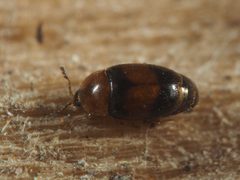
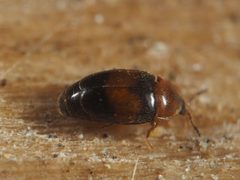
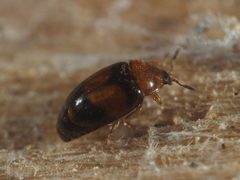
Minute beetle with body length likely under 2 mm based on characteristics. Members of Corylophidae typically have compact, oval to elongate-oval bodies with short bearing 3-segmented clubs. The specific epithet "fasciata" suggests possible banded or striped coloration pattern, though this requires verification.
Habitat
Specific preferences for this are not documented. Members of Corylophidae generally inhabit decaying plant matter, fungi, leaf litter, and similar microhabitats rich in organic decomposition. The Belgian records suggest temperate European woodland or anthropogenic environments where such microhabitats occur.
Distribution
Documented from Belgium with records indicating presence, absence, and doubtful status in different localities. The GBIF data suggest established occurrence in this region, though with some record uncertainty. No additional geographic range information is available from provided sources.
Ecological Role
As a member of Corylophidae, likely contributes to decomposition processes in microhabitats, though specific ecological functions for this are undocumented. Minute beetles in this are generally considered part of the cryptic fauna associated with fungal and decaying matter .
Similar Taxa
- Corylophus spp.Congeneric minute beetles in same , requiring microscopic examination to distinguish; differ in antennal structure and body proportions
- Orthoperus spp.Another of European Corylophidae with similar minute size and preferences, separable by detailed morphological features
More Details
Taxonomic stability
The has maintained consistent since original description, with no synonymy indicated in available sources. placement in Corylophidae (formerly sometimes treated as Corylophidae or included in broader concepts) is stable.
Data limitations
Despite being described in 1842, this remains poorly known in the literature, reflecting the general neglect of minute beetle and . The 18 iNaturalist observations suggest recent increased detection through citizen science and improved microscopy access.