
Attelabinae
leaf-rolling weevils
Genus Guides
4- Himatolabus
- Homoeolabus(leaf-rolling weevils)
- Synolabus(oak leafrolling weevil)
- Xestolabus
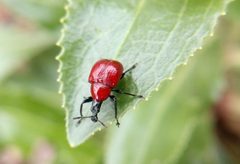
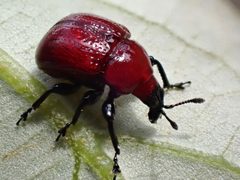
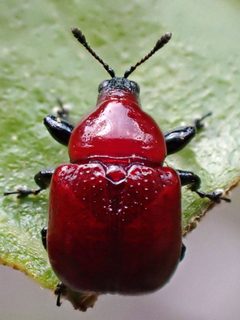
Attelabinae is a of leaf-rolling weevils within the Attelabidae. It comprises at least 20 and over 690 described . Members are characterized by specialized leaf-rolling used in , where females construct leaf rolls to protect and developing larvae. The subfamily is distributed across North America from Canada to Panama, with documented associations including chestnuts (Castanea) and various flowering plants.
Pronunciation
How to pronounce Attelabinae: /ˌætəˈlæbɪniː/
These audio files are automatically generated. While they are not always 100% accurate, they are a good starting point.
Images
Distribution
North America, ranging from Canada through the Republic of Panama. Specific distribution data derives from documented records for member rather than comprehensive -level surveys.
Host Associations
- Castanea dentata - plantDocumented for Homoeolabus analis; leaf-rolling observed on this
- Salvia melissodora - plantDocumented for Pilolabus klugi through field observations and voucher specimens
Life Cycle
Females construct leaf rolls (nidification) for deposition. Larval development occurs within these protective leaf structures.
Behavior
Unique nidification involving leaf-rolling: females cut and roll leaf material to create protective chambers for . This behavior is a defining characteristic of the group.
Similar Taxa
- RhynchitidaeEcologically associated; thief weevils in Pterocolinae (formerly Rhynchitidae) exhibit kleptoparasitic relationships with Attelabinae, exploiting their leaf rolls
More Details
Taxonomic scope
Most detailed biological information available for Attelabinae pertains to specific, well-studied (e.g., Homoeolabus analis, Pilolabus klugi) rather than the as a whole. Generalizations to the entire subfamily should be made cautiously.
Species diversity
With over 690 described across at least 20 , Attelabinae represents a diverse lineage, but many species remain poorly known biologically.
Sources and further reading
- BugGuide
- Wikipedia
- iNaturalist taxon
- NCBI Taxonomy
- Evidence that Salvia melissodora Lag. (Lamiaceae) is a Host Plant of Pilolabus klugi (Gyllenhal) (Coleoptera: Curculionoidea: Attelabidae: Attelabinae)
- Leaf-Rolling Weevil, Homoeolabus analis (Illiger) (Coleoptera: Attelabidae: Attelabinae) and Thief Weevil, Pterocolus ovatus Fabricius (Coleoptera: Rhynchitidae: Pterocolinae)