
Tetropium parvulum
Casey, 1891
Northern Spruce Borer
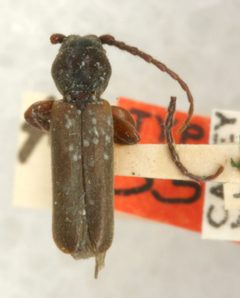
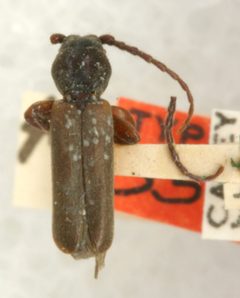
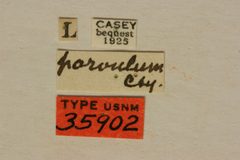
Tetropium parvulum, the northern spruce borer, is a small cerambycid beetle specialized on spruce . It was elevated from synonymy with T. cinnamopterum based on distinct morphological differences in larvae and , and exhibits strict host specificity to Picea compared to the conifer T. cinnamopterum. The has a one-year and is an economically important borer of white and Engelmann spruce logs in western Canada.
Pronunciation
How to pronounce Tetropium parvulum: //tɛˈtroʊpiəm ˈpɑrvjʊləm//
These audio files are automatically generated. While they are not always 100% accurate, they are a good starting point.
Identification
distinguished from T. cinnamopterum by shape, scutellum structure, external genitalia, and number of pronotal punctures. Larvae distinguished by urogomphi . A key to separate T. parvulum from T. cinnamopterum is available.
Images
Habitat
Coniferous forests, specifically spruce-dominated stands; found in logs of white spruce (Picea glauca) and Engelmann spruce (P. engelmannii).
Distribution
North America: recorded from Alberta, British Columbia, Labrador, and Manitoba in Canada; distribution centered in western regions.
Seasonality
emerge in early summer; larvae mature by September, overwinter in galleries, and pupate in spring.
Diet
Larvae feed on phloem and cambium of spruce trees; wood-boring habit creates L-shaped galleries penetrating 25–35 mm into wood.
Host Associations
- Picea glauca - larval white spruce
- Picea engelmannii - larval Engelmann spruce
- Picea - larval spruce , strict association
Life Cycle
One-year . emerge early summer, larvae mature by September, overwinter in L-shaped galleries averaging 25–35 mm deep in wood, pupate in spring.
Ecological Role
Primary decomposer in coniferous forest ; economically important pest of spruce logs. Natural mortality factors include suspected (57% of last-instar larvae in one ), Rhimphoctona alaskensis, excessive heat, and woodpeckers.
Human Relevance
Economically important pest of white and Engelmann spruce logs in Alberta and western Canada; damage from wood-boring larvae reduces timber value.
Similar Taxa
- Tetropium cinnamopterumFormerly considered ; distinguished by larval urogomphi, shape, scutellum, genitalia, and pronotal puncture number. T. cinnamopterum is a conifer while T. parvulum is strictly associated with spruce.
- Tetropium alaskanumConfirmed synonym of T. parvulum based on examination.
Sources and further reading
- BugGuide
- Wikipedia
- GBIF taxonomy match
- iNaturalist taxon
- NCBI Taxonomy
- Catalogue of Life
- Eumastacidae | Beetles In The Bush
- NOTES ON THE BIOLOGY OF TETROPIUM PARVULUM (COLEOPTERA: CERAMBYCIDAE) IN ALBERTA
- TETROPIUM PARVULUM ELEVATED TO SPECIES RANK AND CONTRASTED TO T. CINNAMOPTERUM IN MORPHOLOGY AND HOST PREFERENCE (COLEOPTERA: CERAMBYCIDAE)