
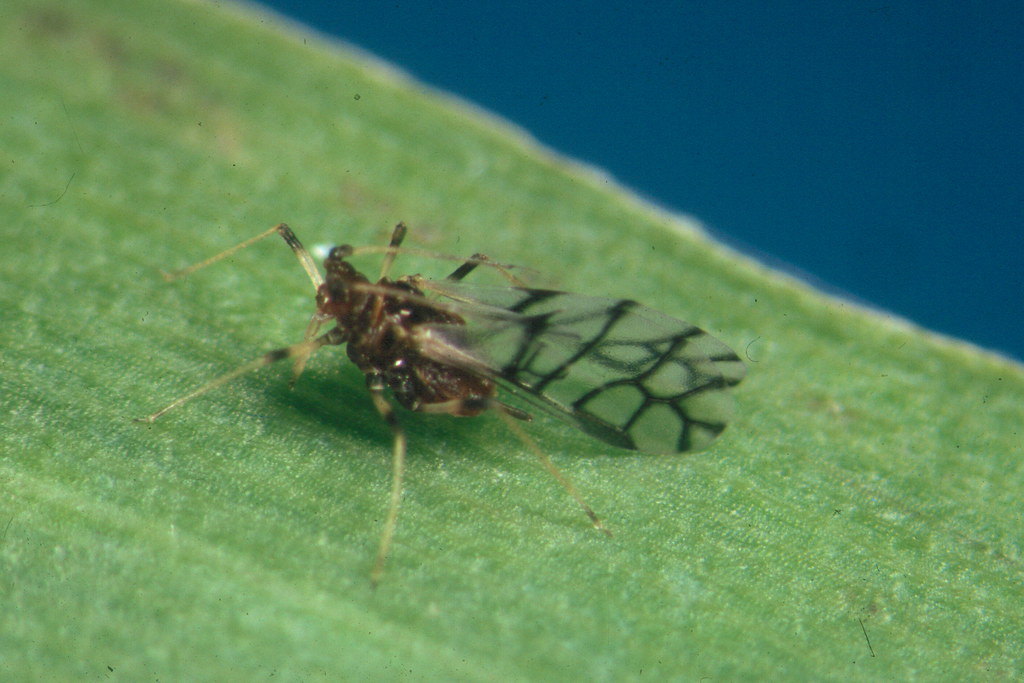
People usually talk about aphids like they are already explained. Tiny green bugs. Bad for the roses. Spray them, squish them, move on. That is not wrong. It is just a very small version of the story.
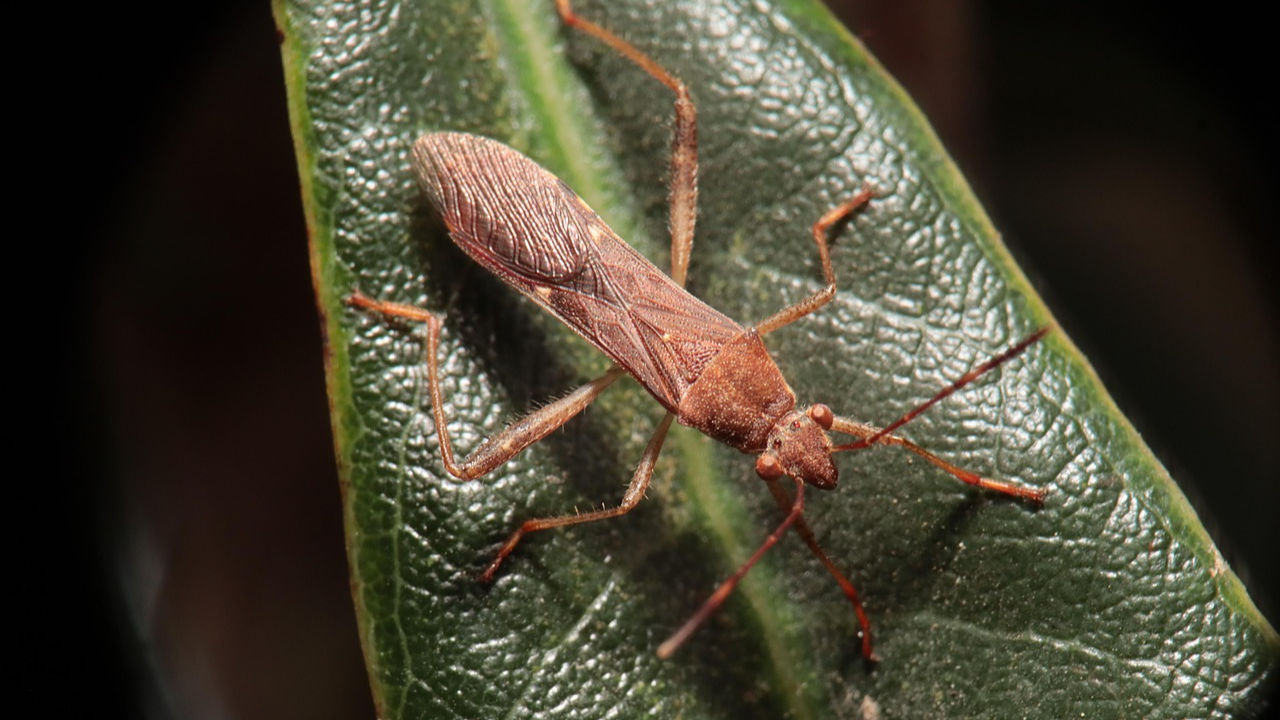
Plagiognathus delicatus is a species of plant bug in the family Miridae, first described by Uhler in 1887. It belongs to the genus Plagiognathus, a diverse group of mirids commonly associated with vegetation. The species is documented in eastern North America with scattered records from the Midwest. Like other members of its family, it possesses piercing-sucking mouthparts.
Plagiognathus longirostris is a species of plant bug in the family Miridae. It was described by Knight in 1923. The species is known from North America, with records from the northeastern United States and parts of Canada.
Plagiognathus modestus is a species of plant bug in the family Miridae, first described by Reuter in 1912. It is distributed across North America, with records from Canada and multiple U.S. states including Georgia, Nebraska, West Virginia, and Wisconsin. Like other members of its genus, it belongs to the diverse assemblage of mirid plant bugs that inhabit various terrestrial environments.
Plagiognathus morrisoni is a species of plant bug in the family Miridae, first described by Knight in 1923 under the basionym Psallus morrisoni. The species is distributed across northeastern North America, with records from multiple Canadian provinces and several U.S. states. As a member of the diverse genus Plagiognathus, it belongs to one of the largest genera within the Miridae, though specific biological details for this particular species remain limited in available literature.
Plagiognathus phaceliae is a species of plant bug in the family Miridae, described by Schuh in 2001. The species name 'phaceliae' indicates an association with plants in the genus Phacelia. It is known from California, USA. As a member of the large genus Plagiognathus, it belongs to a diverse group of small plant-feeding true bugs.
Plagiognathus politus is a species of plant bug in the family Miridae. The species was described by Uhler in 1895 and includes two recognized subspecies: P. p. flaveolus and the nominate P. p. politus. It is distributed across North America, with records from the northeastern United States and Canada extending west to Colorado. As a member of Miridae, it belongs to one of the largest families of true bugs, commonly known as plant bugs or leaf bugs.
Plagiognathus shoshonea is a species of plant bug in the family Miridae, described by Knight in 1964. It occurs across western North America from Canada to the southwestern United States. The species is one of numerous small mirid bugs in the genus Plagiognathus, which are generally associated with vegetation.
Platycentrus is a genus of treehoppers in the family Membracidae, subfamily Centrotinae, and tribe Platycentrini. The genus was established by Stål in 1869 and contains at least three described species: P. acuticornis, P. obtusicornis, and P. brevicornis. These species have been recorded from Mexico and the southwestern United States (California). As members of the primitive subfamily Centrotinae, they are characterized by an exposed scutellum, unlike most other membracid subfamilies where the pronotum covers this structure.
Platycotis is a genus of treehoppers in the family Membracidae, comprising approximately 13 described species. The genus is characterized by pronounced pronotal modifications typical of the family. The best-studied species, P. vittata (the oak treehopper), exhibits presocial behavior including maternal egg guarding and nymphal aggregations. Species in this genus are associated with woody host plants, particularly oaks.
Wing-tapping Cicadas
Platypedia is a genus of cicadas in the family Cicadidae containing at least 20 described species distributed across western North America. Unlike most cicadas, males in this genus lack tymbal organs and instead produce sound through crepitation—snapping their wings together or striking them against vegetation. This alternative sound production mechanism enables two-way acoustic communication between males and females, as females also produce sound. The genus occurs primarily in montane habitats, with species segregated by elevation.
Platypedia barbata is a species of cicada described by Davis in 1920. Like other members of its genus, it lacks the timbal organs used by most cicadas for sound production. Instead, it produces sound through crepitation—snapping its wings against its body or substrate. The species occurs in California and is part of a diverse western North American genus comprising 21 species and four subspecies.
Minor Cicada
Platypedia minor is a small cicada species in the genus Platypedia, a group known for producing sound through wing-snapping rather than abdominal tymbals. Like other Platypedia species, males lack the timbal organs typical of most cicadas and instead communicate via crepitation—snapping their wings against their bodies or substrate. The species occurs in western North America, where it inhabits montane and foothill environments.
Platypedia vanduzeei is a small cicada species in the family Cicadidae, native to western North America. It belongs to a group of "wing-banger" or "wing-tapper" cicadas that produce sound through crepitation—snapping their wings against vegetation—rather than using the abdominal tymbal organs typical of most cicadas. The species was described by Davis in 1920 and is known from California and Nevada.
pygmy backswimmers, pleids
Pleidae, the pygmy backswimmers, is a family of minute aquatic true bugs (Hemiptera: Nepomorpha) containing approximately 52 species in four genera. Adults measure only 2–3.5 mm and inhabit stagnant or slow-moving freshwater with abundant vegetation. They are predatory, feeding on mosquito larvae and other small arthropods, and swim upside-down while carrying an air reserve beneath the body. The family is distributed worldwide except polar regions and remote oceanic islands, with genus Plea in the Old World, Neoplea in the Americas, Paraplea globally in warmer regions, and the recently described Heteroplea from Venezuela.
Pleotrichophorus is a genus of aphids in the family Aphididae, tribe Macrosiphini, established by Börner in 1930. The genus contains species distributed across Europe, Southeastern Asia, and North America. P. glandulosus, described from Germany, serves as the type species. Molecular phylogenetic analyses place Pleotrichophorus within Macrosiphini sensu stricto.
Plesiodema is a genus of plant bugs in the family Miridae, established by Reuter in 1875. Species in this genus are associated with coniferous habitats, particularly pine and spruce. The genus contains eight described species distributed across Europe and North America.
Plesiommata tripunctata is a species of leafhopper in the family Cicadellidae, first described by Asa Fitch in 1851. The species is currently recognized as a synonym of Provancherana tripunctata by some taxonomic authorities, though it remains listed under Plesiommata in NCBI Taxonomy. Distribution records from GBIF indicate occurrence in the eastern United States, specifically Connecticut, District of Columbia, Georgia, Illinois, Indiana, and Massachusetts. As a member of the true bugs (Hemiptera), it possesses piercing-sucking mouthparts characteristic of the order.
Ploiaria aptera is a thread-legged bug species described by McAtee and Malloch in 1925. It belongs to the subfamily Emesinae within the assassin bug family Reduviidae. The species is known from North America and is characterized by its wingless condition, as indicated by its specific epithet 'aptera'. Thread-legged bugs in this genus are typically slender predators with elongated legs adapted for capturing prey on vegetation.
Ploiaria reticulata is a thread-legged assassin bug in the family Reduviidae, subfamily Emesinae. The species was described by Baker in 1910 and is distributed across Middle and North America. Like other emesine reduviids, it possesses elongated, thread-like legs adapted for capturing prey on vegetation.
Ploiaria similis is a species of thread-legged assassin bug (Reduviidae: Emesinae) described by McAtee & Malloch in 1925. The species belongs to the genus Ploiaria, a group of slender, elongate reduviids characterized by their thread-like legs and cryptic habits. It is recorded from North America and Middle America based on distribution data, though specific ecological details remain poorly documented.
Pnirontis brimleyi is a species of assassin bug in the family Reduviidae, described by Blatchley in 1926. It belongs to the subfamily Stenopodainae, a group characterized by raptorial forelegs adapted for capturing prey. The species is known from North America, with distribution records documented in the southeastern United States. Available information is limited, with only one observation recorded in iNaturalist.
Pnirontis languida is a species of assassin bug described by Stål in 1859. It belongs to the subfamily Stenopodainae within the family Reduviidae. The species has a broad distribution across the Americas, with records from North America, Central America, South America, and Caribbean islands. As a member of Reduviidae, it is presumed to be predatory, though specific ecological details remain poorly documented.
Poblicia texana is a large planthopper in the family Fulgoridae, described by Oman in 1936. The species was formerly placed in the genus Angulapteryx but is now accepted as Poblicia texana. Members of this genus are among the largest North American planthoppers, combining the hopping capabilities of smaller planthoppers with body size approaching that of small cicadas. The genus Poblicia includes only two species known to occur as far north as Missouri, with P. texana representing the western component of the genus' distribution.
Podisus neglectus is a predatory stink bug species in the family Pentatomidae, subfamily Asopinae. It belongs to a genus of beneficial insects known for preying on agricultural and forest pests. Specific biological details for this species remain poorly documented in published literature, though it shares the general predatory habits characteristic of Podisus species.
Podisus sagitta is a small to medium-sized predatory stink bug in the family Pentatomidae. It belongs to the subfamily Asopinae, a group of predatory pentatomids. The species is distributed from the southern United States through Central America, the Caribbean, and into South America. Like other members of the genus Podisus, it is a generalist predator of other insects.
Turtle Bugs
Podopinae, commonly known as turtle bugs, is a subfamily within the stink bug family Pentatomidae. Members are characterized by their distinctive rounded, often shield-like body form that resembles a turtle shell. The subfamily includes approximately six tribes and numerous genera distributed across multiple continents. Some species have documented associations with specific host plants, including Vitex (Lamiaceae).
Poecilocapsus nigriger is a plant bug species in the family Miridae, native to North and Central America. It is closely related to the fourlined plant bug (Poecilocapsus lineatus), a well-documented pest of ornamental plants and vegetables. As a member of the Hemiptera, it possesses piercing-sucking mouthparts used to extract plant fluids. Specific ecological details for P. nigriger remain sparse in published literature, with most research attention focused on its congener P. lineatus.
Poiocerinae is a subfamily of planthoppers within the family Fulgoridae, comprising approximately 50 genera distributed across tropical and subtropical regions of the Americas, Asia, and Australasia. The subfamily is divided into four tribes: Diloburini (Central and South America), Lystrini (Americas), Paralystrini (South America), and Poiocerini (Americas, Asia, and Australasia). The type genus is Poiocera. Many members of this subfamily exhibit enlarged or modified head structures characteristic of fulgorid planthoppers.
Polana is a genus of leafhoppers (Cicadellidae) in the tribe Gyponini, established by DeLong in 1942. The genus includes multiple subgenera (Polana, Nihilana, Polanana, Hobemanella, Bulbusana, Varpulana) with over 34 species described in the nominate subgenus alone. Species occur primarily in the Neotropical region, with documented diversity in Brazil, Costa Rica, and surrounding areas. The group has undergone extensive taxonomic revision, with numerous new combinations proposed to clarify subgeneric placement.
Polyamia brevipennis is a species of leafhopper in the family Cicadellidae, first described by DeLong and Davidson in 1935. It belongs to the subfamily Deltocephalinae and tribe Deltocephalini. The species is currently accepted as valid, though it has been treated as a synonym in some sources. Records indicate it occurs in parts of the eastern United States, specifically Alabama and Illinois. Like other leafhoppers, it is a small, plant-feeding insect with piercing-sucking mouthparts.
Polyamia interrupta is a species of leafhopper in the family Cicadellidae, subfamily Deltocephalinae. It was described by DeLong in 1916 and is currently accepted as a valid species. The genus Polyamia belongs to the tribe Deltocephalini, a diverse group of leafhoppers within the superfamily Membracoidea. Distribution records indicate occurrence in the eastern and midwestern United States.
Polyamia obtecta is a species of leafhopper in the family Cicadellidae, first described by Osborn & Ball in 1898. The species has been recorded in six U.S. states in the eastern and midwestern regions. Like other members of the genus Polyamia, it is a small, plant-feeding insect with limited documented ecological information. The genus Polyamia belongs to the subfamily Deltocephalinae, one of the largest and most diverse groups of leafhoppers.
Polyglypta is a genus of treehoppers (family Membracidae) characterized by pronounced pronotal modifications typical of the family. The genus was established by Burmeister in 1835 and contains at least three described species: P. costata, P. dorsalis, and P. lineata. All three species were described by Burmeister. Members of this genus belong to the tribe Polyglyptini within the subfamily Smiliinae, a group known for diverse and often elaborate pronotal structures.
Polyglyptini is a tribe of treehoppers in the family Membracidae, subfamily Smiliinae. The tribe contains at least four genera—Bryantopsis, Entylia, Polyglyptini, and Publilia—with approximately nine described species. Members exhibit the characteristic enlarged pronotum typical of Membracidae, though specific morphological features distinguishing this tribe from related groups remain poorly documented in available literature.
Polykatianna sp-nr-radicula is a flatid planthopper in the family Flatidae, a group of fulgoroid insects characterized by broad, often flattened wings and a distinctive waxy coating. Members of this genus occur in tropical and subtropical regions and are primarily associated with woody vegetation. The species epithet "radicula" suggests possible association with root systems or basal plant parts, though this requires confirmation. Flatid planthoppers are generally sap-feeders on phloem and serve as hosts for parasitoid wasps.
Polymerus is a genus of plant bugs in the family Miridae, containing at least 100 described species. The genus was established by Hahn in 1831 and has been subject to extensive taxonomic revision, particularly for Eastern Hemisphere species. Species occur across the Holarctic region, with records from Europe, North America, Africa, India, Australia, and Madagascar. The genus includes subgenera Polymerus and Pachycentrum, with some species previously assigned to Polymerus now transferred to other genera such as Dichelocentrum and Charagochilus.
Polymerus americanus is a species of plant bug in the family Miridae, first described by Reuter in 1876. It is a true bug (Heteroptera) within the order Hemiptera. The species has been the subject of a dedicated study examining its distribution, host plant associations, and seasonal activity patterns, though specific details from that work are not fully accessible in the provided sources.
red-spotted aster mirid
Polymerus basalis is a plant bug in the family Miridae, commonly known as the red-spotted aster mirid. The species occurs across Central America and North America, with records from the United States (including Arkansas, Colorado, Florida, Georgia, Louisiana, Mississippi, Texas, and West Virginia), Mexico, and Brazil. It inhabits agricultural fields and adjacent habitats, particularly in the Delta region of the lower Mississippi River valley. Two subspecies are recognized: Polymerus basalis basalis and Polymerus basalis fuscatus.
Polymerus proximus is a species of plant bug in the family Miridae, described by Knight in 1923. It belongs to the large and diverse mirid fauna of North America. Like other members of its genus, it is a small, soft-bodied true bug with piercing-sucking mouthparts. The species has been documented from several states in the eastern and central United States.
Polymerus testaceipes is a species of plant bug in the family Miridae. It has been documented across a broad geographic range spanning the Caribbean, Central America, North America, and South America. The species was first described by Stål in 1860. Available records indicate presence in countries including Argentina, Brazil, Cuba, Jamaica, Peru, Ecuador, Venezuela, Puerto Rico, Surinam, and the United States (Florida), with 51 observations recorded on iNaturalist.
Ponana dohrni is a species of leafhopper in the family Cicadellidae, subfamily Iassinae, tribe Gyponini. First described by Carl Stål in 1864, this species is currently accepted as valid. Available distribution records indicate occurrence in the southwestern United States (Arizona, Colorado) and Mexico (Veracruz). As a member of the Gyponini, it belongs to a group of leafhoppers characterized by particular morphological features of the head and wing venation, though specific diagnostic traits for this species are not well documented in accessible literature.
Ponana floridana is a leafhopper species in the family Cicadellidae, subfamily Iassinae, described by DeLong in 1942. The genus Ponana belongs to the tribe Gyponini, a group of leafhoppers characterized by their distinctive head shape and wing venation. This species is known from the southeastern United States, with records from Florida and Texas.
Ponana puncticollis is a leafhopper species in the family Cicadellidae, first described by Spångberg in 1878. It is a member of the large genus Ponana, which contains numerous North and Central American species. The species has been documented across a broad geographic range spanning the southeastern United States and Mexico, with over 950 observations recorded on iNaturalist. As with other cicadellids, it likely feeds on plant phloem, though specific host associations remain poorly documented.
Ponana sonora is a species of leafhopper in the family Cicadellidae, described by Ball in 1935. It belongs to the tribe Gyponini within the subfamily Iassinae. The species is known from Arizona, with records from the Sonoran Desert region. Like other members of the genus Ponana, it is a xylem-feeding insect associated with woody vegetation.
Porpomiris is a genus of plant bugs in the family Miridae, established by Berg in 1883. The genus contains at least three described species: Porpomiris campinensis, Porpomiris curtulus, and Porpomiris picturatus. One species, P. curtulus, has been documented as a specialist on switchgrass (Panicum virgatum), indicating the genus may include grass-associated species.
Prairiana latens is a leafhopper species in the family Cicadellidae, described by DeLong in 1942. It belongs to the tribe Gyponini within the subfamily Iassinae. The species is known from Arizona based on available distribution records. As a member of the leafhopper family, it likely feeds on plant phloem sap, though specific host associations and ecological details remain poorly documented.
Prairiana ponderosa is a species of leafhopper in the family Cicadellidae, subfamily Iassinae, and tribe Gyponini. First described by Ball in 1920 as a subspecies of Gypona cinerea, it is now recognized as a distinct species in the genus Prairiana. The specific epithet "ponderosa" likely references the ponderosa pine (Pinus ponderosa), suggesting a potential host plant association, though this relationship has not been formally documented. The species is rarely observed, with only four records in iNaturalist as of the source data.
Prepops atripennis is a species of plant bug in the family Miridae. It has been recorded from the United States (Nevada, New York, Texas), Cuba, and Brazil. The species was described by Reuter in 1876. As a member of the genus Prepops, it belongs to a group of mirids commonly known as leaf bugs.
Prepops fraterculus is a species of plant bug in the family Miridae, first described by Knight in 1923. It belongs to the genus Prepops, a group of mirid bugs found primarily in North America. The species has been recorded from multiple states in the eastern and central United States.
Prepops nigripilus is a species of plant bug in the family Miridae, first described by Knight in 1929. The species was originally placed in the genus Platytylellus before being transferred to Prepops. It is a member of the diverse Miridae family, one of the largest families of true bugs.