Dryophilodes niger is a species of beetle in the family Ptinidae, a group commonly known as spider beetles or deathwatch beetles. The genus Dryophilodes is part of a family of small beetles often associated with stored products, wood, or dry organic materials. Available records for this species are extremely limited, with only two observations documented on iNaturalist. The specific biology, ecology, and distribution of D. niger remain poorly characterized in published literature.
Firefly Longhorn
Dylobolus rotundicollis is a longhorn beetle (family Cerambycidae) in the subfamily Lamiinae, tribe Hemilophini. It was described by James Thomson in 1868 and is known from Costa Rica and the United States. The species has been historically classified under the genus Mecas, which remains a synonym. Observations suggest adult activity during summer months in North American regions.
Eleodes knullorum is a darkling beetle species in the family Tenebrionidae, described by Triplehorn in 1971. It belongs to the diverse genus Eleodes, commonly known as clown beetles or desert stink beetles. Records indicate this species occurs in Mexico. As with many Eleodes species, it likely exhibits the defensive head-stand behavior characteristic of the genus when disturbed.
Puritan tiger beetle
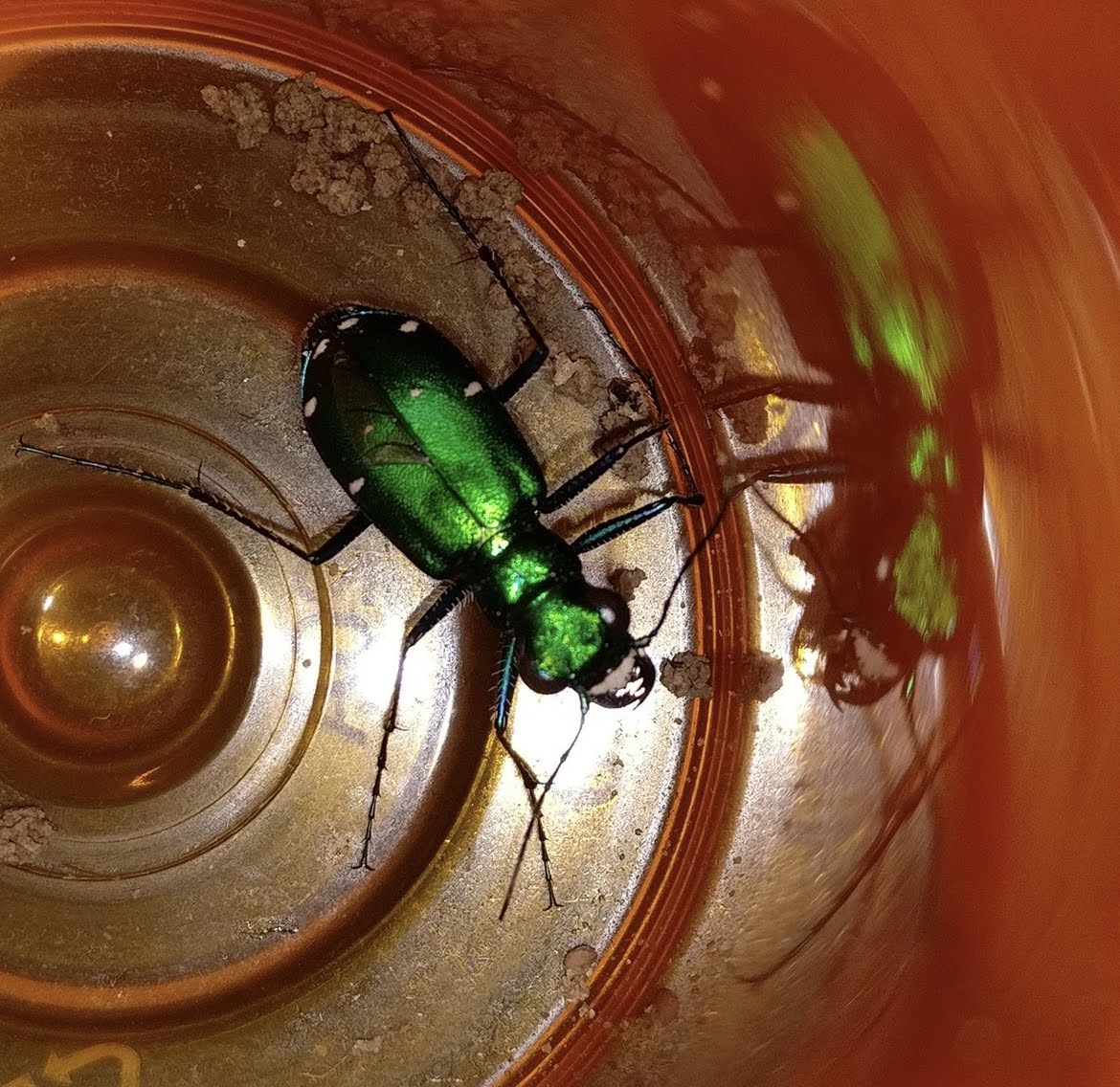
Ellipsoptera puritana, the Puritan tiger beetle, is a federally threatened species endemic to a highly restricted range in the northeastern United States. Adults are medium-sized, fast-running predators with distinctive cream-white marginal markings on their elytra. The species occupies a narrow ecological niche: sandy beaches and riverbanks backed by eroding cliffs or bluffs, where larvae burrow into exposed sediment faces. Its two-year life cycle involves larval development in burrows followed by brief adult emergence in mid-summer. Habitat loss from shoreline development, dam construction, and bank stabilization has severely reduced populations, prompting intensive conservation efforts including captive rearing programs.
Blackman's False Darkling Beetle
Emmesa blackmani is a species of false darkling beetle in the family Melandryidae, described by Hatch in 1927. It is known from a small number of observations in eastern Canada, primarily Québec. The species belongs to a genus of beetles associated with decaying wood and fungal habitats in forest ecosystems.
Tiled False Darkling Beetle
Emmesa testacea is a species of false darkling beetle in the family Melandryidae. The common name "Tiled False Darkling Beetle" refers to this species, though published natural history information is extremely limited. The species is listed in museum collections but lacks substantial observational or ecological documentation in scientific literature. As a member of Melandryidae, it belongs to a family of beetles typically associated with decaying wood and fungal substrates in forested habitats.
Endecatomus dorsalis is a beetle species in the family Bostrichidae (subfamily Endecatominae). It is known from the southern United States. Both adults and larvae feed on bracket fungi, specifically members of Polyporaceae and Hymenochaetaceae.
Endecatomus rugosus is a small beetle species in the family Bostrichidae (formerly placed in Endecatomidae). The species was first described by Randall in 1838 under the basionym Triphyllus rugosus. It is known from North America with records from Canada (Manitoba, New Brunswick) and the United States. The genus Endecatomus comprises wood-boring beetles, and the specific epithet rugosus refers to the wrinkled or rough surface texture characteristic of this group.
silken fungus beetle
Ephistemus globulus is a small beetle in the family Cryptophagidae, commonly known as silken fungus beetles. The species was first described by Paykull in 1798 under the basionym Dermestes globulus. It is native to Europe and has been recorded from several islands in the Azores archipelago.
Ochre Beaded Blister Beetle
Epicauta ochrea is a blister beetle in the family Meloidae, commonly known as the Ochre Beaded Blister Beetle. The species was described by LeConte in 1853 and is placed in the subgenus Macrobasis. It occurs across Central America and North America, with museum records indicating substantial collections from western regions. Like other Epicauta species, it likely produces cantharidin, a defensive compound that causes blistering on contact with skin.
Episernus trapezoideus is a small beetle species in the family Ptinidae (death-watch and spider beetles). It occurs in northwestern North America, with confirmed records from Alaska and British Columbia. The species was described by Fall in 1905. Available information on its biology and ecology is extremely limited.
Avaricious Sap Beetle
Epuraea avara is a species of sap-feeding beetle in the family Nitidulidae. It is found in North America. The species is commonly known as the Avaricious Sap Beetle. As a member of the Nitidulidae, it is associated with fermenting plant sap, fruit, and other sugary substances.
Epuraea imperialis is a small beetle species in the family Nitidulidae (sap beetles). The genus Epuraea comprises minute to small beetles typically associated with fermenting plant materials, fungi, and decaying organic matter. This species has been documented in Belgium and the broader European region. Like other nitidulids, it likely plays a role in nutrient cycling through its association with decomposing substrates.
Eronyxa pallida is a species of beetle in the family Lophocateridae (formerly placed in Trogossitidae), described by Motschulsky in 1863. It belongs to a family of predatory beetles commonly known as bark-gnawing beetles. The species has been documented in western North America, with confirmed records from British Columbia, Canada.
Euconnus montanus is a species of minute rove beetle in the family Staphylinidae, subfamily Scydmaeninae. The species was described in 2021 by Stephan & O'Keefe. Scydmaenine beetles are commonly known as ant-like stone beetles due to their small size and compact body form. Members of the genus Euconnus are among the smallest beetles, typically measuring less than 2 mm in length.
Eucrada is a genus of small beetles in the family Ptinidae (formerly Anobiidae), established by J.L. LeConte in 1861. Members of this genus belong to the subfamily Eucradinae and tribe Eucradini. The genus contains species associated with wood-boring habits typical of related ptinid beetles. Taxonomic placement has shifted historically between Anobiidae and Ptinidae due to ongoing classification revisions in the Bostrichoidea superfamily.
Euglenesini is a tribe of small beetles within the family Aderidae, commonly known as ant-like leaf beetles. Members of this tribe are characterized by their diminutive size and compact body form. The tribe contains the genus Euglenes and related taxa. These beetles are poorly studied, with limited biological information available.
Eugonus bicolor is a species of fungus weevil in the beetle family Anthribidae, described by Valentine in 1972. The species is known from Central America and North America. As a member of the Anthribidae, it belongs to a family commonly referred to as fungus weevils, though specific ecological details for this species remain limited.
minute marsh-loving beetles
Eulimnichus is a genus of minute marsh-loving beetles in the family Limnichidae, established by Casey in 1889. The genus contains over 30 described species distributed across North, Central, and South America. Members are small beetles associated with moist or marshy habitats. The genus is part of the subfamily Limnichinae within the dryopoid beetle lineage.
fungus weevil
Euparius pictus is a species of fungus weevil in the beetle family Anthribidae. It was described by Valentine in 1972. The species occurs in Central America and North America, where it inhabits forested environments. As a fungus weevil, it is associated with fungal resources, though specific ecological details remain limited in published literature. The species is represented by few observations in community science databases, suggesting it may be underreported or genuinely uncommon.
plate-thigh beetles
Euscaphurus is a genus of plate-thigh beetles in the family Eucinetidae, established by Casey in 1885. The genus contains at least three described species: E. nikkon, E. saltator, and E. spinipes. These beetles belong to a small family of beetles characterized by their distinctive plate-like hind femora. Members of Eucinetidae are generally small, obscure beetles with limited ecological documentation.
Euschaefferia hicoriae is a species of beetle in the family Trogossitidae, a group commonly known as bark-gnawing beetles. The species is known from very few records, with only one documented observation on iNaturalist. Members of the genus Euschaefferia are poorly studied, and little is known about their biology or ecology. The specific epithet "hicoriae" suggests a possible association with hickory (Carya species), though this relationship remains unconfirmed.
Gambrinus plebejus is a species of click beetle in the family Elateridae. It belongs to the genus Gambrinus, which is part of the diverse and widespread click beetle group characterized by their ability to produce an audible clicking sound. The species has been documented through limited observations, with records available in biodiversity databases.
death-watch beetle
Gastrallus fasciatus is a species of death-watch beetle in the family Ptinidae. It is known from North America. The species was described by White in 1976. As a member of the death-watch beetles, it belongs to a group known for their association with wood-boring habits, though specific details about its biology remain limited.
Semi-opaque Earth-boring Scarab Beetle
Geotrupes semiopacus is an earth-boring scarab beetle in the family Geotrupidae. It is broadly distributed across eastern and central North America, ranging from Canada through the United States. The species is active primarily in fall and early winter, with adults observed from October until hard winter conditions set in. Like other members of the genus Geotrupes, it is associated with mammal dung and forest floor habitats.
Cactus Weevils
Gerstaeckeria is a genus of weevils in the family Curculionidae, commonly known as cactus weevils. The genus contains more than 40 described species. Members of this genus are associated with Opuntia cacti as hosts. The genus was established by Champion in 1905.
Glyphonyx championi is a species of click beetle in the family Elateridae. The genus Glyphonyx comprises small to medium-sized click beetles characterized by their ability to produce an audible clicking sound through a prosternal process that snaps into a mesosternal groove, allowing them to right themselves when flipped onto their backs. Species within this genus are typically associated with soil and decaying organic matter in various terrestrial habitats.
Glyphonyx nanus is a species of click beetle in the family Elateridae. The specific epithet 'nanus' is Latin for 'dwarf', suggesting small size relative to congeners. Very little published information exists about this species beyond its taxonomic classification. The genus Glyphonyx contains multiple species of click beetles distributed across various regions, with most species being poorly studied in terms of their biology and ecology.
clown beetle
Gnathoncus rotundatus is a species of clown beetle in the family Histeridae. It is a small beetle with a cosmopolitan distribution spanning multiple continents. The species has been introduced to Australia and New Zealand. It is associated with poultry manure habitats where it functions as a biological control agent of fly pests.
fungus weevils
Gymnognathus is a genus of fungus weevils (family Anthribidae) comprising more than 90 described species. Members of this genus are predominantly associated with tropical moist forests, with some species occurring in subtropical humid forests at orographic rain barriers. At least one species, G. barclayi, exhibits apparent mimicry of calyptrate flies based on pronotal coloration patterns.
Gulf Beach Tiger Beetle
Habroscelimorpha dorsalis venusta, commonly known as the Gulf Beach Tiger Beetle, is a subspecies of tiger beetle in the family Carabidae (subfamily Cicindelinae). It is one of several subspecies within the Habroscelimorpha dorsalis species complex. Tiger beetles in this genus are typically associated with sandy coastal habitats. The specific epithet 'venusta' suggests an attractive or elegant appearance, consistent with the often colorful and patterned nature of tiger beetles in this group.
Crawling Water Beetles, haliplids
Haliplidae is a family of small aquatic beetles comprising approximately 200 species in five genera, representing the sole extant member of the superfamily Haliploidea. These beetles are characterized by their distinctive swimming behavior using alternating leg movements, which renders them relatively clumsy swimmers compared to other aquatic beetles. Consequently, they predominantly move by crawling along substrates rather than swimming. The family exhibits a cosmopolitan distribution in freshwater habitats worldwide.
Haliplus borealis is a small aquatic beetle in the family Haliplidae, commonly known as crawling water beetles. The species occurs in North America with confirmed records from Alberta and Manitoba in Canada. Like other members of its genus, it inhabits freshwater environments. The species was described by LeConte in 1850. Available information on this species is limited, with only five observations documented on iNaturalist.
Warm Springs Crawling Water Beetle
Haliplus mimeticus is a small aquatic beetle in the family Haliplidae, commonly known as crawling water beetles. This species was described by Matheson in 1912 and is known from North and Middle America. It is associated with warm spring habitats, as suggested by its common name. The genus Haliplus comprises small beetles that inhabit aquatic environments, often found in vegetation at the margins of ponds, lakes, and slow-moving waters.
Hallomenus scapularis is a species of polypore fungus beetle in the family Tetratomidae, first described by Melsheimer in 1846. It is found in North America, with records from Canada (British Columbia, Nova Scotia, Ontario) and the United States. The species belongs to a small family of beetles associated with fungal habitats.
Contrasted Dryopid
Helichus lithophilus is a species of long-toed water beetle in the family Dryopidae, found in North America. It is commonly known as the Contrasted Dryopid. The species was originally described as Elmis lithophila by Germar in 1824. It belongs to a family of beetles adapted to aquatic and riparian habitats.
Helichus triangularis is a species of long-toed water beetle in the family Dryopidae, described by Musgrave in 1935. The genus Helichus comprises aquatic beetles commonly associated with stream and river habitats. Records indicate presence in North America and Middle America, though specific details about this species' biology remain sparse.
Hemierana is a genus of longhorn beetles (Cerambycidae) in the tribe Hemilophini, containing two described species: H. marginata (Fabricius, 1798) and H. rileyi (Heffern et al., 2019). The genus was established by Aurivillius in 1923 and is native to North America. H. marginata was long considered the sole species until the description of H. rileyi in 2019.
Hemipeplus chaos is a beetle species in the family Mycteridae, described in 1985 by entomologist Michael C. Thomas. The species name refers to the taxonomic confusion surrounding its identification—specimens had been previously misidentified as females of the related species Hemipeplus marginipennis. It is found in Central and North America, where it shelters between unopened fronds of Sabal palmetto palms without causing feeding damage to the plant.
Hemiquedius infinitus is a rove beetle (Staphylinidae) described in 2017 from eastern North America. It belongs to a small genus of predatory beetles in the tribe Staphylinini. The species has been documented across a broad geographic range spanning southeastern Canada and the eastern and central United States.
Heterocerus angustatus is a species of beetle in the family Heteroceridae, described by Chevrolat in 1864. Members of this family are commonly known as variegated mud-loving beetles due to their association with riparian habitats. The species is poorly documented in scientific literature, with limited information available beyond taxonomic records. Observations on iNaturalist suggest occasional detection but very low encounter rates.
Heterocerus pallidus is a species of small, elongated beetle in the family Heteroceridae, commonly known as variegated mud-loving beetles. The species was described by Thomas Say in 1823. Members of this family are typically associated with moist, muddy habitats near water bodies. Heterocerus pallidus is one of approximately 250 species in the genus Heterocerus, which has a cosmopolitan distribution with highest diversity in tropical and subtropical regions.
hidden snout weevil
Hohonus lacteicollis is a species of hidden snout weevil described by Kissinger in 1964. It belongs to the family Curculionidae, one of the largest families of beetles. The species is known from North America. Like other members of Curculionidae, it possesses the characteristic elongated rostrum (snout) with mouthparts at the tip.
Hydrochus granulatus is a species of water scavenger beetle in the family Hydrochidae. The species was described by Blatchley in 1910 and is known from North America, with records from both the United States and Canada. It is sometimes treated as a member of the family Hydrophilidae in alternative classifications.
Hymenorus texensis is a species of comb-clawed beetle in the family Tenebrionidae, subfamily Alleculinae. Described by Fall in 1931, this species belongs to a group formerly treated as the separate family Alleculidae before being reclassified as a subfamily of Tenebrionidae. Comb-clawed beetles in this genus typically have antennae with segments longer than wide, resembling ground beetles (Carabidae), but differ in having concealed mandibles. The species epithet "texensis" indicates a type locality or primary distribution in Texas.
Hyperaspis annexa is a small lady beetle (Coccinellidae) native to North America, with records from California. Adults measure 2.0–2.75 mm and are characterized by black elytra with two yellow vittae. Males have a yellow anterior pronotal margin, sometimes black. The species belongs to a genus whose larvae are notable predators of scale insects, though specific prey relationships for this species remain undocumented.
Hyperaspis gemma is a small lady beetle in the family Coccinellidae native to southwestern North America. Adults measure 2.20–2.80 mm and exhibit distinct sexual dimorphism in pronotal coloration. The species belongs to a genus known for predation on scale insects, though specific ecological details for H. gemma remain limited.
clown beetle
Hypocaccus patruelis is a species of clown beetle in the family Histeridae. It is found in North America.
Hypodacne is a genus of beetles in the family Euxestidae, established by J.L. LeConte in 1876. The genus contains a single described species, H. punctata. These beetles are characterized by their well-polished, glossy appearance. The family Euxestidae was historically treated as part of Cerylonidae, and some sources still reflect this classification.
Hypodacne punctata is a small beetle species in the family Euxestidae, described by John Lawrence LeConte in 1875. It belongs to a group of minute beetles often associated with fungi or decaying plant material. Records indicate a North American distribution, with confirmed presence in Ontario and Québec, Canada. The species remains poorly documented in scientific literature, with limited information available regarding its biology and ecology.