
Haliplus mimeticus
Matheson, 1912
Warm Springs Crawling Water Beetle
Haliplus mimeticus is a small aquatic in the Haliplidae, commonly known as crawling water beetles. This was described by Matheson in 1912 and is known from North and Middle America. It is associated with warm spring , as suggested by its . The Haliplus comprises small beetles that inhabit aquatic environments, often found in vegetation at the margins of ponds, lakes, and slow-moving waters.
Pronunciation
How to pronounce Haliplus mimeticus: /ˈhælɪplʌs mɪˈmɛtɪkəs/
These audio files are automatically generated. While they are not always 100% accurate, they are a good starting point.
Identification
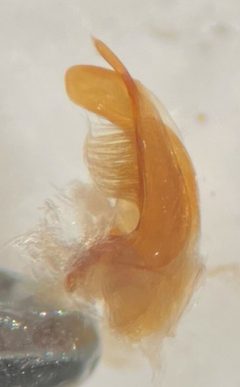
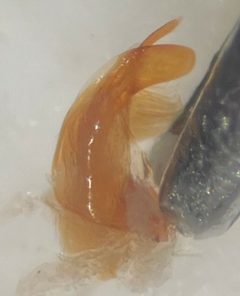
Distinguished from other Haliplus by subtle differences in body proportions, punctation patterns on the , and male genitalia. The specific epithet 'mimeticus' suggests possible mimicry or resemblance to another species, though the precise basis for this name is not well documented in accessible literature. Examination of structure is typically required for definitive species identification within Haliplus. The association with warm spring may help distinguish it from sympatric in certain regions.
Images
Appearance
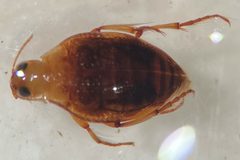
are small, oval to oblong beetles, typically 2-5 mm in length. Like other Haliplus , they have convex surfaces and hind legs modified for swimming, with fringed . The body is usually yellowish to brownish with variable dark markings. are thread-like and relatively short. The pronotum is narrower than the base, creating a distinct shoulder.
Habitat
Aquatic environments, specifically associated with warm springs based on the . Like other Haliplidae, likely found in shallow water with abundant vegetation, including pond margins, lake edges, and slow-moving streams. These beetles require emergent or submerged vegetation for attachment and feeding.
Distribution
Recorded from North America and Middle America. Specific locality data are sparse in available sources, but the has been documented in both regions.
Behavior
are aquatic but capable of and may disperse between water bodies. Like other Haliplidae, they are capable of crawling on submerged vegetation and swimming with their modified hind legs. They are active swimmers but spend considerable time clinging to vegetation.
Ecological Role
Member of aquatic in freshwater . As with other Haliplidae, likely contributes to nutrient cycling and serves as prey for larger aquatic .
Human Relevance
No documented direct economic or medical importance. The 'Warm Springs ' suggests potential use as an for thermal spring , though this has not been formally established.
Similar Taxa
- Haliplus spp.Other in the share similar body form, size, and aquatic habits. Distinguishing features require detailed examination of punctation patterns and male genitalia.
- Peltodytes spp.Another in Haliplidae with similar and appearance; distinguished by differences in pronotal shape and elytral striation patterns.
More Details
Taxonomic note
The specific epithet 'mimeticus' (meaning 'imitative' or 'mimetic') was chosen by Matheson in 1912, but the original description and the basis for this name are not readily accessible in standard databases. The etymology may refer to resemblance to another or to the conditions.
Data limitations
This has minimal occurrence data (only 1 iNaturalist observation) and lacks published biological studies in readily accessible literature. Most information is inferred from -level characteristics of Haliplus.