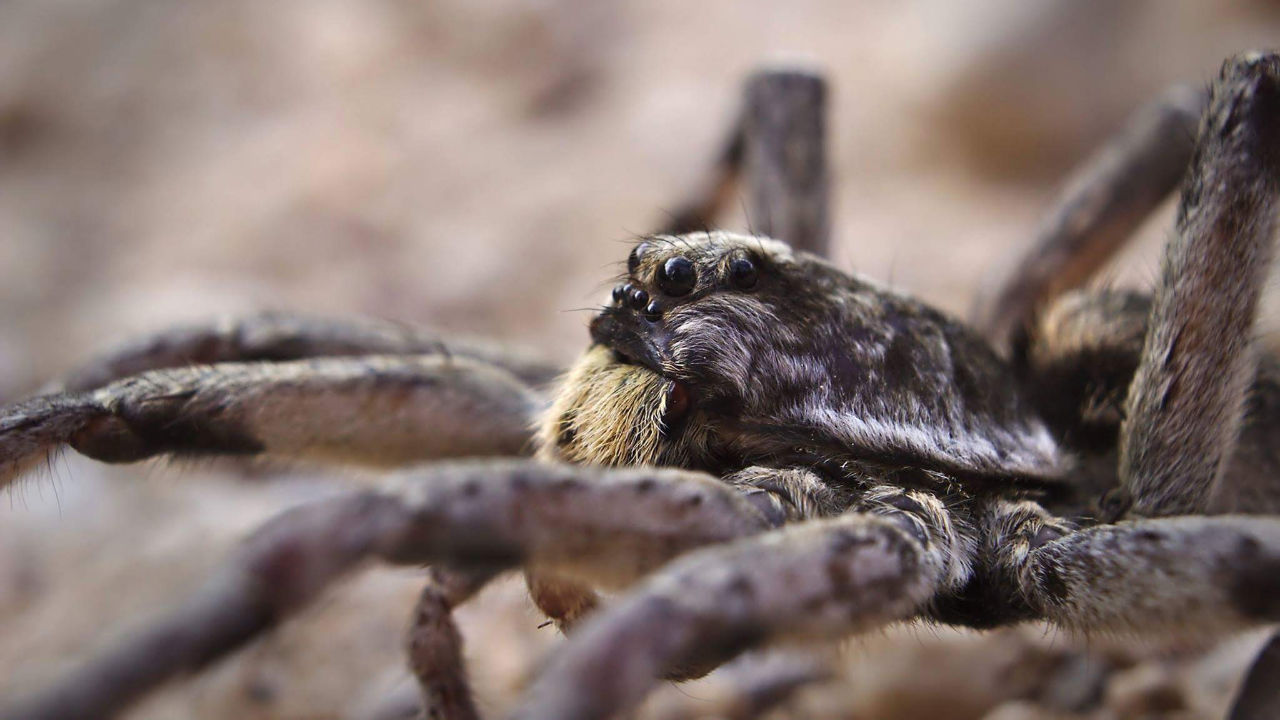
dwarf spider
Ceratinopsis nigriceps is a dwarf spider species in the family Linyphiidae, first described by Emerton in 1882. The species is recorded from the United States and Canada. Members of this family are generally small-bodied spiders that construct sheet webs or occupy ground layer habitats. Available information for this species is limited.
Cesonia gertschi is a species of ground spider in the family Gnaphosidae, described by Platnick & Shadab in 1980. It is distributed across the United States and Mexico. Like other members of its genus, it is a small, agile hunter. Specific details about its biology and ecology remain poorly documented.
Cesonia ubicki is a species of ground spider in the family Gnaphosidae, described by Platnick and Shadab in 1980. The species is distributed across the southwestern United States and Mexico. Like other members of the genus Cesonia, it is a small, agile predator. Specific details about its ecology and behavior remain poorly documented in the scientific literature.
windscorpion, sun spider
Chanbria rectus is a species of solifuge (windscorpion or sun spider) in the family Eremobatidae, described by Muma in 1962. As a member of the order Solifugae, it is an arachnid characterized by large, powerful chelicerae and rapid movement. The species occurs in North America and is placed in the subfamily Therobatinae. Like other eremobatids, it is a fast-moving, primarily nocturnal predator adapted to arid and semi-arid environments.
wind scorpion
Chanbria regalis is a species of solifuge (wind scorpion) in the family Eremobatidae, first described by Muma in 1951. It belongs to the order Solifugae, an arachnid group commonly known as sun spiders or wind scorpions. The species has been documented in North America with 52 iNaturalist observations. Like other eremobatids, it is a fast-moving, nocturnal predator adapted to arid and semi-arid environments.
Longlegged Sac Spiders, Yellow Sac Spiders
Cheiracanthium is a genus of araneomorph spiders in the family Cheiracanthiidae, first described by Carl Ludwig Koch in 1839. Commonly known as longlegged sac spiders or yellow sac spiders, the genus contains over 230 accepted species. These spiders are notable for their pale coloration, nocturnal hunting behavior, and habit of constructing silken retreats rather than permanent webs. They are frequently encountered in human dwellings, particularly in temperate regions, and have been the subject of controversy regarding their medical significance.
Chelicerates
Chelicerata is a major subphylum of arthropods characterized by the presence of chelicerae—pincer-like or fang-like appendages that are the first pair of structures before the mouth. The group includes horseshoe crabs, sea spiders, and arachnids (spiders, scorpions, mites, ticks, harvestmen, and allies). Chelicerates diverged from other arthropods by the mid-Cambrian period, approximately 508 million years ago. With over 77,000 described living species and estimates suggesting hundreds of thousands more undescribed species, chelicerates represent one of the most diverse animal groups after insects. Most living species are terrestrial air-breathers, though marine lineages persist.
Chelifer is a genus of pseudoscorpions in the family Cheliferidae, established in 1762. The genus is currently monotypic, containing only Chelifer cancroides, the house pseudoscorpion, which is the most widely distributed pseudoscorpion species globally. All other species originally described in Chelifer have been moved to other genera, synonymized, or designated as nomina dubia or nomina nuda. The genus is characterized by distinctive morphological features including large setose tubercles on the carapace and specialized male genitalia structures.
Chernetid Pseudoscorpions
Chernetidae is a large family of pseudoscorpions in the order Pseudoscorpiones, containing over 650 described species across 119 genera. Members are small arachnids lacking a tail and stinger, characterized by prominent pincer-like pedipalps. The family was established by Anton Menge in 1855. Many species inhabit subcortical environments beneath tree bark and are frequently documented engaging in phoresy—attaching to insects such as longhorned beetles (Cerambycidae) for dispersal.
Thick-handed Scorpion
Chihuahuanus crassimanus is a scorpion species in the family Vaejovidae, originally described as Vaejovis crassimanus by Pocock in 1898. It is commonly known as the Thick-handed Scorpion. The species occurs in the southwestern United States and Mexico, inhabiting arid and semi-arid regions. Like other vaejovid scorpions, it is a terrestrial predator adapted to desert environments.
Russell's Scorpion
Chihuahuanus russelli is a scorpion species in the family Vaejovidae, originally described as Vaejovis russelli by Williams in 1971. It is commonly known as Russell's Scorpion. The species belongs to the genus Chihuahuanus, which comprises scorpions distributed in the Chihuahuan Desert region of North America.
Little Mountain Jumping Spider
Chinattus parvulus is a species of jumping spider in the family Salticidae, commonly known as the Little Mountain Jumping Spider. It is found in the United States and Canada. The species was originally described by Banks in 1895 as Saitis parvulus before being transferred to the genus Chinattus. As a salticid, it possesses the characteristic enlarged anterior median eyes and jumping locomotion typical of the family.
Cicurina bryantae is a species of true spider in the family Cicurinidae, described by Exline in 1936. It is known only from the United States. The genus Cicurina includes species adapted to specialized habitats, with some congeners inhabiting caves or subnivium environments.
Cicurina intermedia is a species of true spider in the family Cicurinidae, first described by Chamberlin and Ivie in 1933. It belongs to a genus of small to medium-sized spiders known for their association with dark, humid microhabitats. The species has been recorded from the United States and parts of Canada.
Cicurina japonica is a spider species in the family Cicurinidae, originally described from Japan. It occurs naturally in Korea and Japan and has been introduced to parts of Europe, including Switzerland and Germany, though some European records are marked as doubtful. The species belongs to a genus that includes several cave-dwelling species, though specific habitat details for C. japonica itself are limited in available sources.
Curly-legged Ground Spiders
Cithaeronidae is a small family of araneomorph spiders in the superfamily Gnaphosoidea, established by Simon in 1893. The family contains two genera—Cithaeron and Inthaeron—with approximately ten described species. Members are small, pale yellowish, fast-moving nocturnal hunters that construct silken retreats under rocks. Several species, notably Cithaeron praedonius, have been introduced to the Americas and Australia through human activity.
Citharoceps fidicina is a tube-dwelling spider in the family Segestriidae, described by Chamberlin in 1924. The genus Citharoceps is endemic to the southwestern United States and Mexico. Segestriid spiders are characterized by their elongated, cylindrical abdomens and their habit of constructing silken retreats in crevices, under bark, or in other sheltered locations. Members of this family possess six eyes arranged in a distinctive semicircular pattern, a trait that distinguishes them from most other spider families which typically have eight eyes.
Clubiona maritima is a sac spider species in the family Clubionidae. It occurs across North America from Canada through the United States and into the Caribbean region. As a member of the sac spider group, it constructs silken retreats rather than prey-capture webs and hunts actively. The species was described by Ludwig Carl Christian Koch in 1867.
Riparian Sac Spider
Clubiona riparia is a sac spider species in the family Clubionidae. It is known from a broad geographic range spanning northern Eurasia and North America. The specific epithet 'riparia' refers to its association with riparian habitats. Like other Clubiona species, it constructs silken retreats rather than prey-capture webs and hunts actively.
Coreorgonal bicornis is a species of sheet-web weaver spider in the family Linyphiidae, first described by Emerton in 1923. The genus Coreorgonal belongs to a large family of small spiders commonly known as money spiders or sheet-web weavers, which construct horizontal sheet webs often with a retreat at one edge. The specific epithet "bicornis" (Latin for "two-horned") likely refers to a morphological feature of this species, though detailed descriptions of its appearance remain limited in available literature.
Cryptocreagris destica is a species of pseudoscorpion in the family Neobisiidae, described in 2010 by Harvey and Muchmore. It belongs to the genus Cryptocreagris, which comprises small, cryptic pseudoscorpions. The species is known from North America. Like other pseudoscorpions, it is a tiny, non-venomous arachnid that uses its pedipalps to capture prey.
Ctenus valverdiensis is a species of wandering spider in the family Ctenidae, described by Peck in 1981. It belongs to a genus known for active hunting behavior rather than web-building. The species has been documented in the United States, with observations recorded on iNaturalist. As with many Ctenidae, it likely exhibits cursorial habits and nocturnal activity patterns.
Curicaberis abnormis is a species of huntsman spider (Sparassidae) native to North America. Originally described by Keyserling in 1884 as Olios abnormis, it was transferred to the newly established genus Curicaberis in 2015 based on morphological revision. The species is one of nine former Olios species reclassified into Curicaberis, a genus endemic to North and Central America. Like other sparassids, it is characterized by laterigrade legs and flattened body form adapted for living in narrow spaces.
Peninsular Huntsman Spider
Curicaberis peninsulanus is a huntsman spider in the family Sparassidae, originally described by Banks in 1898 from Olios and transferred to the genus Curicaberis in 2015. The species is distributed across Mexico and the southwestern United States. Like other members of its genus, it belongs to the subfamily Sparassinae and exhibits typical sparassid morphology.
Owl Woodland Spider
Cybaeus eutypus is a species of true spider in the family Cybaeidae, commonly known as the Owl Woodland Spider. It is found in the United States and Canada. The species was described by Chamberlin and Ivie in 1932. Like other members of the genus Cybaeus, it belongs to the marronoid clade of spiders, a group that has been subject to recent phylogenetic revision.
Common West Coast Woodland Spider
Cybaeus reticulatus is a species of true spider in the family Cybaeidae. It was first described by French arachnologist Eugène Simon in 1886. The species is found in the United States and Canada, with observations concentrated on the West Coast. It belongs to the marronoid clade, a group of spiders united by molecular phylogenetics rather than obvious morphological synapomorphies.
Night-hunting Woodland Spider
Cybaeus signifer is a species of true spider in the family Cybaeidae, described by Eugène Simon in 1886. It is distributed across the United States and Canada. The species belongs to the marronoid group of spiders, a diverse clade that has been subject to recent phylogenetic revision using genetic data from museum specimens.
Dalquestia rugosa is a species of harvestman (order Opiliones) first described by Schenkel in 1951. It belongs to the family Globipedidae, a group of long-legged arachnids commonly known as daddy longlegs. The species is recorded from North America, with specific locality data from San Diego. As with many harvestman species, detailed biological information remains limited.
Dictyna agressa is a species of mesh web weaver spider in the family Dictynidae, described by Wilton Ivie in 1947. As a member of the genus Dictyna, it constructs irregular, mesh-like webs for prey capture. The species is documented from the United States, though specific details about its ecology and behavior remain limited in published literature.
Alaska mesh web weaver
Dictyna alaskae is a small spider species in the family Dictynidae, commonly known as mesh web weavers. The species was described in 1947 and has a Holarctic distribution spanning boreal and subarctic regions. It constructs irregular, mesh-like webs to capture prey. The specific epithet references Alaska, where the species was first described.
mesh web weaver
Dictyna major is a species of mesh web weaving spider in the family Dictynidae, first described by Menge in 1869. It belongs to a family characterized by irregular, mesh-like webs rather than the organized spiral webs of orb-weavers. The species has a notably broad distribution spanning multiple continents, including North America, Europe, and Asia.
Black Dicymbium
Dicymbium nigrum is a dwarf spider in the family Linyphiidae, first described by John Blackwall in 1834. The species exhibits a wide Palearctic distribution spanning Europe, Turkey, the Caucasus, Russia, Central Asia, and China. Two subspecies are recognized: the nominate form D. n. nigrum and D. n. brevisetosum described by Locket in 1962. As a member of the sheet-web weavers, this species constructs characteristic horizontal webs for prey capture.
desertshrub spider
Diguetia albolineata is a species of desertshrub spider in the family Diguetidae. It is one of seven species in the genus Diguetia occurring north of Mexico. The species is found in the United States and Mexico, inhabiting desert environments where it constructs distinctive horizontal sheet webs with tubular retreats.
desert bush spider
Diguetia canities, commonly known as the desert bush spider, is a species of coneweb spider in the family Diguetidae. It is the most widely distributed species in its genus, occurring across desert and semidesert habitats from California to Oklahoma and Texas. The spider constructs a distinctive dome-shaped sheet web with a tubular retreat, often placed in bushes or cacti less than 60 cm above ground. It produces a potent insect-selective venom peptide called Dc1a.
Desertshrub Spider
Diguetia mojavea is a species of desertshrub spider in the family Diguetidae, endemic to the deserts of the American Southwest. First described by Gertsch in 1958, this species constructs distinctive horizontal sheet webs with dome-shaped retreats amid desert vegetation. As a haplogyne spider, it exhibits relatively primitive reproductive morphology compared to more derived arachnids.
desertshrub spider
Diguetia signata is a species of desertshrub spider in the family Diguetidae, first described by Gertsch in 1958. It inhabits arid regions of the southwestern United States and Mexico, where it constructs distinctive horizontal sheet webs with central tubular retreats. The species belongs to a primitive spider lineage characterized by simple genital structures.
Diplocentrus diablo is a species of scorpion in the family Diplocentridae, first described by Stockwell and Nilsson in 1987. The species belongs to a genus characterized by distinctive morphological features including a subaculear tubercle on the telson. As a member of the order Scorpiones, it possesses the typical arachnid body plan with four pairs of walking legs and a segmented metasoma terminating in a stinger.
Trans-Pecos Twinspine Scorpion
Diplocentrus lindo is a species of scorpion in the family Diplocentridae, described by Stockwell and Baldwin in 2001. It is commonly known as the Trans-Pecos Twinspine Scorpion. The species belongs to a genus characterized by distinctive paired spines on the pedipalps. It occurs in North America, with records primarily from the Trans-Pecos region of Texas.
Banded Fishing Spider
Dolomedes vittatus is a nursery web spider commonly known as the Banded Fishing Spider. It occurs throughout the United States. As a member of the genus Dolomedes, it is associated with aquatic and semi-aquatic habitats where it hunts prey at the water's surface. The species is among the more frequently observed fishing spiders in North America, with over 5,000 documented observations.
Drassinella modesta is a small spider species in the family Liocranidae, first described by Nathan Banks in 1904. It belongs to a genus of ground-dwelling spiders found in North America. The species is poorly known, with minimal published biological or ecological information available.
Drassyllus insularis is a species of ground spider in the family Gnaphosidae. It was first described by Nathan Banks in 1900 as Callilepis insularis and later transferred to the genus Drassyllus. The species is found in North America, with records from Canada, the United States, and Mexico. As a member of the Gnaphosidae family, it belongs to a diverse group of nocturnal hunting spiders commonly known as ground spiders.
Drassyllus mormon is a ground spider species in the family Gnaphosidae, first described by Chamberlin in 1936. It occurs in western North America, with records from the United States and Mexico. As a member of the genus Drassyllus, it is part of a diverse group of small to medium-sized ground-dwelling spiders commonly known as ground spiders or gnaphosids.
Drassyllus niger is a species of ground spider in the family Gnaphosidae. The species was first described by Nathan Banks in 1896. It occurs in the United States and Canada. As a member of Gnaphosidae, it is a nocturnal hunting spider that does not build webs to capture prey.
running crab spider
Ebo is a genus of running crab spiders in the family Philodromidae, first described by German arachnologist Eugen von Keyserling in 1884. These small spiders are distinguished by their extremely elongated second pair of legs, which are at least twice the length of the other legs. The genus formerly contained 22 North American species, but recent taxonomic revisions reassigned most to the genus Titanebo, leaving seven species in Ebo sensu stricto. The genus has a broad distribution including the United States, Canada, Mexico, Argentina, India, and Russia, with highest diversity in the southwestern United States.
Mesh Web Weaver
Emblyna annulipes is a small spider species in the family Dictynidae, commonly known as mesh web weavers. The species was first described by Blackwall in 1846 under the name Ergatis annulipes. It has been recorded across a broad geographic range spanning North America, Europe, Turkey, the Caucasus region, and the Russian Far East. As with other dictynids, it constructs irregular, mesh-like webs rather than the spiral orb webs characteristic of many spiders.
Emblyna borealis is a spider species in the family Dictynidae, distributed across boreal regions of the Northern Hemisphere. The species occurs in Arctic and subarctic environments including Greenland, northeastern Siberia, Canada, and the United States. As a member of the mesh-web weavers, it constructs characteristic tangled webs.
Emblyna borealis cavernosa is a subspecies of mesh-web weaver spider in the family Dictynidae. It is known from high-latitude and high-altitude regions of the northern hemisphere, including Greenland, northern Canada, and northeastern Siberia. The subspecies designation suggests cave-associated or subterranean habitat preferences, though specific ecological details remain poorly documented. Like other dictynid spiders, it constructs irregular mesh webs for prey capture.
mesh web weaver
Emblyna cruciata is a species of mesh web weaving spider in the family Dictynidae. It was first described by Emerton in 1888. The species is known to occur in the United States and Canada. Like other dictynids, it constructs irregular mesh webs for prey capture.
Emblyna florens is a small spider in the family Dictynidae, first described from the United States in 1935. This species belongs to a genus of meshweb weavers that construct irregular, tangled webs. Records indicate it occurs in the USA, though detailed ecological and behavioral studies remain limited.
mesh web weaver
Emblyna manitoba is a species of mesh web weaver spider in the family Dictynidae. The species was described by Ivie in 1947 and is known to occur in the United States and Canada. As a member of Dictynidae, it constructs irregular, mesh-like webs for prey capture. The specific epithet "manitoba" suggests a type locality or association with the Canadian province of Manitoba.