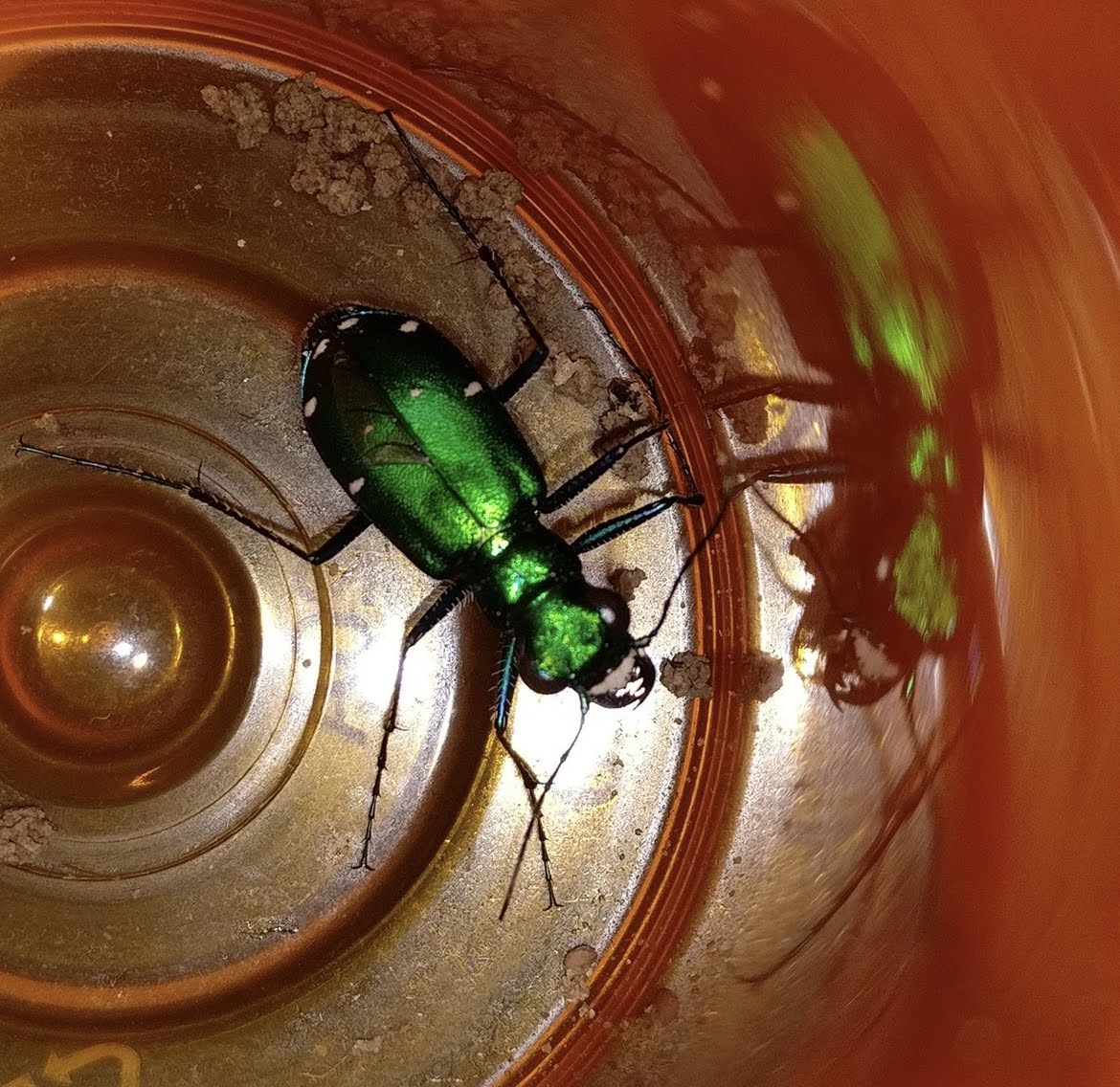
Cyclotrachelus blatchleyi is a species of ground beetle in the family Carabidae, occurring in woodland habitats of North America. The genus Cyclotrachelus comprises woodland ground beetles characterized by their terrestrial habits and predatory ecology. This species was described by Casey in 1918.
Cyclotrachelus brevoorti is a species of ground beetle in the family Carabidae. It is native to North America and has been recorded in the United States. As a member of the genus Cyclotrachelus, it belongs to a group of woodland ground beetles. The species was described by LeConte in 1846.
woodland ground beetle
Cyclotrachelus convivus is a species of ground beetle in the family Carabidae, described by LeConte in 1853. It belongs to a genus of woodland ground beetles distributed primarily in North America. The species is documented from the United States, though specific ecological details remain limited in published literature.
Cyclotrachelus dejeanellus is a species of ground beetle in the family Carabidae, tribe Harpalini. The genus Cyclotrachelus comprises medium to large-sized ground beetles distributed primarily in North America. Species in this genus are generally characterized by their robust body form and association with ground-dwelling habitats. This species is part of a genus that has attracted interest from coleopterists, as evidenced by its inclusion in collector wish lists for regional surveys.
woodland ground beetle
Cyclotrachelus freitagi is a ground beetle in the family Carabidae, described by Bousquet in 1993. It belongs to the genus Cyclotrachelus, a group of woodland ground beetles distributed in North America. The species is known from the United States.
Cyclotrachelus fucatus is a species of ground beetle in the family Carabidae. It belongs to a genus of woodland ground beetles native to North America. The species was described by Freitag in 1969. Available records indicate it occurs in the United States, though specific ecological details remain poorly documented.
Cyclotrachelus hernandensis is a species of ground beetle in the family Carabidae. It belongs to the genus Cyclotrachelus, a group of carabid beetles found in North America. The species was described by Van Dyke in 1943. Very little specific information about its biology or ecology has been documented.
Cyclotrachelus heros is a species of ground beetle in the family Carabidae. It is native to North America and has been recorded from the United States. As a member of the Carabidae family, it is part of the diverse ground beetle fauna that inhabits various terrestrial habitats across the continent.
woodland ground beetle
Cyclotrachelus incisus is a species of ground beetle in the family Carabidae. It is classified as a woodland ground beetle and has been documented in North America. Like other members of the genus Cyclotrachelus, it is a ground-dwelling species.
woodland ground beetle
Cyclotrachelus laevipennis is a species of ground beetle in the family Carabidae, described by LeConte in 1846. It belongs to the genus Cyclotrachelus, a group of woodland ground beetles distributed across North America. The species is recorded from the United States with limited observation data available. As with other members of Carabidae, it is likely a predatory beetle active on or near the ground surface.
A ground beetle in the genus Cyclotrachelus, family Carabidae. The genus name refers to the rounded, wheel-like pronotal shape characteristic of these beetles. Very few documented observations exist for this species.
woodland ground beetle
Cyclotrachelus sigillatus is a species of woodland ground beetle in the family Carabidae, described by Thomas Say in 1823. It is found in North America, with records from the United States. As a ground beetle, it likely inhabits forest floor habitats where it functions as a predatory insect.
A ground beetle in the family Carabidae, Cyclotrachelus unicolor is a poorly documented species with limited observational records. The species epithet 'unicolor' refers to its uniform coloration. Available information is sparse, with only two iNaturalist observations documented and minimal published literature specifically addressing this taxon.
Cyladini is a tribe of weevils in the family Brentidae, subfamily Apioninae. The tribe includes economically significant pests of sweet potato, particularly the sweetpotato weevil (Cylas formicarius), which causes substantial damage to storage roots in tropical and subtropical production regions. Members of this tribe are characterized by their association with Convolvulaceae host plants and their status as specialized root-feeding pests.
Cylindrocopturinus pictus is a species of true weevil in the beetle family Curculionidae, first described by Sleeper in 1963. It belongs to the genus Cylindrocopturinus, a group of weevils within the diverse Curculionidae family. The species has a documented distribution across North America, Central America, and the Caribbean.
A true weevil in the family Curculionidae. Found in North America. Limited published information exists on this species.
Cylindrocopturus cretaceus is a weevil species in the family Curculionidae, first described by Van Dyke in 1929-30. The genus Cylindrocopturus includes stem-boring weevils associated with plants in the Asteraceae family, particularly sunflowers. The specific epithet 'cretaceus' (Latin for chalky or chalk-white) may refer to coloration characteristics.
Cylindrocopturus deleoni is a species of weevil in the family Curculionidae, first described by Buchanan in 1940. It belongs to the genus Cylindrocopturus, which includes several species associated with sunflower and other Asteraceae hosts. The species is recorded from western North America, specifically Alberta and British Columbia in Canada. Like other members of its genus, it is likely a stem-boring weevil with larvae that develop within host plant stems.
Cylindrocopturus mediinotus is a species of true weevil in the family Curculionidae. It is found in North America. The species was originally described by Fall in 1906 and has been treated as a synonym of Copturus mediinotus in some taxonomic databases. Like other members of the genus Cylindrocopturus, it is associated with sunflower plants, though specific ecological details for this species are limited in available literature.
Cylindrocopturus nubilatus is a species of weevil in the family Curculionidae. It belongs to a genus containing several species associated with sunflowers and related plants. The genus Cylindrocopturus includes the well-documented sunflower stem weevil C. adspersus, a significant agricultural pest, but specific information on C. nubilatus remains limited. Observations of this species are sparse, with only four records documented on iNaturalist.
Cylindrocopturus operculatus is a species of true weevil in the beetle family Curculionidae. It is found in North America. The genus Cylindrocopturus includes several species associated with sunflowers and related plants, though specific ecological details for C. operculatus remain poorly documented in published literature.
Cylindrocopturus quercus is a species of twig and stem weevil in the tribe Zygopini, family Curculionidae. It is native to North America and associated with oak hosts (Quercus). As a member of the Zygopini, it likely exhibits the typical life history of twig-boring weevils, with larvae developing within woody stems.
Cyllodes is a genus of small beetles in the family Nitidulidae, established by Erichson in 1843. The genus comprises approximately 14 described species. Members of this genus are classified as sap-feeding beetles, placing them within the ecological guild of organisms that utilize plant exudates and fermenting materials. The genus belongs to the tribe Cyllodini within the subfamily Nitidulinae.
riffle beetle
Cylloepus abnormis is a species of riffle beetle in the family Elmidae, first described by Horn in 1870. The species is distributed across Central America and North America. As a member of the Elmidae family, it is adapted to aquatic habitats, particularly flowing water environments.
checkered beetle
The Cymatodera aegra-complex comprises a group of checkered beetles in the family Cleridae, subfamily Tillinae. These beetles are known from the southwestern United States and northern Mexico, where they have been collected in association with desert thorn-scrub vegetation. Members of this complex are morphologically similar and may represent a cryptic species assemblage requiring further taxonomic study.
Bicolored Checkered Beetle
Cymatodera bicolor is a species of checkered beetle in the family Cleridae, described by Thomas Say in 1825. It is found in North America, with records from Canada (Manitoba, New Brunswick, Nova Scotia) and the United States. The species epithet 'bicolor' refers to its two-toned coloration. As a member of Cleridae, it belongs to a family commonly known as checkered beetles, many of which are predatory on other insects.
checkered beetle
Cymatodera delicatula is a species of checkered beetle in the family Cleridae. It occurs in Central America and North America. As a member of Cleridae, it belongs to a family commonly known as checkered beetles, which are generally predatory or feed on other insects.
checkered beetle
Cymatodera fuchsii is a species of checkered beetle in the family Cleridae, described by Schaeffer in 1904. The species is distributed across Central America and North America. Checkered beetles in the family Cleridae are predatory insects, though specific ecological details for C. fuchsii remain poorly documented. The genus Cymatodera belongs to the subfamily Tillinae, a group characterized by elongated bodies and predatory habits.
checkered beetle
Cymatodera horni is a species of checkered beetle described by Wolcott in 1910. It belongs to the family Cleridae, a group of predatory beetles often associated with wood-boring insects. The species is documented from both Central America and North America. Records are sparse, with limited published biological information available.
Cymatodera pubescens is a species of checkered beetle in the family Cleridae, first described by Wolcott in 1909. It is native to North America. Like other members of the genus Cymatodera, it belongs to a group of clerid beetles commonly known as checkered beetles. The species is rarely encountered in collections and field observations, with only 8 documented observations on iNaturalist as of the available data.
Cymatodera schwarzi is a species of checkered beetle in the family Cleridae, described by Wolcott in 1921. The species is known from North America, with collection records from the southwestern United States including Arizona. Like other members of the genus Cymatodera, it is likely a predator associated with wood-boring beetles, though specific biological details remain poorly documented in published literature.
Cymatodera scitula is a species of checkered beetle in the family Cleridae, described by Barr in 1972. It belongs to the subfamily Tillinae, a group of predatory beetles commonly known as
Pale-tipped Cymatodera
Cymatodera sirpata is a species of checkered beetle in the family Cleridae, first described by George Henry Horn in 1885. It is native to North America and has been documented through over 300 iNaturalist observations. The species belongs to a genus of clerid beetles known for their predatory habits and association with various woody plants.
Cymatodera tricolor is a species of checkered beetle in the family Cleridae, first described by Skinner in 1905. The species is distributed across Central America and North America. As a member of Cleridae, it belongs to a family commonly known as checkered beetles, many of which are predatory and associated with wood-boring insects.
Cymatodera tuta is a species of checkered beetle in the family Cleridae. The species was described by Wolcott in 1910. It is known from Middle America and North America. The genus Cymatodera includes predatory species that feed on other insects.
Cymatoderella is a genus of checkered beetles in the family Cleridae, established by Barr in 1962. The genus contains three described species: C. collaris, C. morula, and C. patagoniae. Members of this genus are part of the diverse clerid beetle fauna, a family known for predatory habits. Cymatoderella species have been recorded from the United States, including Vermont.
Cymatoderella collaris is a species of checkered beetle in the family Cleridae. The species occurs in Central America and North America, with confirmed records from both regions. The genus Cymatoderella belongs to the clerid beetle lineage, a family known for predatory habits, though species-specific biology for this taxon remains poorly documented. The original description placed this species in the genus Tillus before its transfer to Cymatoderella.
water scavenger beetle
Cymbiodyta acuminata is a species of water scavenger beetle in the family Hydrophilidae, described by Fall in 1924. It is one of 29 recognized species in the genus Cymbiodyta, which was revised taxonomically in 1974. The species is distributed across northern North America, with records from Canada and the northern United States.
Cymbiodyta bifida is a species of water scavenger beetle in the family Hydrophilidae. It belongs to the genus Cymbiodyta, which comprises aquatic beetles typically found in freshwater habitats. The species was described by John Lawrence LeConte in 1855 and is known from eastern North America, with records from Canada and the United States. Like other members of its family, it is presumed to inhabit aquatic or semi-aquatic environments where it contributes to nutrient cycling through scavenging behavior.
Cymbiodyta pacifica is a species of water scavenger beetle in the family Hydrophilidae, first described by Leech in 1948. It is found in western North America, with records from British Columbia, Canada, and several western U.S. states including California, Nevada, Oregon, and Washington. Like other members of its family, it is associated with aquatic or semi-aquatic habitats. The species is part of the subfamily Enochrinae, which contains many small to medium-sized hydrophilid beetles.
Cymbiodyta vindicata is a species of water scavenger beetle in the family Hydrophilidae. It is found across much of North America, with records from Canada and the United States. A neotype has been designated for this species. The genus Cymbiodyta was revised in 1974, recognizing 29 species including C. vindicata.
Cymindis americana is a species of ground beetle in the family Carabidae, subfamily Harpalinae. It was described by Pierre François Marie Auguste Dejean in 1826. The genus Cymindis comprises numerous species of small to medium-sized predatory beetles distributed primarily in the Holarctic region. As a member of the Harpalinae, this species likely exhibits the cursorial (running) locomotion and predatory habits characteristic of this diverse subfamily.
Cymindis arizonensis is a species of ground beetle in the subfamily Harpalinae, described by Schaeffer in 1910. The genus Cymindis comprises numerous species of ground beetles distributed across the Northern Hemisphere. Like other members of Carabidae, this species is likely a nocturnal predator. Records indicate presence in the United States and North America, though detailed ecological information remains limited.
Cymindis borealis is a species of ground beetle in the subfamily Harpalinae, described by John Lawrence LeConte in 1863. The genus Cymindis comprises small to medium-sized carabid beetles, many of which are nocturnal predators. Species in this genus are typically associated with open, dry habitats and are often found under stones or debris.
Cymindis pilosa is a species of ground beetle in the subfamily Harpalinae, described by Thomas Say in 1823. It belongs to the genus Cymindis, a group of small to medium-sized carabid beetles. The species is known from North America, with records from Canada and the United States. As a member of Carabidae, it is likely predatory, though specific ecological details remain poorly documented.
Cyparium ater is a species of rove beetle in the family Staphylinidae, subfamily Scaphidiinae. Described by Casey in 1900, this species is currently treated as a synonym of Cyparium atrum. The genus Cyparium belongs to the tribe Cypariini within the scaphidiine rove beetles. Very little is known about the biology or ecology of this species.
Cyparium concolor is a rove beetle in the subfamily Scaphidiinae, a group commonly known as shining fungus beetles. The species was described by Fabricius in 1801 and is native to eastern North America. Scaphidiine beetles are generally associated with fungal substrates, though specific ecological details for C. concolor remain limited.
pleasing fungus beetles
Cypherotylus is a genus of pleasing fungus beetles in the family Erotylidae, containing over 30 described species. The genus is frequently encountered in literature under the unavailable name "Gibbifer," which is permanently invalid under ICZN Article 11.4 due to its origin in Voet's work. Species in this genus are associated with fungal substrates and exhibit the characteristic morphology of fungus-feeding beetles in this family.
blue fungus beetle, blue pleasing fungus beetle
A medium-sized pleasing fungus beetle (family Erotylidae) with distinctive blue elytra marked with black spots, found in western North America. Adults measure 14–18 mm in length. The elytral coloration fades from bright blue to grayish as individuals age. The species completes its life cycle in a single year, with adults active from spring through fall.
A longhorn beetle species in the subfamily Lepturinae, characterized by an elongated rostrum. The species occurs across South America with records from Bolivia, Brazil, and Colombia, with a recent first record from Peru in seasonally dry forest habitat. The subspecies C. rostrata rostrata has been documented in disturbed localities.