
Cypherotylus californicus
(Lacordaire, 1842)
blue fungus beetle, blue pleasing fungus beetle
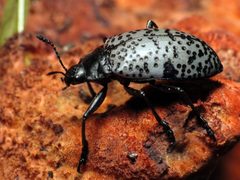
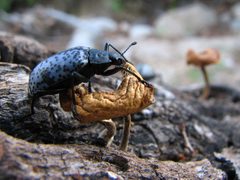
A medium-sized pleasing fungus beetle ( Erotylidae) with distinctive blue marked with black spots, found in western North America. measure 14–18 mm in length. The elytral coloration fades from bright blue to grayish as individuals age. The completes its in a single year, with adults active from spring through fall.
Pronunciation
How to pronounce Cypherotylus californicus: //ˌsaɪfəˈrɒtɪləs ˌkælɪˈfɔrnɪkəs//
These audio files are automatically generated. While they are not always 100% accurate, they are a good starting point.
Identification
Distinguished from other western Erotylidae by the combination of bright blue with black spots and relatively large size (14–18 mm). The blue coloration distinguishes it from the similar Gibbifer californicus (a synonym), which shares the same color pattern. The elytra fade to gray with age, which may cause confusion with other gray-colored erotylids; fresh specimens are needed for reliable identification.
Images
Habitat
Associated with fungal growth on logs and trees in forested and woodland environments.
Distribution
Western North America: recorded from Wyoming, Colorado, New Mexico, Arizona, California, and Kansas in the United States, and the Mexican state of Sonora.
Seasonality
active from spring through late summer and early fall. laid in late summer and early fall; larvae present in spring, occurs in summer.
Diet
Feeds on fungi growing on logs and trees.
Life Cycle
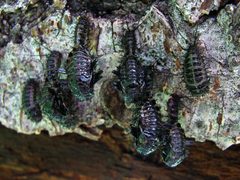
(one per year). hatch in spring; larvae develop through spring and early summer, pupating in summer. emerge and are active from late spring through fall, mating and laying eggs in late summer and early fall.
Behavior
are attracted to light at night and have been observed on tree trunks after dark.
Ecological Role
Fungivore; contributes to decomposition of wood-inhabiting fungi.
Similar Taxa
- Gibbifer californicusSynonym; same , formerly placed in Gibbifer
- Other Erotylidae speciesSimilar body form and fungus-feeding ; distinguished by color pattern and size
Sources and further reading
- BugGuide
- Wikipedia
- GBIF taxonomy match
- iNaturalist taxon
- Encyrtid Holdings | Entomology Research Museum
- California Has No State Bee--Yet! | Bug Squad
- Bohart Museum: Learn about California's State Insect on UC Davis Picnic Day | Bug Squad
- Grasshoppers of Colorado
- Erotylidae | Beetles In The Bush
- Sex Attraction Pheromone Improves Detection of a Threatened Beetle
- Observations on the Ecology, Behavior and Life Cycle of the Fungus-Feeding Beetle, Cypherotylus californicus, with a Description of the Pupa (Coleoptera: Erotylidae)