
Cymbiodyta bifida
(LeConte, 1855)
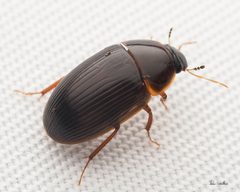
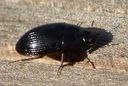
Cymbiodyta bifida is a of water scavenger beetle in the Hydrophilidae. It belongs to the Cymbiodyta, which comprises aquatic beetles typically found in freshwater . The species was described by John Lawrence LeConte in 1855 and is known from eastern North America, with records from Canada and the United States. Like other members of its family, it is presumed to inhabit aquatic or semi-aquatic environments where it contributes to nutrient cycling through scavenging .
Pronunciation
How to pronounce Cymbiodyta bifida: //sɪm.biˈɒ.dɪ.taː bɪˈfɪ.da//
These audio files are automatically generated. While they are not always 100% accurate, they are a good starting point.
Images
Habitat
Aquatic and semi-aquatic freshwater environments including ponds, lakes, and slow-moving streams. Members of the Cymbiodyta are typically found in association with submerged vegetation and detritus in lentic and lotic water bodies.
Distribution
Eastern North America. Recorded from Canada (New Brunswick, Ontario, Quebec) and the United States (Florida, Georgia, Iowa, Illinois, Indiana, Maine, Maryland, Massachusetts, Michigan, Minnesota, Mississippi, New Hampshire, New York, Rhode Island, South Carolina, Wisconsin).
Ecological Role
As a member of the Hydrophilidae , contributes to aquatic functioning through scavenging of decaying organic matter. Water scavenger beetles play roles in nutrient cycling and detritus processing in freshwater systems.