
Cylindrocopturus quercus
(Say, 1832)
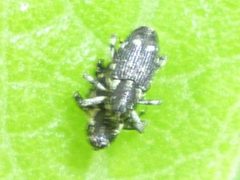
Cylindrocopturus quercus is a of twig and stem weevil in the tribe Zygopini, Curculionidae. It is native to North America and associated with oak (Quercus). As a member of the Zygopini, it likely exhibits the typical of twig-boring weevils, with larvae developing within woody stems.
Pronunciation
How to pronounce Cylindrocopturus quercus: //sɪˌlɪndroʊˈkɑptjʊrəs ˈkwɛrkəs//
These audio files are automatically generated. While they are not always 100% accurate, they are a good starting point.
Images
Habitat
Associated with oak-dominated woodlands and forests. The "quercus" indicates an association with Quercus (oak) .
Distribution
North America; recorded from Québec, Canada and presumably widespread in eastern and central United States where oak occur.
Diet
Larvae bore into and feed within oak twigs and stems; likely feed on oak foliage or bark. Specific feeding habits of adults not well documented in available sources.
Host Associations
Life Cycle
Incomplete information available. As a twig-boring weevil, likely exhibits a involving: deposition in oak twigs, larval development within woody tissue, within the stem or in soil, and . Specific timing and number of per year not documented in available sources.
Behavior
Ecological Role
As a stem-boring insect, contributes to natural pruning and nutrient cycling in oak . May serve as prey or for and other natural enemies, though specific relationships not documented.
Human Relevance
Not documented as a significant pest of ornamental or timber oaks in available sources. Potential minor pest in nursery settings due to twig-boring larval habit.
Similar Taxa
- Cylindrocopturus adspersusCongeneric also in tribe Zygopini; C. adspersus is a documented pest of sunflower stems, differing in association (Asteraceae vs. Fagaceae)
- Other Zygopini generaTwig-boring weevils in tribe Zygopini share similar cylindrical body form and stem-boring habits; identification to requires examination of genitalia and other fine morphological characters
Sources and further reading
- BugGuide
- Wikipedia
- GBIF taxonomy match
- iNaturalist taxon
- Catalogue of Life
- 🌿 Botanizing w/ the Webster Groves Nature Study Society (WGNSS) Botany Group at Fults Hill Prairie Nature Preserve — 27 Oct 2025 | Beetles In The Bush
- Blackjack oak “flower” | Beetles In The Bush
- Bug Eric: More Insects From Sunflowers
- November | 2025 | Beetles In The Bush
- Cynipidae | Beetles In The Bush
- January | 2022 | Beetles In The Bush
- Biology and Immature Stages of Cylindrocopturus quercus (Say) (Coleoptera: Curculionidae)