
Cylindrocopturus
Heller, K.M., 1895
Species Guides
17- Cylindrocopturus adspersus(sunflower stem weevil)
- Cylindrocopturus binotatus
- Cylindrocopturus cretaceus
- Cylindrocopturus dehiscens
- Cylindrocopturus deleoni
- Cylindrocopturus eatoni(pine reproduction weevil)
- Cylindrocopturus furnissi(Douglas-fir twig weevil)
- Cylindrocopturus longulus
- Cylindrocopturus longulus group
Cylindrocopturus is a of weevils in the tribe Zygopini, first described by Heller in 1895. in this genus possess an unmodified mesoventrite and lack sclerolepidia. The genus includes several economically significant species: C. adspersus (sunflower stem weevil), C. eatoni (pine weevil), and C. furnissi (Douglas-fir seed weevil). associations vary widely across species, encompassing sunflowers, pines, Douglas-fir, oaks, and cacti.
Pronunciation
How to pronounce Cylindrocopturus: //sɪˌlɪndroʊˈkɒptjərəs//
These audio files are automatically generated. While they are not always 100% accurate, they are a good starting point.
Identification
Distinguished from related by the combination of an unmodified mesoventrite and lack of sclerolepidia. -level identification requires examination of association and detailed morphological features. C. adspersus can be recognized by its brown and white mottled pattern and association with sunflower stems.
Images
Appearance
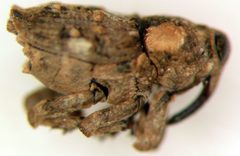
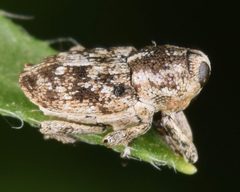
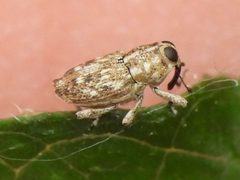
Small to medium-sized weevils with typical curculionid including an elongated rostrum. C. adspersus are brown and white mottled, approximately 3/16 inch (4.8 mm) long. Specific appearance traits for the as a whole are not well documented beyond tribal characteristics.
Habitat
varies by : C. adspersus occurs in sunflower fields and areas with wild Helianthus species; C. eatoni inhabits pine forests and seed orchards; C. furnissi is associated with Douglas-fir forests; C. quercus is found with oaks; C. biradiatus occurs on nopal cacti.
Distribution
North America, with distributed according to plant ranges. C. adspersus occurs in Colorado, Texas, North Dakota, South Dakota, Minnesota, and Saskatchewan. C. eatoni is associated with pine regions of western North America. C. furnissi occurs within the range of Douglas-fir. C. biradiatus is recorded from Mexico.
Seasonality
C. adspersus: active from third alternate leaf stage to early bud stage of sunflowers; larvae overwinter in stalk bases and pupate the following year, typically in June. C. eatoni and C. furnissi show seasonal patterns tied to plant .
Host Associations
- Helianthus annuus (sunflower) - C. adspersus
- Pinus species (pines) - C. eatoni; includes P. ponderosa, P. radiata, P. attenuata, P. muricata
- Pseudotsuga menziesii (Douglas-fir) - C. furnissi
- Quercus (oak) - C. quercus
- Opuntia (nopal cacti) - C. biradiatus
Life Cycle
details vary by . C. adspersus: deposited in sunflower stalks over 2-5 week period; larvae burrow into stalk, destroying pith, and overwinter in chambers at stalk base; single per year. C. furnissi: larval development occurs within Douglas-fir cones and seeds. C. eatoni: larvae develop within pine tissues.
Behavior
C. adspersus feed on leaves without causing economic damage; females oviposit into plant stems or reproductive structures. Larvae of stem-feeding tunnel downward through pith. C. eatoni adults attack pine reproductive structures, reducing seed production.
Ecological Role
Seed and stem of plants. C. adspersus can reduce sunflower yields by up to 50% and predisposes plants to charcoal rot. C. eatoni impacts pine seed orchard productivity. C. furnissi acts as a seed predator of Douglas-fir.
Human Relevance
Two are recognized pests: C. eatoni damages pine in seed orchards, affecting forestry operations; C. furnissi is a pest of Douglas-fir cone and seed production; C. adspersus is a significant pest of cultivated sunflowers in the Great Plains and Texas. are used for C. adspersus management when are exceeded.
Similar Taxa
- Apion occidentale (black sunflower stem weevil)Also feeds on sunflower stems but belongs to Brentidae; distinguished by black coloration and smaller size (~3 mm vs. ~5 mm for C. adspersus)
- Smicronyx spp. (sunflower seed weevils)Share sunflower association but feed on seeds rather than stems; are reddish-brown or gray and smaller (~2.5-4 mm)
- Haplorhynchites aeneus (sunflower head-clipping weevil)Attacks sunflower but belongs to Attelabidae; larger (~8 mm), metallic black, and exhibits distinctive head-girdling
More Details
Taxonomic History
Originally placed in Lechriopini by some early sources, but all recent works assign Cylindrocopturus to Zygopini based on morphological characters.
Parasitoids
C. adspersus is attacked by in the Northern Great Plains, including that may influence ; C. biradiatus is parasitized by Eupelmus pulchriceps in Mexico.
Management
For C. adspersus, crop and delayed planting (after mid-June) have prevented yield reductions in the Texas High Plains and Panhandle. is two or more per plant from third alternate leaf stage to early bud stage in Texas; one adult per three plants in North Dakota.
Sources and further reading
- BugGuide
- Wikipedia
- GBIF taxonomy match
- iNaturalist taxon
- NCBI Taxonomy
- Catalogue of Life
- Managing Insect Pests of Texas Sunflowers - AgriLife Extension Entomology
- Bug Eric: More Insects From Sunflowers
- Biology of Cylindrocopturus furnissi Buchanan on Douglas-Fir1
- Biology and Immature Stages of Cylindrocopturus quercus (Say) (Coleoptera: Curculionidae)
- Resistance of Pines to the Pine Reproduction Weevil, Cylindrocopturus eatoni
- Biology of the Weevil Cylindrocopturus eatoni Buchanan, Injurious to Ponderosa and Jeffrey Pine Reproduction
- RESEARCH AND DEVELOPMENT OF PINES RESISTANT TO THE PINE REPRODUCTION WEEVIL, CYLINDROCOPTURUS EATONI BUCH
- Ovipositional Behavior and Site Selection by a Sunflower Stem Weevil, Cylindrocopturus Adspersus (Coleoptera: Curculionidae)1
- DISTRIBUTION AND ABUNDANCE OF THE SUNFLOWER STEM WEEVIL, CYLINDROCOPTURUS ADSPERSUS (LECONTE) (COLEOPTERA: CURCULIONIDAE), IN SASKATCHEWAN
- Distribution and Abundance of a Stem Weevil, Cylindrocopturus adspersus (Coleoptera: Curculionidae), in Cultivated Sunflower in the Northern Plains 1
- Parasitoids of a Stem Weevil, Cylindrocopturus Adspersus (Coleoptera: Curculionidae), in Sunflower: Incidence and Parasitization Rates in the Northern Great Plains1
- Toxicity of Insecticides on a Stem Weevil, Cylindrocopturus adspersus (Coleoptera: Curculionidae), and its Parasitoids in Sunflower1
- Cylindrocopturus(Coleoptera: Curculionidae: Conoderinae) Species Associated withOpuntia(Caryophyllales: Cactaceae) Species
- First record of Eupelmus pulchriceps (Hymenoptera:Eupelmidae) as a parasitoid of Cylindrocopturus biradiatus (Coleoptera: Curculionidae) in Mexico