
Haplorhynchites aeneus
(Boheman, 1829)
sunflower headclipping weevil, head-clipping weevil
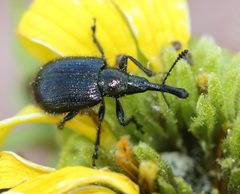
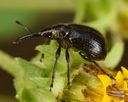
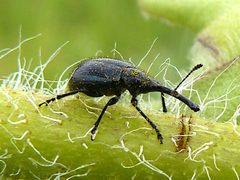
Haplorhynchites aeneus is a leaf-rolling weevil in the Attelabidae, commonly known as the sunflower headclipping weevil. are metallic black, approximately 6–8 mm long, with a prominent elongated snout. Females girdle sunflower stems just below the flower , causing the head to fall to the ground where larvae develop and overwinter. The is prairie- and found across North America, with documented in Canada (Manitoba, Ontario, Saskatchewan) and the United States. Economic damage to commercial sunflowers is generally minor, though occasional can affect 2–3 percent of a crop.
Pronunciation
How to pronounce Haplorhynchites aeneus: /ˌhæpləˈrɪnkaɪtiːz ˈiːniəs/
These audio files are automatically generated. While they are not always 100% accurate, they are a good starting point.
Identification
Metallic black coloration with long, slender snout (rostrum) characteristic of weevils. measure approximately 6–8 mm in body length. Distinguished from other sunflower-associated weevils by the combination of: metallic black , elongated rostrum, and association with girdled sunflower . Similar to Curculionidae weevils but placed in Attelabidae based on morphological and phylogenetic characters. Larvae develop within fallen sunflower heads rather than in standing plant tissue.
Images
Habitat
Native prairie ; associated with sunflower (Helianthus) plants. Occurs in agricultural settings where sunflowers are cultivated, as well as in stands of native sunflowers.
Distribution
North America; prairie-. Documented in Canada: Manitoba, Ontario, Saskatchewan. Present throughout the United States in prairie regions.
Seasonality
emerge in mid-summer. Females active during sunflower blooming period for girdling and oviposition. Larvae overwinter in fallen , with adults emerging the following summer.
Host Associations
- Helianthus annuus - plantcommon sunflower; cultivated and wild used for oviposition and larval development
- Helianthus spp. - plantnative sunflower in prairie
Life Cycle
Complete . laid in girdled sunflower . Larvae feed and develop within the head after it falls to the ground. occurs in soil. Single per year with emerging the following summer.
Behavior
Females perform distinctive -clipping : girdling the sunflower stem 1–2 inches below the flower head, causing the head to detach and fall. This behavior prepares the oviposition site and provides protected for larval development. feed on pollen and nectar.
Ecological Role
Herbivore specializing on sunflowers; contributes to natural and nutrient cycling in prairie . Minor pest in agricultural contexts.
Human Relevance
Occasional pest of commercial sunflower production. Economic rare; typically affects 2–3 percent of crop in problem years. In Kansas, application considered when 10 percent or more of flower clipped and weevils remain active. Head-clipping can reduce seed yield directly and predispose plants to secondary issues.
Similar Taxa
- Cylindrocopturus adspersussunflower stem weevil; also in Curculionidae but differs in boring within standing stalks rather than -clipping, and has brown-and-white mottled coloration versus metallic black
- Smicronyx fulvusred sunflower seed weevil; smaller (2.5–3 mm), reddish-brown with rust-colored , feeds on developing seeds rather than clipping
- Smicronyx sordidusgray sunflower seed weevil; gray coloration, similar size to S. fulvus, also seed-feeding rather than -clipping
- Baris strenuasunflower root weevil; larger (6 mm), dull black with short downward snout, larvae feed on roots rather than
- Dectes texanuslonghorned beetle (Cerambycidae); girdles stalks at base for but much larger (16 mm), pale gray with extremely long , larvae bore in stems rather than
Sources and further reading
- BugGuide
- GBIF taxonomy match
- iNaturalist taxon
- Catalogue of Life
- Managing Insect Pests of Texas Sunflowers - AgriLife Extension Entomology
- Encyrtid Holdings | Entomology Research Museum
- Bug Eric: More Insects From Sunflowers
- Learning the Insect Lingo While Working Abroad
- Nomenclatural changes in Phymatodes | Beetles In The Bush
- The Drugs (Neonicotinoids) Don’t Work 2 - Buglife Blog - Buglife
- Observations on the Biology of Haplorhynchites aeneus (Boheman) (Coleoptera: Rhynchitidae)
- Consequences of Habitat Fragmentation for the Prairie-Endemic Weevil Haplorhynchites aeneus