
Smicronyx fulvus
LeConte, 1876
Red Sunflower Seed Weevil
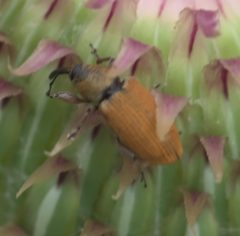
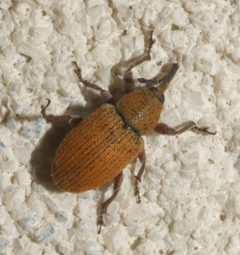
Smicronyx fulvus, commonly known as the red sunflower seed weevil, is a small seed-feeding weevil in the Curculionidae. are 2.5–3 mm long and reddish-brown in color. The is a significant pest of cultivated sunflower (Helianthus annuus) in North America, with larvae developing inside developing achenes and reducing seed oil content by approximately 30% per larva. It has a with adults present throughout the growing season.
Pronunciation
How to pronounce Smicronyx fulvus: /smiˈkrɔnɪks ˈfʊlvʊs/
These audio files are automatically generated. While they are not always 100% accurate, they are a good starting point.
Identification
The red sunflower seed weevil can be distinguished from the similar gray sunflower seed weevil (Smicronyx sordidus) by its smaller size (2.5–3 mm vs. ~6 mm), reddish-brown coloration (vs. gray), and more numerous laid per female. S. fulvus is also smaller than the sunflower head-clipping weevil (Haplorhynchites aeneus, ~8 mm) and lacks the metallic black coloration of that . Within sunflower , S. fulvus eggs are laid internally in developing seeds, whereas S. sordidus deposits eggs externally on seeds.
Images
Appearance
Habitat
Agricultural fields cultivated with sunflower (Helianthus annuus), including both oilseed and confectionery varieties. Also found on wild sunflower (Helianthus annuus) in non-cultivated areas. occur on sunflower plants from bud stage through maturity.
Distribution
United States and Canada. Specific records include Alberta, Ontario, and Saskatchewan in Canada, and Vermont in the United States. The occurs throughout the sunflower-growing regions of North America.
Seasonality
are present during the entire growing season. In Texas and similar regions, adults emerge in late June and early July. Larvae pupate in soil during June or July of the following year. One per year.
Diet
feed on sunflower buds and pollen. Larvae feed internally on developing sunflower seeds (achenes), consuming approximately one-third of the seed contents before exiting.
Host Associations
- Helianthus annuus - plantCultivated and wild sunflower; primary
- Helianthus - plant-level association
- Triaspis aequoris - that attacks larvae
- Nealiolus curculionis - Braconid that parasitizes larvae
Life Cycle
(one per year). emerge from soil in late spring to early summer. Females deposit individually into developing sunflower seeds from the edge of the flower disc inward. Each larva consumes approximately one-third of a seed before chewing an exit hole and dropping to the ground. Larvae burrow into soil to overwinter, pupating the following June or July. Adults emerge from pupae to begin the cycle again.
Behavior
feed between bracts of sunflower buds before flowers open, then shift to feeding on pollen once flowers mature. Females oviposit into developing seeds throughout the blooming period. Mature larvae exit seeds through chewed holes and drop to the ground to burrow into soil for .
Ecological Role
Human Relevance
Major economic pest of sunflower production. Action thresholds for application are 14 per for oilseed sunflowers and 1 per head for confectionery sunflowers. has been developed, with line HA 488 showing significantly reduced damage (5% vs. 20–38% in susceptible lines). Early planting is an effective cultural practice to reduce damage.
Similar Taxa
- Smicronyx sordidusGray sunflower seed weevil; larger (~6 mm), gray coloration, lays fewer , deposits eggs externally on seeds rather than internally
- Haplorhynchites aeneusSunflower head-clipping weevil; larger (~8 mm), metallic black, girdles stems below flower rather than feeding on seeds
More Details
Economic Impact
The red sunflower seed weevil is considered one of the most economically damaging pests of sunflower in North America, particularly affecting confectionery and hybrid seed sunflowers. A single larva can reduce seed oil content by approximately 30%.
Management
strategies include early planting dates, (notably line HA 488), application based on action thresholds, and conservation of natural enemies including .
Research Methods
-based detection methods have been shown to be more reliable than traditional -based methods for assessing rates by Triaspis aequoris.
Sources and further reading
- BugGuide
- Wikipedia
- GBIF taxonomy match
- iNaturalist taxon
- NCBI Taxonomy
- Catalogue of Life
- Managing Insect Pests of Texas Sunflowers - AgriLife Extension Entomology
- Meloidae Holdings | Entomology Research Museum
- Bug Eric: More Insects From Sunflowers
- Bug Eric: Wasp Wednesday: Pachysomoides fulvus
- Bug Eric: September 2011
- reintroduction | Blog
- Susceptibility of sunflower inbred lines and putative resistance sources to Smicronyx fulvus LeConte (Coleoptera: Curculionidae)
- Emergence- and DNA-based detection methods show inconsistent effects of planting date on parasitism of red sunflower seed weevil, Smicronyx fulvus LeConte, by Triaspis aequoris Martin