
Baris strenua
Champion, G.C., 1909
Sunflower root weevil
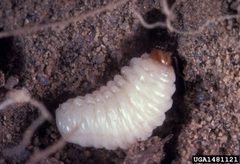
Baris strenua is a of weevil in the Curculionidae, first described by Champion in 1909. It is commonly known as the sunflower root weevil and is recognized as a pest of cultivated sunflowers in North America. The species is native to North America with confirmed records from Manitoba, Canada. feed on sunflower foliage, causing minor damage, while larvae develop on roots and can cause significant wilting and lodging of plants. Despite its potential as a pest, for application have not been established, and control measures are generally not warranted.
Pronunciation
How to pronounce Baris strenua: //ˈbæ.rɪs ˈstrɛ.nju.ə//
These audio files are automatically generated. While they are not always 100% accurate, they are a good starting point.
Identification
Distinguished from other Baris by combination of dull black coloration, short ventrally-directed rostrum, and association with sunflower plants. Distinguished from other sunflower-associated weevils (such as Cylindrocopturus adspersus, the sunflower stem weevil) by of congregating near root zone and creating callous tissue at feeding scars for oviposition, rather than ovipositing in stems. The similar Baris transversa may occur in overlapping range but differs in morphological details of the and pronotum.
Images
Habitat
Associated with cultivated sunflower fields and areas with wild sunflower (Helianthus spp.) presence. are found on foliage and near the base of plants; larvae develop in soil around root systems. The thrives in agricultural settings where sunflowers are grown, particularly in the northern Great Plains region of North America.
Distribution
North America; confirmed present in Manitoba, Canada. Likely occurs more broadly in sunflower-growing regions of the United States and Canada, though specific distribution records are sparse.
Seasonality
emerge and become active during the growing season, with peak activity during sunflower vegetative growth and flowering stages. Larvae develop through summer and autumn, in soil capsules before pupating and emerging as adults the following year.
Diet
feed on sunflower foliage, creating small holes in leaves. Larvae feed on root tissue near the soil surface, destroying root tissue and causing plant wilting.
Host Associations
- Helianthus annuus - primary cultivated sunflower
- Helianthus spp. - wild sunflower
Life Cycle
feed on foliage during morning and late afternoon, then move to root zone where females create callous tissue through feeding and deposit approximately three at a time underneath this tissue. Larvae hatch and feed near the oviposition site, destroying root tissue and causing wilting. By autumn, larvae construct soil capsules in which they pupate. Adults emerge the following growing season. One per year.
Behavior
exhibit diel activity pattern with feeding on foliage during cooler parts of day (morning and late afternoon) and movement to root zone for oviposition. Adults aggregate near base of plants for mating and oviposition. Females prepare oviposition sites by feeding on root tissue to induce callous formation.
Ecological Role
Herbivore and agricultural pest. As a root-feeding insect, larvae can significantly impact plant water relations and structural stability. levels typically remain below in most sunflower production areas.
Human Relevance
Recognized as a minor to moderate pest of cultivated sunflowers in North America. Can cause yield reduction through root damage leading to wilting and lodging, particularly when are severe. Currently not a major target for chemical control; management recommendations emphasize crop and destruction of to reduce . No established for application.
Similar Taxa
- Cylindrocopturus adspersusAlso a sunflower-associated weevil, but differs in oviposition ( laid in stems rather than root callus tissue) and appearance (brown and white mottled rather than uniformly dull black)
- Baris transversaCongeneric with similar and likely overlapping distribution; distinguished by subtle differences in elytral and pronotal sculpturing
- Rhodobaenus quinquepunctatusCocklebur weevil, another root-feeding weevil in sunflower plants, but distinguished by red and black spotted coloration and larger size (6-10 mm)
More Details
Taxonomic note
The was described by George Charles Champion in 1909. The Baris contains numerous species, many of which are associated with Asteraceae plants. Baris strenua is one of several Baris species recorded from North America.
Management context
While recognized as a sunflower pest, B. strenua receives less management attention than other sunflower weevils such as the sunflower stem weevil (Cylindrocopturus adspersus) or red sunflower seed weevil (Smicronyx fulvus). This reflects its generally lower economic impact and the lack of established for chemical control.
Sources and further reading
- BugGuide
- GBIF taxonomy match
- iNaturalist taxon
- Catalogue of Life
- Managing Insect Pests of Texas Sunflowers - AgriLife Extension Entomology
- Publications | Entomology Research Museum
- Bug Eric: More Insects From Sunflowers
- Argentine Researchers Develop Artificial Attractant for Kissing Bugs
- Admiration for Insects: How One Entomologist Found a Calling at an Early Age
- Eumastacidae | Beetles In The Bush