
Haplorhynchites
Voss, 1924
head-clipping weevils, leaf and bud weevils
Species Guides
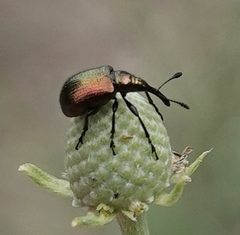
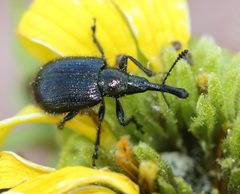
5Haplorhynchites is a of leaf and bud weevils in the Attelabidae, comprising ten recognized . The genus is best known through Haplorhynchites aeneus, commonly called the sunflower -clipping weevil, which exhibits a distinctive reproductive where females girdle plant stems below the flower head to facilitate larval development. Members of this genus are associated with prairie and sunflower plants, with most species described from North America.
Pronunciation
How to pronounce Haplorhynchites: //ˌhæpləˌrɪŋˈkaɪtiːz//
These audio files are automatically generated. While they are not always 100% accurate, they are a good starting point.
Identification
Haplorhynchites are distinguished from other Attelabidae by their association with the tribe Rhynchitini (formerly placed in Rhynchitidae). Haplorhynchites aeneus can be recognized by its metallic black coloration, approximately 6–8 mm body length, and elongated rostrum typical of weevils. The is differentiated from true weevils of family Curculionidae by its placement in Attelabidae, though external is broadly similar. Species-level identification requires examination of genitalic characters and other fine morphological details.
Images
Habitat
Tallgrass prairie . Haplorhynchites aeneus has been documented specifically in prairie , with the described as prairie-.
Distribution
North America. have been described from the United States (including Texas, Kansas, and northern states) and Mexico. Haplorhynchites aeneus occurs in prairie regions of the central United States.
Seasonality
of Haplorhynchites aeneus emerge in mid-summer, with activity coinciding with sunflower bloom periods from late June through July.
Diet
feed on pollen and nectar. Larvae develop within detached flower .
Host Associations
- Helianthus annuus - plantsunflower -clipping weevil (H. aeneus) uses sunflower heads for larval development; female girdles stem below head, causing it to fall to ground where larva feeds and pupates
Life Cycle
Haplorhynchites aeneus: emerge mid-summer and feed on pollen and nectar. Females girdle the sunflower stem just below the flower , deposit a single in the head, causing it to detach and fall to the ground. Larva develops within the fallen head, feeding on plant material, then exits to pupate in soil. Adults emerge the following year. One per year.
Behavior
Females of H. aeneus exhibit distinctive -clipping : they chew a complete or partial girdle around the stem circumference 1–2 inches below the flower head, severing vascular tissue and causing the head to droop or fall. This behavior creates a protected, nutrient-rich environment for larval development in the detached head.
Ecological Role
As herbivores, Haplorhynchites contribute to plant-insect interactions in prairie . The -clipping of H. aeneus represents a specialized form of plant manipulation that creates unique microhabitats. -level effects of fragmentation have been documented for H. aeneus in tallgrass prairie systems.
Human Relevance
Haplorhynchites aeneus is considered an occasional pest of commercial sunflower . Economic damage is typically minor (2–3% of crop in Texas), though higher occur in some regions. In Kansas, application is recommended when 10% or more of flower have been clipped and weevils remain active. The is not a major limiting factor in sunflower production compared to other pests.
Similar Taxa
- Cylindrocopturus adspersusBoth are weevils associated with sunflower stems; Cylindrocopturus is a stem weevil (Curculionidae) that bores into stalks rather than clipping , and larvae develop within standing plants rather than detached heads.
- Smicronyx fulvusBoth are weevils associated with sunflower ; Smicronyx is a seed weevil (Curculionidae) with larvae developing inside seeds of standing heads, lacking the stem-girdling of Haplorhynchites.
- Apion occidentaleBoth are weevils on sunflowers; Apion is a stem weevil (Brentidae) with larvae in pith of standing stems, differing in placement and lacking -clipping .
Sources and further reading
- BugGuide
- Wikipedia
- GBIF taxonomy match
- NCBI Taxonomy
- Catalogue of Life
- Managing Insect Pests of Texas Sunflowers - AgriLife Extension Entomology
- Bug Eric: More Insects From Sunflowers
- Consequences of Habitat Fragmentation for the Prairie-Endemic Weevil Haplorhynchites aeneus
- Observations on the Biology of Haplorhynchites aeneus (Boheman) (Coleoptera: Rhynchitidae)