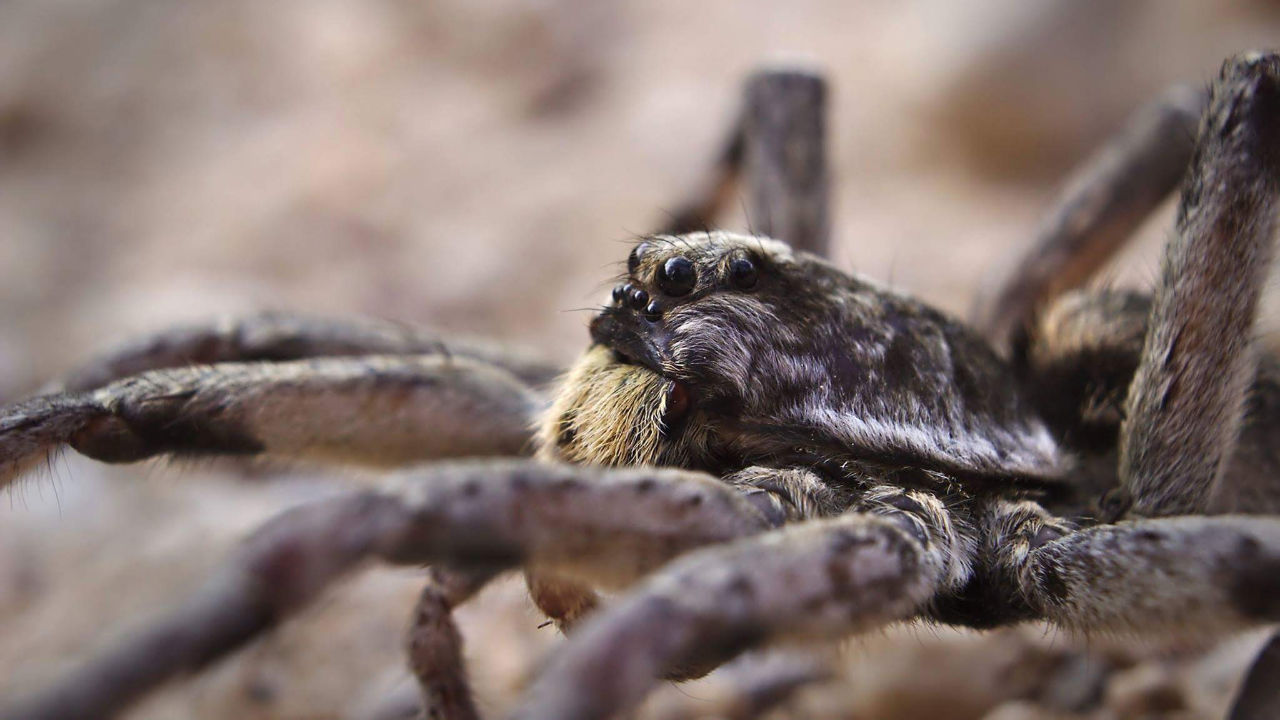
nursery web spider
Tinus peregrinus is a small nursery web spider in the family Pisauridae, notable for being the smallest member of its family in North America. Adults reach only about 10 mm in body length, with males slightly smaller than females. The species occurs across the southwestern United States and northern Mexico, where it inhabits riparian edges and human structures near water. Unlike larger fishing spiders and nursery web spiders, T. peregrinus is rarely encountered due to its diminutive size and cryptic habits.
Titanebo is a genus of running crab spiders in the family Philodromidae, first described by Gertsch in 1933. The genus comprises 14 species distributed in the southwestern United States and Mexico. These spiders were historically classified under the genus Ebo but were reassigned to Titanebo based on taxonomic revision. They are characterized by their elongated second pair of legs, a distinctive trait among philodromid spiders.
Titanoeca americana is a species of true spider in the family Titanoecidae, first described by Emerton in 1888. It is one of several species in the genus Titanoeca, which are small to medium-sized spiders characterized by their cribellate silk production. The species is known from North America, with records from the United States.
Mexican red-rump tarantula, Mexican red rump
Tliltocatl vagans is a large terrestrial tarantula native to Mexico and Central America, distinguished by the distinctive red hairs covering its abdomen. Formerly placed in the genus Brachypelma, this species was reclassified to Tliltocatl following taxonomic revision accepted by the World Spider Catalog. It is a burrowing, nocturnal predator that constructs underground galleries. The species has established a non-native population in Florida since 1996, introduced through the pet trade. Females are notably long-lived, potentially reaching 25–40 years in captivity. Due to habitat destruction, collection pressure, and high juvenile mortality, T. vagans is considered vulnerable to extinction and is protected under CITES Appendix II.
Trabeops aurantiacus is a wolf spider (family Lycosidae) and the sole species in the genus Trabeops. First described by Emerton in 1885 and later placed in its own genus by Roewer in 1959, this spider occurs in the United States and Canada. It represents a monotypic genus within the diverse wolf spider family.
Trachelas volutus is a species of true spider in the family Trachelidae. It is found in the United States and Mexico. The genus Trachelas was previously placed in the family Corinnidae but has since been reclassified to Trachelidae based on phylogenetic studies.
A species of harvestman in the family Sclerosomatidae, described by Banks in 1894. As with other harvestmen in the genus Trachyrhinus, it belongs to the order Opiliones—arachnids distinct from spiders that lack fangs, venom glands, and silk production. Members of this genus are known to employ chemical defenses through repugnatorial glands.
long-legged water spider
Trechalea gertschi, known as the long-legged water spider, is a species of true spider described by Carico & Minch in 1981. It belongs to the family Trechaleidae, a group of spiders associated with aquatic and semi-aquatic habitats. The species occurs in the United States and Mexico.
Uroctonites huachuca is a scorpion species in the family Vaejovidae, first described by Gertsch and Soleglad in 1972. The species is named after the Huachuca Mountains in southeastern Arizona, which constitute its type locality and primary known range. It belongs to a genus of medium-sized scorpions distributed in the southwestern United States and northern Mexico.
whip scorpions, vinegaroons, uropygids
Uropygi is an order of arachnids commonly known as whip scorpions or vinegaroons, characterized by a whip-like flagellum on the posterior end and large scorpion-like pedipalps. They lack venom glands but possess defensive glands capable of spraying acetic and caprylic acid, producing a vinegar-like odor. These nocturnal predators use only six legs for walking, with the first two pairs modified as sensory appendages. The order comprises approximately 100 species across 18 extant genera, all placed in the single family Thelyphonidae.
Urozelotes rusticus is a cosmopolitan ground-dwelling spider in the family Gnaphosidae and the type species of the genus Urozelotes. Originally described from Europe in 1872, it has been introduced to the Americas, tropical Africa, Australia, and South Africa through human activity. Its synanthropic habits enable it to thrive in buildings and modified environments worldwide.
Vaejovis chisos is a species of scorpion in the family Vaejovidae, described by Sissom in 1990. It belongs to the genus Vaejovis, a group of scorpions commonly referred to as mountain scorpions. The species is native to North America and is part of the diverse scorpion fauna of the southwestern United States and northern Mexico region.
Intermediate Scorpion
Vaejovis intermedius is a scorpion species in the family Vaejovidae, described by Borelli in 1915. The species occurs in Middle and North America according to distribution records. As a member of the genus Vaejovis, it shares characteristics with other vaejovid scorpions, though specific details about its biology and ecology remain limited in available sources. The species is recognized as valid and accepted in major taxonomic databases.
Walckenaeria auranticeps is a species of dwarf spider in the family Linyphiidae. It was described by Emerton in 1882. The species has a transcontinental distribution spanning northern Eurasia and North America, with records from Russia (South Siberia to Far East), Canada, and the United States. As a member of the sheet-web weaving spiders, it belongs to one of the most species-rich families of spiders.
Walckenaeria castanea is a species of dwarf spider (family Linyphiidae) first described by Emerton in 1882. It is known from northern North America, with documented occurrences in the United States, Canada, and Greenland. As a member of the sheet-web weavers, it constructs horizontal webs to capture prey. The species is among the smaller spiders in its family, consistent with the 'dwarf spider' common name applied to linyphiids.
dwarf spider
Walckenaeria columbia is a species of dwarf spider (subfamily Erigoninae) in the sheet-web weaving family Linyphiidae. Described by Millidge in 1983, this small arachnid is distributed across the United States and Canada. As a member of the Erigoninae, it likely constructs simple sheet webs or inhabits vegetation in ground-level habitats, though specific behavioral and ecological details remain poorly documented.
dwarf spider
Walckenaeria cornuella is a species of dwarf spider belonging to the family Linyphiidae. The species was described by Chamberlin and Ivie in 1939. It is distributed across the United States and Canada, with confirmed records from Alberta and British Columbia. Like other members of its genus, it is a small-bodied spider typical of the sheet-web weaving linyphiids.
dwarf spider
Walckenaeria directa is a species of dwarf spider in the family Linyphiidae, first described by O. Pickard-Cambridge in 1874. The species is known to occur in the United States and Canada. As a member of the sheet-web weavers, it belongs to one of the most diverse spider families, though specific ecological details for this species remain limited.
dwarf spider
Walckenaeria exigua is a species of dwarf spider in the family Linyphiidae, first described by Millidge in 1983. It belongs to a genus of small sheet-web weavers characterized by their diminutive size and specialized genital morphology. The species has been documented across much of North America, with confirmed records from both the United States and Canada. Like other members of Linyphiidae, it constructs flat sheet webs with a retreat area, though specific web architecture details for this species remain undocumented.
Wubana atypica is a species of sheetweb spider in the family Linyphiidae, first described in 1936. It is distributed across the United States and Canada, with confirmed records from Alberta and British Columbia. As a sheetweb spider, it constructs flat, horizontal webs for prey capture. The species remains poorly documented in scientific literature, with limited information available on its biology and ecology.
Xeropigo tridentiger is a corinnid spider species first described from Colombia in 1870. It is one of the most widespread species in the genus, with records spanning northern South America including Colombia, Venezuela, and Brazil. The species name refers to the three-toothed (trident) structure of the male pedipalp, a diagnostic feature. Recent taxonomic work has updated its known distribution, confirming its presence across multiple Brazilian states.
Xysticus californicus is a species of crab spider in the family Thomisidae, first described by Keyserling in 1880. The species occurs in the United States and Mexico. As a member of the genus Xysticus, it belongs to a group of spiders commonly known as ground crab spiders, which are characterized by their ambush hunting strategy and crab-like leg posture.
Xysticus robinsoni is a species of ground crab spider in the family Thomisidae, first described by Willis J. Gertsch in 1953. The species belongs to a genus of ambush predators characterized by their crab-like posture and enlarged front legs used to seize prey. Like other Xysticus species, it is likely a sit-and-wait predator that does not construct webs for prey capture. The species occurs in the United States and Mexico, though specific details about its biology remain poorly documented.
Yorima is a genus of araneomorph spiders in the family Cybaeidae, first described by Chamberlin & Ivie in 1942. The genus has undergone several family reassignments, originally placed in Agelenidae (funnel weavers), then Dictynidae in 1967, and finally Cybaeidae in 2017 based on revised phylogenetic understanding. It contains six described species distributed in the United States and Cuba, with most species occurring in the western United States.
Yunohamella is a genus of comb-footed spiders in the family Theridiidae, established by H. Yoshida in 2007. The genus is characterized by distinct male genital morphology: a large tegulum, small median apophysis, thin embolus, and distinct tegular apophysis. Females have an epigyne lacking a pointed scapus or possessing a blunt scapus. As of 2026, the genus comprises thirteen species distributed across Asia, Europe, and North America. Recent taxonomic revisions have clarified species boundaries using morphological and molecular data, including the reestablishment of Y. mneon as a valid species and the synonymy of Y. varietas.
ground spider
Zelotes duplex is a species of ground spider in the family Gnaphosidae, first described by Chamberlin in 1922. It is found in the United States and Canada. As a member of Zelotes, it belongs to a large genus of active hunting spiders commonly known as ground spiders.
prowling spider
Zora hespera is a species of prowling spider described by Corey and Mott in 1991. It belongs to the family Miturgidae, a group of wandering spiders that do not build permanent webs for prey capture. The species is found in North America across the United States and Canada.
Zora pumila is a species of prowling spider in the family Miturgidae. The species was first described by Nicholas Marcellus Hentz in 1850. It is known from the United States, though specific details regarding its biology and ecology remain poorly documented in the scientific literature. As a member of Miturgidae, it belongs to a family of wandering spiders that actively hunt prey rather than building webs to capture them.
harvestman
Zuma is a genus of harvestmen (arachnids in the order Opiliones) established by Goodnight & Goodnight in 1942. It belongs to the family Paranonychidae, a group of small, cryptic harvestmen often found in moist microhabitats. The genus is part of the diverse Laniatores suborder, characterized by relatively short legs and compact bodies compared to other harvestman groups.
Zuma tioga is an armoured harvestman (order Opiliones) described by Briggs in 1971. It belongs to the family Paranonychidae within the infraorder Insidiatores. The species is known from North America, though specific locality details beyond this broad region are not well documented. Like other members of its family, it is a small, soil-dwelling arachnid with a heavily sclerotized body.