
Zora pumila
(Hentz, 1850)
Zora pumila is a of prowling spider in the Miturgidae. The species was first described by Nicholas Marcellus Hentz in 1850. It is known from the United States, though specific details regarding its and remain poorly documented in the scientific literature. As a member of Miturgidae, it belongs to a family of wandering spiders that actively hunt prey rather than building webs to capture them.
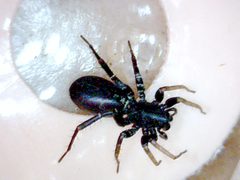
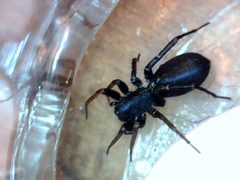
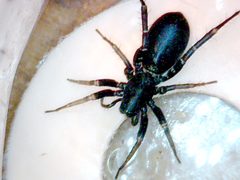
Pronunciation
How to pronounce Zora pumila: /ˈzɔːrə ˈpjuːmɪlə/
These audio files are automatically generated. While they are not always 100% accurate, they are a good starting point.
Identification
Zora pumila can be distinguished from other North American spiders by its placement in the Zora, characterized by specific morphological features associated with the prowling spider Miturgidae. Detailed diagnostic characters for -level identification within Zora require examination of genitalic structures and other subtle morphological traits. The species lacks the web-building adaptations seen in orb-weaving families and possesses the elongated body form typical of active hunters in this family.
Images
Distribution
United States of America. Specific state or regional records are not well-documented in the available sources.
Behavior
As a member of the Miturgidae, commonly known as prowling or wandering spiders, Zora pumila is presumed to be an active hunter that does not construct webs for prey capture. This behavioral mode is characteristic of the family, though direct observations of this specific have not been documented in the provided sources.
Similar Taxa
- Other MiturgidaeOther in the Miturgidae share the prowling hunting strategy and general body plan, requiring careful examination of genitalic and other morphological characters for definitive identification to species.
Sources and further reading
- BugGuide
- Wikipedia
- GBIF taxonomy match
- iNaturalist taxon
- Catalogue of Life
- Beetle, orthop or something else? | Beetles In The Bush
- In a New Study, Spring Forest Bees Get Their Due
- paleoentomology | Beetles In The Bush
- [No taxon] | Beetles In The Bush | Page 5
- 2018 New Mexico/Texas Insect Collecting Trip “iReport” | Beetles In The Bush
- December | 2012 | Beetles In The Bush | Page 2