
Xyleborini
ambrosia beetles, xyleborine ambrosia beetles
Genus Guides
12- Ambrosiodmus
- Ambrosiophilus
- Anisandrus
- Cnestus(ambrosia beetles)
- Coptoborus
- Cyclorhipidion
- Dryoxylon
- Euwallacea(Ambrosia beetles)
- Heteroborips
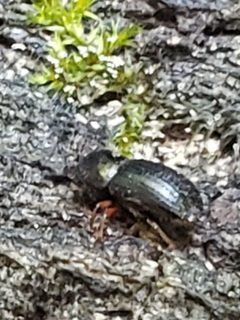
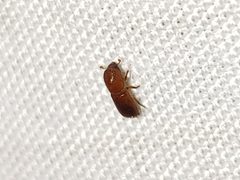
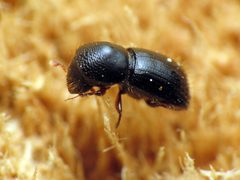
Xyleborini is a tribe of ambrosia beetles within the Scolytinae (Curculionidae), comprising highly specialized weevils that cultivate symbiotic fungi for food. The tribe dominates ambrosia beetle faunas across Eurasia and the Americas, with the type Xyleborus containing over 500 , though this genus represents an unnatural grouping of distantly related species. Many Xyleborini are economically significant pests that attack healthy trees, while others are secondary colonizers of dead or dying wood. The tribe exhibits exceptional diversity with numerous genera, many of which are small or .
Pronunciation
How to pronounce Xyleborini: /ˌzaɪlɨˈbɔːrɪˌnaɪ/
These audio files are automatically generated. While they are not always 100% accurate, they are a good starting point.
Images
Habitat
Xyleborini are primarily associated with woody substrates, boring into trees and fallen logs to establish fungal gardens. Most species colonize dead or dying wood, though some attack healthy trees. In Thailand, species have been documented from fallen chinquapin trees (Castanopsis inermis). Brazilian studies indicate gallery systems are established in various trees, with some species showing specificity while others are .
Distribution
Pantropical and subtropical distribution with significant representation in Eurasia and the Americas. Documented from Southeast Asia (type locality of ancestral lineages approximately 20 million years ago), Melanesia (Fiji, Vanuatu, New Caledonia), Thailand, Laos, Japan, Brazil, and North America north of Mexico. The Euwallacea has a confirmed pantropical distribution. Several have established across multiple continents including Africa, the Americas, Europe, and Pacific islands.
Diet
and larvae feed exclusively on ambrosia fungi cultivated within their gallery systems. The beetles transport fungal spores in specialized mycangia and inoculate wood to establish fungal gardens. This obligate mutualism with fungi represents the primary nutritional mode for the tribe.
Host Associations
- Castanopsis inermis - Fallen chinquapin tree in Thailand documented with multiple Xyleborini
- Protium spp. - Healthy trees attacked by X. nr. solitariceps sp. A in Brazil
- Mangifera indica - Mango; Xyleborus affinis pathogenic fungi
- Theobroma cacao - Cacao; Xyleborus ferrugineus pathogenic fungi
- Ochroma pyramidale - Balsa trees in Ecuador attacked by some Coptoborus
- Persea borbonia - Redbay laurels; nonnative fungus-farming caused devastation in Southern U.S.
- Persea americana - Avocado; nonnative fungus-farming caused devastation in Southern U.S.
Life Cycle
Development occurs within maternal gallery systems where females cultivate fungal gardens. Females produce predominantly female offspring with one or two dwarfed males. Males remain within the natal gallery, are flightless, and function solely to mate with sisters. Mated females disperse to establish new galleries, carrying fungal to inoculate fresh substrate. This haplodiploid-like with extreme sex ratio and inbreeding is characteristic of the tribe.
Behavior
females bore into wood to establish tunnel systems, then inoculate tunnels with ambrosia fungi carried in mycangia. Gallery maintenance includes fungal garden and removal of waste . Females exhibit philopatric with daughters remaining in or near maternal galleries until maturity. occurs via mated females seeking new material. Some demonstrate potential through human-mediated transport of infested wood products.
Ecological Role
Primary decomposers of dead and dying wood in forest , accelerating wood decomposition through fungal . Some act as of pathogenic fungi to economically important trees. disrupt native forest by attacking healthy trees lacking coevolved defenses. The mutualistic relationship with ambrosia fungi represents a significant nutrient cycling in tropical and temperate forests.
Human Relevance
Several are notorious pests causing substantial economic damage to forestry and agriculture. Xyleborus affinis and X. ferrugineus pathogenic fungi affecting mango and cacao production. have devastated redbay laurels and avocado in the southern United States. The emerald ash borer (non-Xyleborini) is cited as a familiar example of invasive damage to Michiganders, while Xyleborini species pose comparable threats through fungus-farming . Research on Xyleborini invasion aids biosecurity preparedness for detecting and managing new incursions.
Similar Taxa
- ScolytiniXyleborini was historically treated as subtribe Xyleborina within tribe Scolytini; distinguished by obligate ambrosia fungus versus primarily phloeophagy (inner bark feeding) in most Scolytini
- PlatypodinaeAnother group of ambrosia beetles with convergent fungus-farming ; distinguished by different body form, structure, and mycangial placement
Sources and further reading
- BugGuide
- Wikipedia
- iNaturalist taxon
- Catalogue of Life
- Beetles, biodiversity and ‘Battlestar Galactica’ | Blog
- Biology and impact of Xyleborini ambrosia beetles in Japan
- A new genus of ambrosia beetle from Melanesia (Coleoptera: Curculionidae: Scolytinae: Xyleborini)
- Wallacellus is Euwallacea: molecular phylogenetics settles generic relationships (Coleoptera: Curculionidae: Scolytinae: Xyleborini)
- New Distribution and Host Plant Records of Xyleborini (Coleoptera: Curculionidae: Scolytinae) in Mexico
- REVIEW OF THE TRIBE XYLEBORINI IN AMERICA NORTH OF MEXICO (COLEOPTERA: SCOLYTIDAE)
- Structure génétique et modélisation de la distribution des populations de deux espèces invasives de Xylosandrus (Scolytinae - Xyleborini) : deux espèces proches aux histoires d’invasion différentes
- Anisandrus bolavenensis sp. nov. (Col.: Curculionidae, Scolytinae, Xyleborini), a new ambrosia beetle from Laos
- Tricosa uniseriata, a new species of xyleborine ambrosia beetle from Thailand (Coleoptera, Curculionidae, Scolytinae, Xyleborini)
- New species and new records of Amasa Lea, 1894 ambrosia beetles from Thailand (Coleoptera: Curculionidae: Scolytinae: Xyleborini)
- Planiculus angulatus, a new species of xyleborine ambrosia beetle from Thailand (Coleoptera, Curculionidae, Scolytinae, Xyleborini)
- A new species, new synonymy and new records of Mexican and Central American Xyleborini (Coleoptera: Curculionidae: Scolytinae)
- Ten newly recorded species of xyleborine ambrosia beetles (Coleoptera, Curculionidae, Scolytinae, Xyleborini) from Thailand
- Cryptoxyleborus brevicauda, a new species of xyleborine ambrosia beetle from Thailand (Coleoptera: Curculionidae: Scolytinae: Xyleborini)
- Four new species of Arixyleborus Hopkins, 1915, ambrosia beetles from Thailand (Coleoptera: Curculionidae: Scolytinae: Xyleborini)
- Biological studies of Brazilian Scolytidae and Platypodidae (Coleoptera)
- A checklist of xyleborine ambrosia beetles (Coleoptera, Curculionidae, Scolytinae, Xyleborini) on a single fallen chinquapin tree (Castanopsis inermis) from Thailand: with a new species and a new country record.