
Xyleborus
ambrosia beetles, bark beetles
Species Guides
14- Xyleborus affinis(sugarcane shot-hole borer)
- Xyleborus bispinatus
- Xyleborus celsus(Hickory Timber Beetle)
- Xyleborus ferrugineus
- Xyleborus glabratus(Redbay Ambrosia Beetle)
- Xyleborus horridus
- Xyleborus impressus
- Xyleborus intrusus
- Xyleborus pfeili
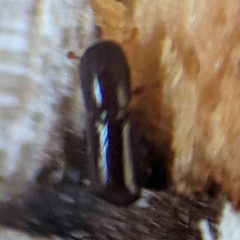
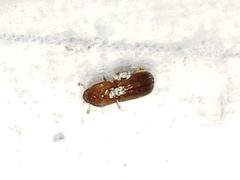
Xyleborus is a of ambrosia beetles in the Curculionidae ( Scolytinae). These small wood-boring beetles are characterized by their obligate symbiotic relationship with ambrosia fungi, which they cultivate in galleries carved into trees and use as their primary food source. Several have become significant pests, including Xyleborus glabratus (redbay ), which the fungus causing laurel wilt . The genus includes both native and introduced species with varying degrees of host specificity.
Pronunciation
How to pronounce Xyleborus: //zaɪˈlɛbərəs//
These audio files are automatically generated. While they are not always 100% accurate, they are a good starting point.
Images
Habitat
Woody substrates; occupy various including living trees, dead wood, and roots. X. glabratus colonizes trees in Lauraceae. X. germanus bores into tea roots at approximately 30 cm depth. X. compactus occupies tea twigs 5–8 mm in diameter.
Distribution
Native range centered in Asia; multiple introduced globally. X. glabratus: native to Southeast Asia, introduced to Georgia (USA) in 2002, established in nine southeastern US states with potential for further spread to California, Mexico, and American tropics. X. ferrugineus and X. volvulus: present in Mexico with extensive climatically suitable areas in Chiapas, Tamaulipas, Veracruz, and Jalisco. X. fornicatus: recorded across Asia (Bangladesh, India, Indonesia, Malaysia, Philippines, Sri Lanka, Taiwan, Vietnam), Africa (Madagascar, Réunion), and Pacific islands (Fiji, Hawaii, Papua New Guinea, Solomon Islands).
Diet
Ambrosia fungi cultivated on gallery walls; larvae feed on fungal spores and mycelia. Not wood-feeders; xylomycetophagous.
Life Cycle
Overwinters as . X. germanus and X. compactus: two per year. X. germanus generations occur June–early July and late August–September. X. compactus generations occur late July–late August and late August–September. Optimal rearing temperature 21–23°C for X. germanus, 25–27°C for X. compactus.
Behavior
Females initiate gallery formation and carry fungal spores in specialized mycangia (internal fungus-storing organs). Cultivates ambrosia fungi on gallery walls for larval nutrition. X. glabratus females Raffaelea lauricola, the causal agent of laurel wilt . No known for X. glabratus; primary attractants are volatile terpenoid from Lauraceae.
Ecological Role
Decomposers of woody material in native ; nutrient cyclers through fungal . act as of plant pathogenic fungi, causing tree mortality and forest ecosystem disruption. X. glabratus has caused extensive mortality in native Persea and threatens avocado production.
Human Relevance
Several are significant agricultural and forestry pests. X. glabratus threatens $65 million Florida avocado crop and native Lauraceae forests. X. compactus and X. germanus are pests of tea plantations in Asia. incur substantial management costs; detection programs for X. glabratus use lures (phoebe oil, manuka oil, cubeb oil, and (-)-α-copaene enriched ).
Sources and further reading
- BugGuide
- Wikipedia
- iNaturalist taxon
- NCBI Taxonomy
- Catalogue of Life
- Xyleborus glabratus and Euwallacea fornicatus - Entomology Today
- Xyleborus-glabratus - Entomology Today
- Forest Pest Invasions Can—And Should—Be Studied Before They Happen
- The Ambrosia Beetle Megaplatypus mutatus: Tiny but Destructive
- The Best Look Yet at the Tiny Fungus Storage Units Inside Ambrosia Beetles
- Why Are We Having a Record Outbreak of Exotic Fruit Flies in 2025?
- Effects of climate change on the potential distribution of Xyleborus ferrugineus, Xyleborus volvulus and Euwallacea kuroshio1
- Preliminary Report on the Biology of Some Scolytid Beetles, the Tea Root Borer, Xyleborus germanus BLANFORD, Attacking Tea Roots, and the Tea Stem Borer, Xyleborus compactus EICHHOFF, Attacking Tea Twigs
- Utility of essential oils for development of host-based lures for Xyleborus glabratus (Coleoptera: Curculionidae: Scolytinae), vector of laurel wilt
- Xyleborus fornicatus . [Distribution map].
- Electroantennographic Responses of Wild and Laboratory-Reared Females of Xyleborus affinis Eichhoff and Xyleborus ferrugineus (Fabricius) (Coleoptera: Curculionidae: Scolytinae) to Ethanol and Bark Volatiles of Three Host-Plant Species
- Current and potential distribution of Xyleborus ferrugineus and Xyleborus volvulus (Coleoptera: Curculionidae) in Mexico
- Biology of Some Scolytid Ambrosia Beetles Attacking Tea Plants : VI A Comparative Study of Two Ambrosia Fungi Associated with Xyleborus compactus EICHHOFF and Xyleborus germanus BLANFORD (Coleoptera : Scolytidae)