
Scolytini
Jakobson, 1911
Typical Bark Beetles
Genus Guides
2Scolytini is a tribe of bark beetles within the Scolytinae, Curculionidae. It comprises at least 50 and approximately 160 described . Members exhibit diverse feeding strategies including phloem-xylophagy and xylomycetophagy (ambrosia feeding), with corresponding morphological adaptations for fungal transport and wood . The tribe is characterized by saproxylic , with species typically associated with dead or dying wood.
Pronunciation
How to pronounce Scolytini: /skɔˈlaɪtaɪni/
These audio files are automatically generated. While they are not always 100% accurate, they are a good starting point.
Identification
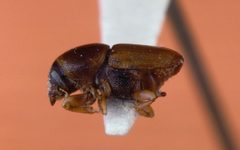
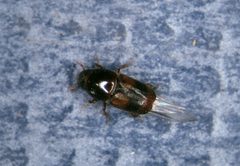
Members of Scolytini can be distinguished from other Scolytinae tribes by the combination of saproxylic habits and specific morphological features of the . Within the tribe, xylomycetophagous (ambrosia-feeding) such as Camptocerus possess mycangia—specialized structures for fungal transport—and an elongated proventriculus with sclerotized on the . Phloeo- genera such as Scolytus exhibit proventricular differences including extended laminate teeth on the plate directed toward the center, and numerous small pointed tubercles on the anterior plate.
Images
Habitat
Saproxylic; associated with dead or dying wood, primarily within the bark and sapwood of trees. Xylomycetophagous excavate galleries perpendicular to the bark surface into the sapwood, while phloeo- species construct galleries in phloem, cambium, and sapwood tissues.
Diet
Two distinct feeding strategies occur within the tribe: phloeo-xylophagy (feeding on phloem, cambium, and sapwood tissues) and xylomycetophagy (ambrosia feeding, where cultivate fungal mycobiota in galleries and larvae consume fungal mycelium). Larvae of xylomycetophagous feed on fungi rather than wood directly.
Life Cycle
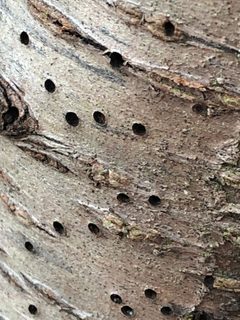
Xylomycetophagous : transport fungal spores and inoculate mycobiota in larval cradles; larvae expand by consuming wood and feeding on fungal mycelium; emerged adults exit through parental entrance tunnels. Phloeo- species: larvae feed on phloem, cambium, and sapwood; upon completing development, young adults exit through self-constructed holes.
Behavior
ambrosia beetles actively transport and cultivate fungi, creating mycobiota "crops" in larval galleries. Behavioral differences between feeding guilds are evident during tree and additional feeding activities. Mycangia function as specialized organs for fungal transport.
Ecological Role
Saproxylic decomposers contributing to wood decomposition processes. Xylomycetophagous members facilitate fungal and establishment in dead wood, accelerating decomposition through fungal . Phloeo- members directly consume vascular tissues of dead and dying trees.
More Details
Feeding Guild Morphological Divergence
The tribe exhibits pronounced morphological differentiation correlated with feeding strategy. Xylomycetophagous (Camptocerus) show proventricular elongation and mycangial development, while phloeo- Scolytus displays distinct proventricular armature with laminate teeth. Intermediate morphologies occur in Ceratolepis, Cnemonyx, and Loganius.
Taxonomic Note
The Catalogue of Life lists Scolytini as a synonym, though this appears to reflect a classification error placing the tribe within Histeridae rather than Curculionidae. Current consensus and multiple sources recognize Scolytini as a valid tribe within Curculionidae: Scolytinae.
Sources and further reading
- BugGuide
- Wikipedia
- iNaturalist taxon
- Catalogue of Life
- Morphological and behavioural features of bark beetles of the tribe Scolytini (Coleoptera, Curculionidae, Scolytinae) associated with fungi
- Patterns of host use within a lineage of temperate and tropical saproxylic beetles (Coleoptera: Curculionidae: Scolytinae: Scolytini)
- Patterns of host tree use within a lineage of saproxlic snout-less weevils (Coleoptera: Curculionidae: Scolytinae: Scolytini)
- Notes on Scolytus fagi Walsh, 1867 with the designation of a neotype, distribution notes and a key to Scolytus Geoffroy of America east of the Mississippi River (Coleoptera, Curculionidae, Scolytinae, Scolytini)
- Figure 1 from: Cognato A (2010) Notes on Scolytus fagi Walsh, 1867 with the designation of a neotype, distribution notes and a key to Scolytus Geoffroy of America east of the Mississippi River (Coleoptera, Curculionidae, Scolytinae, Scolytini). ZooKeys 56: 35-43. https://doi.org/10.3897/zookeys.56.516
- Figure 2 from: Cognato A (2010) Notes on Scolytus fagi Walsh, 1867 with the designation of a neotype, distribution notes and a key to Scolytus Geoffroy of America east of the Mississippi River (Coleoptera, Curculionidae, Scolytinae, Scolytini). ZooKeys 56: 35-43. https://doi.org/10.3897/zookeys.56.516