
Cnestus
Sampson, F.W., 1911
ambrosia beetles
Species Guides
1- Cnestus mutilatus(camphor shot borer)
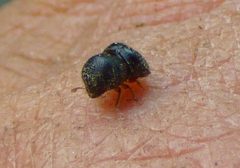
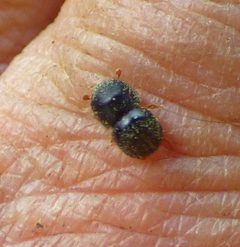
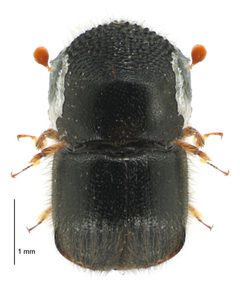
Cnestus is a of ambrosia beetles (Curculionidae: Scolytinae: Xyleborini) established by Sampson in 1911. in this genus are characterized by inbreeding through sib mating, of symbiotic ambrosia fungi as their sole nutritional source, and haplodiploid sex determination. The genus includes both native Asian species and that have established in North America, Europe, and other regions. Cnestus mutilatus (camphor shot borer) is the most widely documented species, first reported in the United States in 1999 and subsequently detected in Europe. The genus exhibits complex evolutionary patterns, with some species containing cryptic sympatric lineages that are morphologically indistinguishable but genetically distinct.
Pronunciation
How to pronounce Cnestus: //ˈknɛs.təs//
These audio files are automatically generated. While they are not always 100% accurate, they are a good starting point.
Images
Habitat
construct nests excavated in woody plant parts, specifically in xylem tissue of trees. Nests are established in living or stressed woody plants across diverse forest and urban environments. have been detected in suburban and urban areas, including school grounds and landscaped settings.
Distribution
Native to Asia. Cnestus mutilatus introduced to North America (first detected 1999 in Mississippi, USA; subsequently spread across southeastern United States). First recorded in Europe (Italy) in 2023. Cnestus solidus native to eastern Australia (Queensland to Tasmania), with records from Western Australia and interception in New Zealand.
Diet
Obligate of symbiotic ambrosia fungi (Ambrosiella ) as sole source of nutrition. Fungi are grown on gallery walls within excavated nests and serve as the complete nutritional base for all life stages.
Host Associations
- Diploglottis australis - Sapindaceae
- Eucalyptus spp. - Myrtaceae; particularly smooth-barked eucalypts
- Macadamia sp. - Proteaceae
- Malus sylvestris - Rosaceae
- Prunus armeniaca - Rosaceae
- Araucaria cunninghamii - Araucariaceae
- Prunus spp. - Rosaceae
- Mangifera indica - Anacardiaceae
Life Cycle
Haplodiploid sex determination. Mated foundress females produce diploid daughters and haploid sons through . Siblings mate within natal nests (predominant inbreeding). Fertilized females disperse to locate new substrates and establish new colonies. Males are dwarfed, almost blind, and flightless, typically remaining in natal nests to mate with sisters. In some related xyleborine , males may leave natal nests to wander on bark and mate with females in other nests on the same host tree.
Behavior
excavate tunnel systems (galleries) in xylem tissue and inoculate fungal on gallery walls. Females carry fungal spores in specialized mycangia and actively cultivate the fungal gardens. The beetles are attracted to ethanol and isopropanol, which are used in trapping programs. Outbred offspring can suffer outbreeding depression. Two sympatric lineages of Cnestus solidus in Australia show reproductive isolation potentially reinforced by in one lineage.
Ecological Role
Primary decomposers of woody plant tissue through xylem excavation. for Ambrosiella fungal . capable of attacking multiple tree across diverse plant . Potential contribution to nutrient cycling in forest . pose risk to urban and forest trees through gallery construction and fungal inoculation in stressed or weakened hosts.
Human Relevance
of concern in the European Union. Cnestus mutilatus designated as EU quarantine pest associated with plants for planting and wood material . Subject of citizen science educational projects for invasive species detection. Trapping programs use ethanol or isopropanol baits for monitoring and detection. Climate change modeling indicates potential range expansion in southeastern United States by 2060 under certain emission scenarios.
Similar Taxa
- XyleboriniOther ambrosia beetle in the same tribe share inbreeding , fungal , and , but differ in specific morphological characters and associations.
- AnisandrusSympatric ambrosia beetle with similar ; both Cnestus mutilatus and Anisandrus maiche were detected together in European trapping programs.
- XylosandrusRelated xyleborine with similar male and fungal .
More Details
Cryptic lineage diversity
Cnestus solidus in eastern Australia contains two sympatric, morphologically indistinguishable but genetically distinct lineages with small nuclear yet large mitochondrial divergence. Both lineages share the same primary fungal (a new Ambrosiella ) at most sites, suggesting fungal symbiont differentiation is not involved in lineage divergence. One lineage carries at high while the other does not, suggesting bacterial endosymbiont may influence and reinforce reproductive barriers.
Trapping efficacy
Both ethanol and isopropanol are effective attractants for Cnestus mutilatus, with ethanol capturing more specimens than isopropanol. These alcohols likely play similar roles in the chemical of ambrosia beetles, possibly mimicking tree stress volatiles.
Invasive spread patterns
First records of Cnestus often occur in urban or suburban areas, highlighting the importance of surveillance in non-forest settings. In Italy, Cnestus mutilatus was first detected through a school-based citizen science project using simple plastic bottle traps with hand sanitizer attractant.
Sources and further reading
- BugGuide
- GBIF taxonomy match
- iNaturalist taxon
- NCBI Taxonomy
- Catalogue of Life
- Beetles in a bottle: a message from aliens to schools | Blog
- Ascalaphidae | Beetles In The Bush
- August | 2022 | Beetles In The Bush
- Arthropoda | Beetles In The Bush | Page 5
- Trapping the exotic weevil Cnestus mutilatus with Isopropanol
- Two sympatric lineages of Australian Cnestus solidus share Ambrosiella symbionts but not Wolbachia
- Habitat Suitability Under Changing Climatic Conditions for the Exotic Ambrosia Beetle, Cnestus mutilatus (Curculionidae: Scolytinae: Xyleborini) in the Southeastern United States
- First report of the alien ambrosia beetle Cnestus mutilatus and further finding of Anisandrus maiche in the European part of the EPPO region (Coleoptera: Curculionidae: Scolytinae: Xyleborini)