
Euwallacea
Hopkins, A.D., 1915
Ambrosia beetles, Shot hole borers
Species Guides
5- Euwallacea fornicatus(tea shot-hole borer)
- Euwallacea interjectus(ambrosia beetle)
- Euwallacea perbrevis(tea shot-hole borer)
- Euwallacea similis(ambrosia beetle)
- Euwallacea validus(Valid Bark Beetle)
Euwallacea is a of ambrosia beetles within the tribe Xyleborini. All are obligate with ambrosia fungi, which they farm in galleries excavated within trees. The genus has a pantropical distribution with origins in Asia and Wallacea, and several species have become globally significant pests. Members of the Euwallacea fornicatus , including the shot hole borer, cause substantial economic damage to fruit and timber trees through mass and associated fungal .
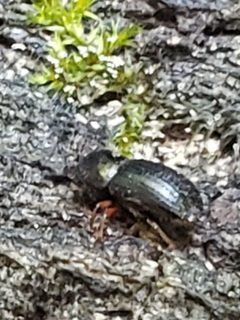
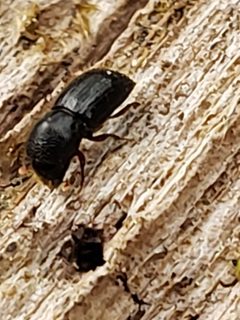
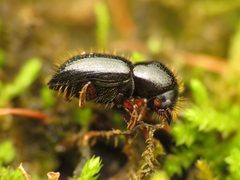
Pronunciation
How to pronounce Euwallacea: //juːˈwɔləsiə//
These audio files are automatically generated. While they are not always 100% accurate, they are a good starting point.
Identification
within Euwallacea are morphologically cryptic and cannot be reliably distinguished by appearance alone. Members of the E. fornicatus complex range from 1.8 to 2.9 mm in length with variable body dimensions. Pronotum and dimensions and presence of protibial socketed denticles show partial correlation with species but remain insufficient for definitive identification. sequencing is required for accurate species determination. Entry holes in bark are approximately the size of a ballpoint pen tip.
Images
Habitat
Associated with woody plants across tropical and subtropical regions. occupy urban forests, orchards, and natural woodlands. Some colonize stressed, cut, or recently dead trees; others attack living hosts.
Distribution
Native to Asia and Wallacea; now established worldwide including North America (California, Florida, Hawaii), Central America, South America (Argentina), Africa (South Africa, Madagascar, Comoros, Reunion), the Middle East (Israel), Europe, and Oceania (Australia, Pacific Islands).
Diet
Xylomycetophagous; and larvae feed exclusively on symbiotic ambrosia fungi cultivated within tree galleries. Does not consume wood tissue directly.
Host Associations
- Ambrosia fungi - obligate mutualismAll farm fungi in galleries; specific fungal associates vary by species
- Fusarium euwallaceae - mutualism/pathogenicPrimary fungal of E. fornicatus; causes Fusarium Dieback in
- Wolbachia - endosymbiosisNovel strain identified in genomic studies; functional role not fully characterized
Life Cycle
Haplodiploid with inbreeding . Females mate with siblings within natal galleries before dispersing. Males are haploid, produced from unfertilized ; females are , produced from fertilized eggs. Females carry fungal spores in mandibular pockets to inoculate new galleries.
Behavior
Females excavate tunnels (galleries) in wood and seed them with fungal spores and . Larvae feed on developing fungus. Mass of host branches occurs, potentially causing structural failure. spend minimal time on bark surfaces, limiting exposure to contact .
Ecological Role
In native ranges, acts as a disturbance agent attacking stressed or injured trees, creating gaps. In invaded regions, causes severe tree mortality and economic damage through fungal transmission and mass . Estimated to cause billions of dollars in damages over decadal timescales in affected regions.
Human Relevance
Major economic pest of avocado, tea, and timber industries. Difficult to control with due to cryptic lifestyle within wood. Management relies on early detection, , and limited chemical combinations; options remain under development. Threatens urban tree with associated loss of services.
Similar Taxa
- XyleborusBoth are ambrosia beetles in tribe Xyleborini with similar and fungus-farming ; distinguished by molecular and subtle morphological characters including protibial
- AmasaAnother xyleborine with convergent ; requires genetic or detailed morphological examination for separation
More Details
Cryptic species complex
The E. fornicatus complex comprises four morphologically nearly identical : E. fornicatus, E. fornicatior, E. whitfordiodendrus ( shot hole borer), and E. kuroshio (Kuroshio shot hole borer). Accurate identification requires molecular methods.
Genomic characteristics
Haplodiploid inbreeding show increased numbers due to fission events compared to outbred scolytines. E. fornicatus contains approximately 17% more repetitive elements than E. similis, potentially contributing to ecological flexibility.
Sources and further reading
- BugGuide
- Wikipedia
- GBIF taxonomy match
- iNaturalist taxon
- NCBI Taxonomy
- Catalogue of Life
- Xyleborus glabratus and Euwallacea fornicatus - Entomology Today
- four species of Euwallacea - Entomology Today
- Euwallacea fornicatus Archives - Entomology Today
- Search Continues for Methods to Control Fungus-Farming Beetle in SoCal Trees
- Forest Pest Invasions Can—And Should—Be Studied Before They Happen
- So Many Shot Hole Borers: New Research Charts Four Nearly Identical Species
- Euwallacea fornicatus . [Distribution map].
- Chromosome structural rearrangements in invasive haplodiploid ambrosia beetles revealed by the genomes of Euwallacea fornicatus and Euwallacea similis (Coleoptera, Curculionidae, Scolytinae)
- Chromosome Structural Rearrangements in Invasive Haplodiploid Ambrosia Beetles Revealed by the Genomes of Euwallacea fornicatus (Eichhoff) and Euwallacea similis (Ferrari) (Coleoptera, Curculionidae, Scolytinae)
- Invasive Shot Hole Borers Euwallacea fornicatus, E. kuroshio, and E. perbrevis (Coleoptera: Curculionidae: Scolytinae)
- Effects of climate change on the potential distribution of Xyleborus ferrugineus, Xyleborus volvulus and Euwallacea kuroshio1
- Wallacellus is Euwallacea: molecular phylogenetics settles generic relationships (Coleoptera: Curculionidae: Scolytinae: Xyleborini)
- Uncharted Territories: First report of Euwallacea fornicatus (Eichhoff) in South America with new reproductive hosts records.
- Euwallacea similis (Ferrari), a new ambrosia beetle (Coleoptera: Curculionidae: Scolytinae) for the Iberian Peninsula, and new records on Euwallacea fornicatus (Eichhoff), Xyleborus bispinatus Eichhoff and Amasa parviseta Knížek & Smith