spongillaflies, spongeflies
Sisyridae, commonly known as spongillaflies or spongeflies, are a small family of aquatic Neuroptera with approximately 60 extant species worldwide. Adults are small, brownish or greyish insects resembling brown lacewings (Hemerobiidae), with forewings spanning 4–10 mm. The family is distinguished by their unique larval biology: larvae are aquatic and obligate predators of freshwater sponges (Porifera: Spongillidae) and bryozoans (Phylactolaemata), using elongated piercing-sucking mouthparts to extract cell contents. Larvae possess seven pairs of jointed, movable tracheal gills on the abdomen—a trait unique among extant insects. The family has a fossil record extending to the Late Cretaceous, with two extant subfamilies (Sisyrinae and Paradoxosisyrinae) and four living genera: Climacia, Sisyborina, Sisyra, and Sisyrina.
Sympherobius amiculus is a species of brown lacewing in the family Hemerobiidae. It was first described by Fitch in 1855 under the basionym Hemerobius amiculus. The species is found in North America and the Caribbean.
Barber's brown lacewing
Sympherobius barberi is a species of brown lacewing in the family Hemerobiidae, commonly known as Barber's brown lacewing. The species has a remarkably broad distribution spanning Europe, Northern Asia (excluding China), Central America, North America, Oceania, and South America. It was first described by Banks in 1903 and has been recorded from the Galápagos Islands, representing both a new species record for the archipelago and the first record of the genus Sympherobius from the islands. The species was introduced to New Zealand in 1936 as a biological control agent for aphids and mealybugs but failed to establish.
California brown lacewing
Sympherobius californicus is a species of brown lacewing in the family Hemerobiidae, first described by Banks in 1911. It is native to Central America, North America, and Oceania, with distribution records from Hawaii. The species was introduced to New Zealand in 1936 as a biological control agent targeting aphids and mealybugs affecting crops, but failed to establish.
western brown lacewing
Sympherobius occidentalis is a species of brown lacewing in the family Hemerobiidae, first described by Fitch in 1855. It is native to North America. Brown lacewings in this family are generally predatory as both larvae and adults, though specific ecological details for this species remain poorly documented. The species is part of a genus containing approximately 30 described species distributed primarily in the Americas.
thorny lacewings
Symphrasinae is a subfamily of thorny lacewings within Rhachiberothidae (Neuroptera), recently transferred from Mantispidae. It comprises three genera—Anchieta, Plega, and Trichoscelia—with 60 described species distributed exclusively in the New World from the southwestern United States to southern Argentina. Members possess raptorial forelegs for prey capture. The genus Plega has been documented as an ectoparasitoid of sawfly larvae and pupae.
Ululodes arizonensis is a species of owlfly in the family Ascalaphidae, tribe Ululodini. It was described by Nathan Banks in 1907. The species is distributed across Central America and North America. Owlflies are predatory insects closely related to antlions, distinguished by their large bulging eyes and elongated bodies.
Macleay's Owlfly
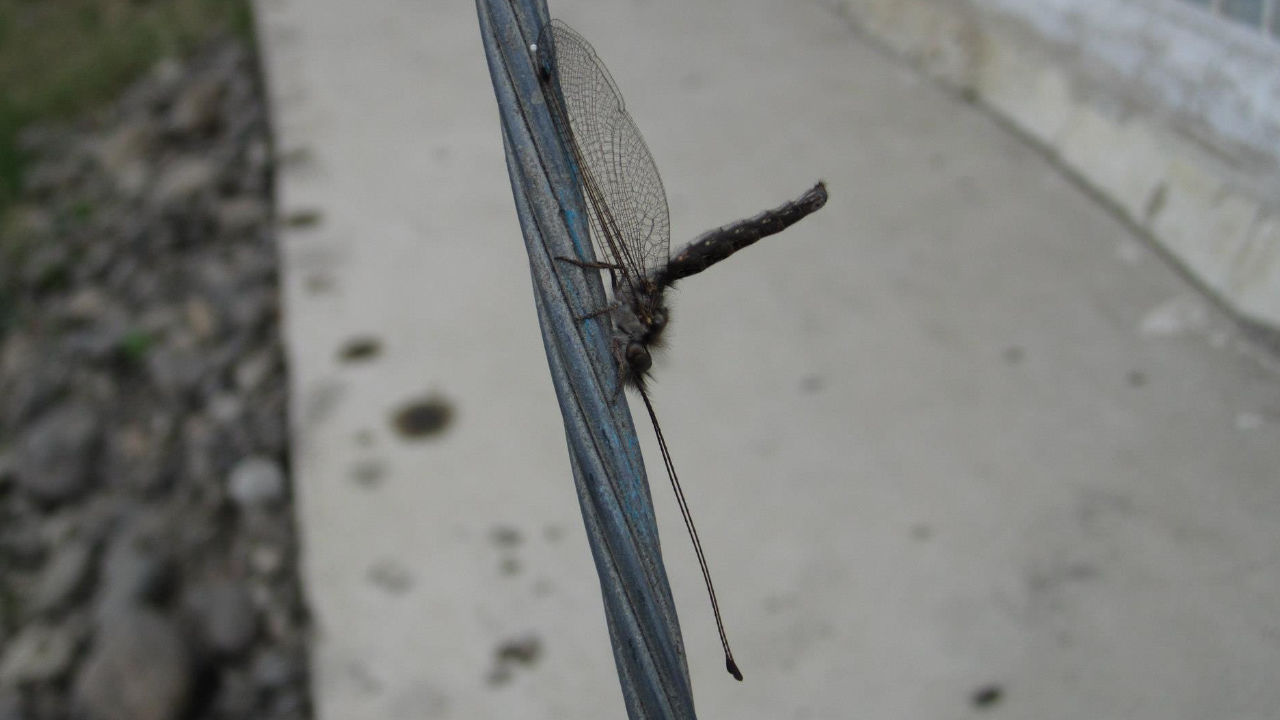
Ululodes macleayanus is a species of owlfly in the tribe Ululodini, family Ascalaphidae. It is widely distributed across the Caribbean, Central America, North America, and South America. The species is characterized by divided eyes and clubbed antennae. Adults are known for a distinctive cryptic resting posture where the abdomen projects from the perch to resemble a twig.
Four-spotted Owlfly
Ululodes quadripunctatus, commonly known as the four-spotted owlfly, is a species of owlfly in the family Ascalaphidae and tribe Ululodini. The species is distributed across Central America and North America. Owlflies are neuropteran insects that share characteristics with both dragonflies and butterflies, possessing large eyes, many-veined wings, and long clubbed antennae.
Vella is a genus of antlions in the family Myrmeleontidae, comprising approximately five described species. These are among the largest antlions in North America, with adults reaching wingspans of 100–120 mm or more. Unlike the pit-digging larvae of the genus Myrmeleon, Vella larvae are sit-and-wait predators that bury themselves just below the soil surface without constructing funnel traps. Adults are nocturnal and frequently attracted to artificial lights.
Vella americana is a large antlion species in the family Myrmeleontidae, notable for being among the largest antlions in North America with adult wingspans exceeding 100 mm. Unlike pit-digging antlions of the genus Myrmeleon, larvae of Vella bury themselves just below the soil surface and wait for prey. Two distinctive larval behaviors have been documented: 'surface travel,' where larvae move across exposed substrates to relocate, and 'sand-blast,' rapid expulsion of sand from the mouth to clear debris or excavate. Adults are frequently attracted to lights at night.
doodlebug
Vella fallax is a species of antlion in the family Myrmeleontidae, found across the Caribbean, Central America, North America, and South America. Adults are among the largest antlions, with wingspans reaching 100-120 millimeters or more. The species belongs to a genus containing three species, all characterized by their large size and nocturnal attraction to lights. Two subspecies are recognized: Vella fallax fallax and Vella fallax texana.
Vella fallax texana is a subspecies of giant antlion in the family Myrmeleontidae. Adults are among the largest antlions in North America, with wingspans exceeding 100 mm. The species is nocturnal and frequently attracted to lights. Larvae are predatory but do not construct the characteristic pit traps of some antlion genera; instead they bury themselves just below the soil surface to ambush prey.
Wesmaelius is a genus of brown lacewings (family Hemerobiidae) described by Krüger in 1922. The genus contains approximately 15 described species with cosmopolitan distribution. Species within this genus are small, delicate neuropteran insects with net-veined wings.
Xeromantispa is a monotypic genus of mantidflies in the family Mantispidae, established by Hoffman in 2002. The genus contains a single described species, X. scabrosa. Mantidflies are predatory insects characterized by raptorial forelegs resembling those of praying mantises, though they belong to the order Neuroptera rather than Mantodea.
Xeromantispa scabrosa is a species of mantidfly in the family Mantispidae, order Neuroptera. The genus Xeromantispa is distinguished from other mantidflies by adaptations to arid environments. This species was described by Banks in 1912. Mantidflies in this genus are characterized by their raptorial forelegs, similar to those of praying mantises, used for capturing prey. The specific epithet "scabrosa" refers to a rough or scabrous texture, likely describing some aspect of the cuticle or body surface.
Apache Lacewing
Yumachrysa apache is a species of green lacewing in the family Chrysopidae, first described by Banks in 1938. Originally placed in the genus Chrysopa, it was later transferred to Yumachrysa. The species is known from North America, with 136 observations recorded on iNaturalist. Like other green lacewings, it belongs to a group of predatory insects commonly used in biological pest control.
Yumachrysa unidentified-sp-texas is an undescribed or poorly documented species of green lacewing in the family Chrysopidae, subfamily Nothochrysinae. It represents a taxon recognized from specimens collected in Texas that has not been formally described in the scientific literature. Members of the genus Yumachrysa are relatively uncommon and understudied compared to other chrysopid genera. This taxon is distinguished from described Yumachrysa species by subtle morphological differences, though formal diagnostic characters remain unpublished.
green mantisfly, green mantidfly
Zeugomantispa minuta, commonly known as the green mantisfly, is a small predatory insect in the family Mantispidae. Adults are sit-and-wait predators that use raptorial forelegs to capture prey. Larvae are specialized parasitoids that develop within spider egg sacs, feeding on spider eggs. The species occurs across the Americas from the Caribbean through Central and North America to South America.