
Vella
Linnaeus, 1753
Species Guides
2- Vella americana
- Vella fallax(doodlebug)
Vella is a of antlions in the Myrmeleontidae, comprising approximately five described . These are among the largest antlions in North America, with reaching wingspans of 100–120 mm or more. Unlike the pit-digging larvae of the genus Myrmeleon, Vella larvae are sit-and-wait that bury themselves just below the soil surface without constructing funnel traps. Adults are and frequently attracted to artificial lights.

Pronunciation
How to pronounce Vella: /ˈvɛl.la/
These audio files are automatically generated. While they are not always 100% accurate, they are a good starting point.
Identification
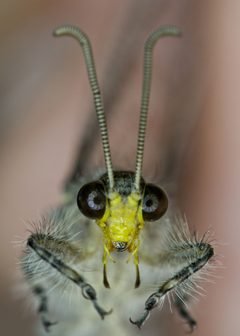
distinguished from by short, clubbed (vs. long, thread-like) and overall more robust build. Among antlions, Vella is notable for exceptional size—substantially larger than most North American . The genus Scotoleon also has males with elongated and bracket-like claspers, but Vella adults are significantly larger. Larvae lack the pit-building characteristic of Myrmeleon; instead they bury themselves just below the surface and wait with jaws agape.
Images
Habitat
Found in the southern third of the United States. Larvae occupy fine, powdery soils in dry, sheltered locations such as beneath rock overhangs, under bridges, in dirt floors of old barns and sheds, and at bases of trees. frequent tall grasses and are attracted to lights at night.
Distribution
Southern third of the United States, from approximately the latitude of southern California across to the southeastern states. Three currently recognized in this .
Seasonality
active during warmer months, most frequently observed at dusk and at night when attracted to lights. Larvae present year-round in suitable substrates.
Diet
Larvae are predatory, feeding on ants and other small that pass near their buried position. Prey is captured with hollow, hooked that inject paralyzing and digestive fluids; liquefied tissues are then imbibed. feeding habits poorly documented.
Life Cycle
Complete with four stages: , larva, pupa, . Larval stage is the longest, spent buried in soil as a sit-and-wait . occurs underground in a sand-grain-reinforced silken cocoon. Adults are short-lived and primarily reproductive.
Behavior
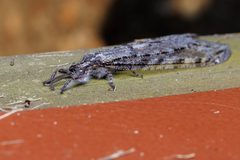
Larvae are ambush that bury themselves just below the soil surface and wait with jaws open for prey. When prey contacts the , larvae inject digestive , liquefy the tissues, and suck out the contents. The dry carcass is then flicked away. Unlike Myrmeleon larvae, they do not dig pit traps or throw sand. are weak, clumsy fliers that rely on —flattening against substrates and aligning with vegetation to become nearly invisible. , with strong positive to artificial lights.
Ecological Role
Larvae function as small in dry, sheltered soil microhabitats. likely serve as prey for birds, bats, and other ; their activity and suggest substantial pressure. Specific contributions otherwise undocumented.
Human Relevance
Larvae do not construct the conspicuous pit traps associated with 'doodlebugs,' limiting their cultural recognition. occasionally encountered at porch lights. No documented economic importance or pest status.
Similar Taxa
- MyrmeleonLarvae construct the classic funnel-shaped pit traps; Vella larvae do not dig pits and instead bury themselves just below the surface. of Myrmeleon are substantially smaller than Vella.
- ScotoleonMales also have elongated with bracket-like claspers, but Vella are much larger (wingspan 100–120 mm+ vs. smaller in Scotoleon). Geographic range and size are distinguishing features.
- GlenurusThree North American with distinctive black, white, and pink wingtips; Vella lacks such bold color patterns and is larger.
Misconceptions
The 'doodlebug' properly refers to pit-digging Myrmeleon larvae, not to Vella larvae, which do not create the characteristic spiral trails or pit traps. Vella are sometimes mistaken for due to their slender bodies and lacy wings, but their clubbed and larger size distinguish them.
More Details
Taxonomic Note
The name Vella is also used for a genus of plants in the Brassicaceae (Cruciferae), creating potential nomenclatural confusion across kingdoms. The insect genus Vella was established by Linnaeus in 1753.
Size Distinction
Vella represents the giant antlions of North America; their wingspan substantially exceeds that of all other antlion in the region.