
Acanthaclisini
Giant Antlions
Genus Guides
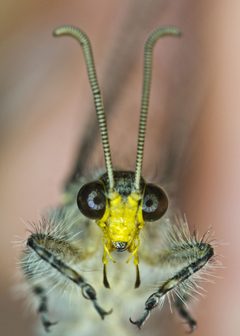
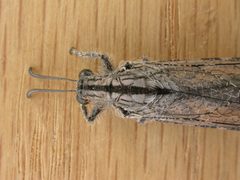
2Acanthaclisini is a tribe of antlions in the Myrmeleontinae, commonly known as Giant Antlions. The tribe comprises approximately 16 . Unlike the pit-dwelling antlions familiar to many observers, most Acanthaclisini larvae are non-pitfall that hunt actively in sandy substrates.
Pronunciation
How to pronounce Acanthaclisini: //əˌkænθəˈklaɪsɪniː//
These audio files are automatically generated. While they are not always 100% accurate, they are a good starting point.
Identification
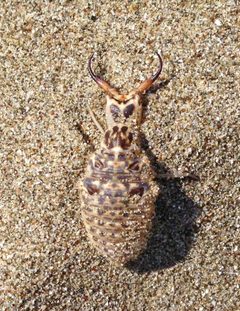
Acanthaclisini can be distinguished from other antlion tribes by a combination of wing venation patterns and genitalic structures, though specific characters vary by . Larvae are notable for lacking the conical pitfall traps characteristic of Myrmeleontini; instead, they possess elongated bodies adapted for burrowing and active in loose sand.
Images
Habitat
Larvae inhabit open tracts of fairly deep, loose sand. The substrate must be sufficiently deep to allow , avoidance, and subterranean hunting. This requirement restricts them to sandy areas such as dunes, riverbanks, and other alluvial deposits with deep, uncompacted sand layers.
Diet
Larvae are predatory, hunting both on the soil surface and beneath it. Specific prey have not been comprehensively documented for the tribe as a whole.
Life Cycle
Larvae undergo development in sandy substrates without constructing pitfall traps. Details of and have not been documented at the tribal level.
Behavior
Larvae are active hunters rather than sit-and-wait . They burrow beneath the sand surface and pursue prey both above and below ground. This represents a fundamentally different foraging strategy from the pitfall-trapping seen in many other antlion groups.
Ecological Role
As in sandy , larvae contribute to in where deep sand limits the establishment of many other predatory arthropods.
Similar Taxa
- MyrmeleontiniLarvae of Myrmeleontini construct conical pitfall traps in sand to capture prey, whereas Acanthaclisini larvae actively hunt without building pits.
More Details
Taxonomic note
There is a discrepancy in placement between sources: Wikipedia places Acanthaclisini in Myrmeleontinae, while iNaturalist lists it in Acanthaclisinae. This reflects ongoing taxonomic revision in the Myrmeleontidae.
Genera
The tribe contains 16 according to current sources, though the complete list is not provided in available documentation.