
Vella fallax texana
(Hagen, 1887)
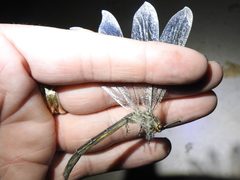
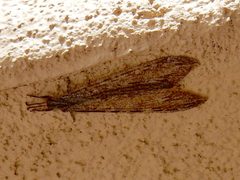
Vella fallax texana is a of giant antlion in the Myrmeleontidae. are among the largest antlions in North America, with wingspans exceeding 100 mm. The is and frequently attracted to lights. Larvae are predatory but do not construct the characteristic pit traps of some antlion ; instead they bury themselves just below the soil surface to ambush prey.
Pronunciation
How to pronounce Vella fallax texana: /ˈvɛl.la ˈfæl.æks tɛkˈsɑː.nə/
These audio files are automatically generated. While they are not always 100% accurate, they are a good starting point.
Identification
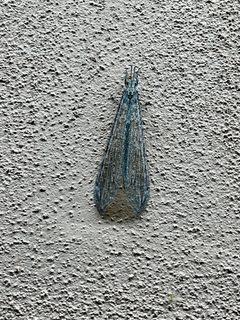
distinguished from other antlions by very large size (wingspan 100–120+ mm), short clubbed , and lacy membranous wings. Separated from congeneric Vella americana by geographic range and subtle wing pattern differences. Adults superficially resemble damselflies but have clubbed rather than thread-like antennae and hold wings roof-like over body at rest rather than folded together.
Images
Habitat
Dry, sandy or powdery soil environments. Larval include fine soil beneath rock overhangs, at base of trees, under bridges, in dirt floors of old barns and sheds, and other perpetually dry situations. found among tall grasses and at lights.
Distribution
Southern United States, particularly Texas and adjacent regions. Records also indicate presence in Middle America, Caribbean, and parts of South America (Brazil: Ceará, Espírito Santo, Paraíba, Rio de Janeiro).
Seasonality
active primarily in summer months; attracted to lights at night.
Diet
Larvae are predatory on ants and other small arthropods. do not feed or feed only on nectar (specific diet unconfirmed for this ).
Life Cycle
Complete with , larva, pupa, and stages. Larva pupates underground in silken cocoon incorporating sand grains.
Behavior
Larvae are ambush that bury themselves just below soil surface with jaws agape, waiting for prey. Unlike Myrmeleon larvae, they do not construct pit traps. fly clumsily and are strongly , often coming to artificial lights. When at rest on vegetation, adults align themselves with substrate and become highly cryptic.
Ecological Role
of soil-dwelling arthropods in larval stage. may serve as prey for larger insects, birds, and bats.
Human Relevance
Larvae sometimes kept in captivity for observation; occasionally encountered at porch lights. No known economic importance.
Similar Taxa
- Myrmeleon spp.Larvae construct pit traps; Vella larvae do not. smaller with different wing venation.
- Vella americanaOverlaps in range; distinguished by subtle differences in wing pattern and coloration.
- Damselflies (Zygoptera) superficially similar but have thread-like , fold wings together above body, and are .