
Billaea
Robineau-Desvoidy, 1830
Species Guides
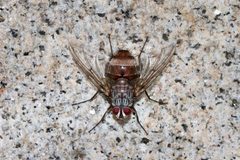
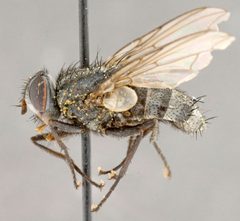
2Billaea is a of tachinid flies comprising approximately 80 described . Most larvae are of larvae, particularly cerambycids and lucanids, with some species attacking lepidopteran in the Pyralidae. Several species have been investigated as agents for agricultural and forestry pests, including palm weevils and sugarcane borers.
Pronunciation
How to pronounce Billaea: /bɪˈleɪə/
These audio files are automatically generated. While they are not always 100% accurate, they are a good starting point.
Identification
can be distinguished from other tachinid by combination of characters including chaetotaxy and wing venation, though specific diagnostic features vary among . Larvae are typical tachinid maggots with reduced capsules and .
Images
Habitat
Associated with of organisms; found in forests, woodlands, and agricultural systems including oil palm plantations and sugarcane fields. Specific microhabitats include semi-decayed wood containing cerambycid larvae and palm tissues infested by weevil borers.
Distribution
Widespread globally with recorded from Europe, Asia, Africa, the Americas, and Oceania. Specific distribution varies by species; some are restricted to particular regions while others have broader ranges. Records exist from Bulgaria, Brazil, Turkey, Mexico, Peru, and multiple Asian countries.
Host Associations
- Prionus coriarius (Cerambycidae) - larval High rates (57-100%) reported in Bulgaria
- Xylotrechus sieversi baiocchii (Cerambycidae) - larval New record from Turkey
- Rhynchophorus palmarum (Dryophthoridae) - larval and pupal Major target; rates up to 72% in Brazil
- Diatraea saccharalis (Crambidae) - larval Sugarcane borer in Peru
- Diatraea considerata (Crambidae) - larval First reported from Nayarit, Mexico
- Galleria mellonella (Pyralidae) - laboratory Used for mass rearing of B. claripalpis
Life Cycle
or ; females deposit live larvae or that hatch immediately. Females typically lack direct contact with , depositing offspring onto or into gallery openings. actively search for hosts within plant tunnels. Multiple may develop per host larva (), with up to 17 individuals reported from single hosts. Pupal duration approximately 45 days under field conditions.
Behavior
Females deposit larvae onto or into gallery openings without direct host contact. actively search for hosts by following feeding tunnels in plant material, guided by from plants and host secretions. Host searching varies with palm , with higher rates observed in oil palm compared to coconut or native palms.
Ecological Role
agent of coleopterous and lepidopterous pests. Provides natural mortality for cerambycid beetles in forest and weevil pests in palm agriculture. Potential for reducing reliance on chemical and trapping in programs.
Human Relevance
Investigated as agent for multiple agricultural pests. Billaea rhynchophorae considered for importation against palm weevils in California and Mediterranean regions. Billaea claripalpis used for biological control of sugarcane borers in South America. Mass rearing protocols developed using alternative .
Similar Taxa
- Anthrax (Bombyliidae)Both are of tiger larvae; Anthrax are bee flies with different and larval attachment
- Exorista (Tachinidae)Both are tachinid of Lepidoptera; Exorista typically attack different groups and have different oviposition
- Methocha (Tiphiidae)Both parasitize tiger larvae; Methocha is a with distinct and different larval
Sources and further reading
- BugGuide
- Wikipedia
- GBIF taxonomy match
- iNaturalist taxon
- NCBI Taxonomy
- Catalogue of Life
- ID Challenge #11 | Beetles In The Bush
- Fear No Weevil: Entomologists Say Cone Traps Better Protect Palm Trees
- Billaea rhynchophorae, a palm weevil parasitoid with global potential
- First Report of Billaea (Paratheresia) claripalpis Wulp1 as a Parasitoid of Diatraea considerata Heinrich2 at Nayarit, Mexico
- Impact of Billaea adelpha (Loew) (Diptera: Tachinidae) as a larval parasitoid of Prionus coriarius (L.) in Bulgaria
- Bioecology of the parasitism of Billaea rhynchophorae (Blanchard, 1937) (Diptera: Tachinidae) in Rhynchophorus palmarum (L., 1758) (Coleoptera: Curculionidae) in Brazil Bioecologia do parasitismo de Billaea rhynchophorae (Blanchard, 1937) (Diptera: Tachinidae) em Rhynchophorus palmarum (L., 1758) (Coleoptera: Curculionidae) no Brasil
- Efecto del parasitismo en campo de Billaea Claripalpis Wulp. criadas en diatraea Saccharalis Fabr. y Galleria Mellonella L.
- Billaea adelpha (Loew, 1873) (Diptera: Tachinidae), a New Parasitoid of Xylotrechus sieversi baiocchii Rapuzzi Sama, 2018 (Coleoptera: Cerambycidae) from Turkey