
Billaea rutilans
(Fabricius, 1781)
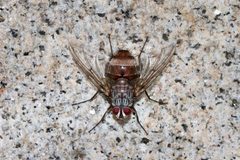
Billaea rutilans is a of tachinid fly (Diptera: Tachinidae) distributed in North America and the West Indies. It belongs to the Billaea, a group of bristle flies characterized by their lifestyle. As with many tachinids, this species likely functions as a parasitoid of other insects, though specific records for this species require verification. The species was first described by Fabricius in 1781.
Pronunciation
How to pronounce Billaea rutilans: /bɪˈleɪ.ə ˈruː.tɪ.lænz/
These audio files are automatically generated. While they are not always 100% accurate, they are a good starting point.
Identification
Billaea rutilans can be distinguished from other tachinid by the combination of features characteristic of Billaea, including specific bristle patterns and wing venation typical of the Dexiinae . Accurate -level identification within Billaea typically requires examination of male terminalia and comparison with . The genus can be separated from similar tachinid genera by details of the facial profile and postocular setae arrangement.
Images
Distribution
United States; West Indies. GBIF records also indicate presence in South Africa (ZA), though this may represent introduced or data quality issues requiring verification.
Ecological Role
As a member of the Tachinidae , Billaea rutilans likely functions as a , contributing to of its . The Billaea is part of the diverse of tachinid flies that serve as natural agents in various .
Similar Taxa
- Other Billaea speciesCongeneric share the general body plan and bristle patterns of B. rutilans, requiring careful examination of specific morphological details for separation.
- Dexiinae tachinids in related generaMembers of the same (Dexiinae) may exhibit convergent morphological features, particularly in wing venation and general body form.