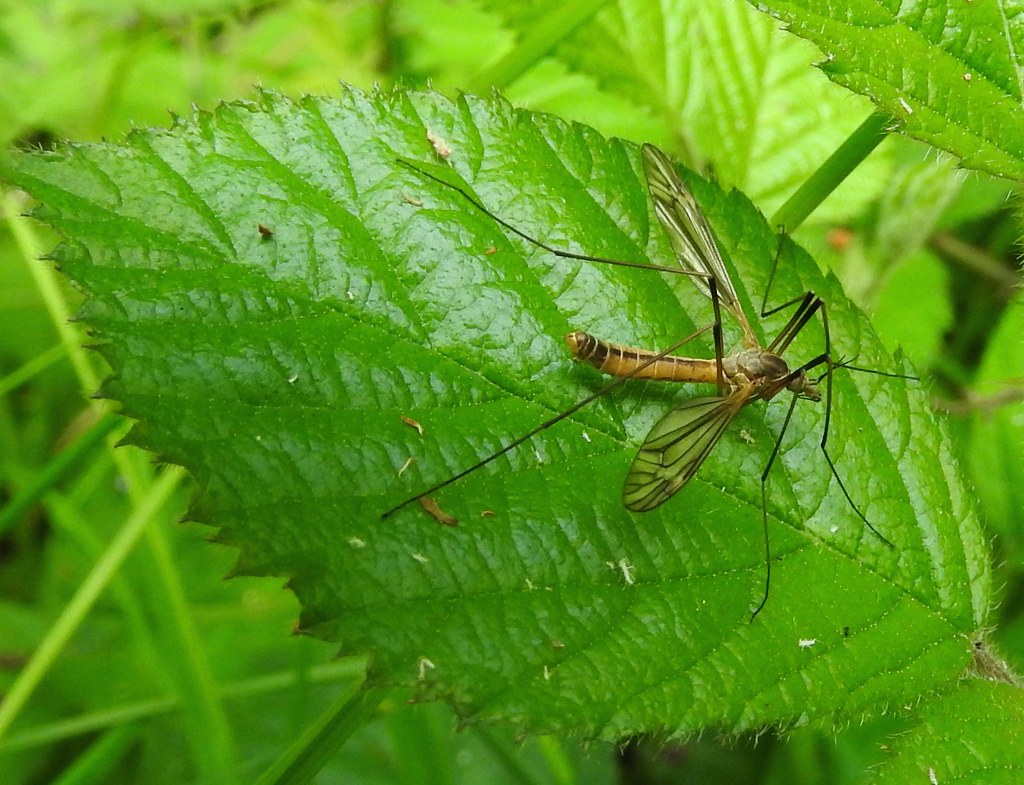
Leptotarsus is a genus of true crane flies (Tipulidae) established by Guerin-Meneville in 1831. The genus is taxonomically complex, containing numerous subgenera (including Aldrovandia, Araucomyia, Aurotipula, Chlorotipula, Habromastix, Leptotipula, Longurio, Macromastix, Maoritipula, Pehlkea, Phymatopsis, Tanypremna, and others) that reflect morphological diversity across multiple biogeographic regions. Species are distributed across the Southern Hemisphere, with significant representation in Australia, New Zealand, South America, and various Pacific and Atlantic islands. The genus is characterized by elongated body proportions typical of crane flies, with substantial variation in size, coloration, and leg morphology among constituent species.
Leptotarsus testaceus is a large crane fly species in the family Tipulidae, distributed across the eastern United States from Maine south to Florida and Tennessee. The species was described by Loew in 1869 and is classified within the genus Leptotarsus, a group of crane flies characterized by elongated bodies and long, fragile legs typical of the family. As a member of Diptera, it undergoes complete metamorphosis with aquatic or semi-aquatic larval stages.
Limnophila antennata is a species of crane fly in the family Limoniidae, originally described by Coquillett in 1905. The species is currently classified under the genus Prionolabis as a synonym. It is known from the Nearctic region, with records from Canada and the western United States.
Limnophila rufibasis is a crane fly species originally described by Osten Sacken in 1860. It is currently recognized as a synonym of Prionolabis rufibasis, reflecting taxonomic reclassification from Limnophila to Prionolabis. The species belongs to the family Limoniidae, a diverse group of small to medium-sized crane flies. Records indicate presence in eastern North America.
Limonia is a genus of crane flies in the family Limoniidae, established by Meigen in 1803. The genus is taxonomically broad and serves as a provisional grouping for species that may require reclassification to other genera. Species of Limonia are found across multiple continents, with documented diversity in East Asia, Europe, and North America. The genus includes both widespread and regionally endemic species.
Limonia bryanti is a species of crane fly in the family Limoniidae, originally described by Johnson in 1909. The species is currently classified under the genus Rhipidia, with Limonia bryanti treated as a synonym. It occurs across a broad range of the United States, from Colorado to Maine and southward to Arizona, Louisiana, and Florida.
Limonia communis is a species of limoniid crane fly in the family Limoniidae. It is currently recognized as a synonym of Geranomyia communis. The species has been recorded across North America from Alaska and British Columbia east to Newfoundland, and south to California, Louisiana, and Florida. As a member of the Limoniidae, it belongs to a diverse group of crane flies commonly found in moist terrestrial and semi-aquatic habitats.
Limonia duplicata is a species of limoniid crane fly originally described by Doane in 1900. The species is currently treated as a synonym of Rhipidia maculata. It has been recorded across a broad geographic range spanning the Nearctic, West Palearctic, and East Palearctic regions, including North America from Alaska to California and Tennessee, much of Europe, and eastward through Russia, Central Asia, East Asia, and China.
Limonia hudsonica is a species of limoniid crane fly in the family Limoniidae. It is currently recognized as a synonym of Metalimnobia hudsonica. The species occurs across northern North America, including Canada and the northern United States.
Limonia immatura is a Nearctic species of limoniid crane fly described by Osten Sacken in 1859. The species is currently recognized as a synonym of Metalimnobia immatura, reflecting taxonomic reclassification within the family Limoniidae. It occurs across a broad range of eastern and central North America.
Limonia indigena is a species of limoniid crane fly described by Osten Sacken in 1860. It is recognized as the type species of the genus Limonia. Three subspecies have been described: L. i. indigena, L. i. jacksoni, and L. i. loloensis.
Limonia liberta is a species of limoniid crane fly originally described by Osten Sacken in 1859. The species is currently classified as a synonym of Dicranomyia liberta. It belongs to the family Limoniidae, a large group of crane flies distinguished from the more familiar Tipulidae by their reduced wing venation and other morphological features. The species has been recorded across a broad transcontinental range spanning North America and Eurasia.
Limonia maculata is a species of crane fly in the family Limoniidae, originally described by Meigen in 1804. The species is currently treated as a synonym of Eloeophila maculata (Meigen, 1804), having been reassigned to the genus Idioptera and subsequently to Eloeophila. It belongs to the subfamily Limnophilinae, a group of crane flies often associated with aquatic or semi-aquatic habitats. The species has been recorded from Belgium and Denmark based on GBIF distribution data.
Limonia marmorata is a species of limoniid crane fly in the family Limoniidae. The species was originally described by Osten-Sacken in 1861. It is currently treated as a synonym of Dicranomyia marmorata. The species is known from the Nearctic region, with records from Canada and the western United States.
Limonia novaeangliae is a species of limoniid crane fly described by Charles Paul Alexander in 1929. It is currently recognized as a synonym of Metalimnobia novaeangliae. The species is known from the northeastern United States.
Limonia rostrata is a species of limoniid crane fly in the family Limoniidae. It is currently treated as a synonym of Geranomyia rostrata by some taxonomic authorities. The species was described by Thomas Say in 1823. Like other limoniid crane flies, it belongs to a diverse group of delicate, long-legged flies often found in moist habitats.
Limonia triocellata is a small to medium-sized limoniid crane fly distinguished by three eye-like spots (ocelli) on each wing. It occurs in eastern North America with two distinct flight periods in spring and fall. The species exhibits clear sexual dimorphism in abdominal structure. Taxonomic placement remains unsettled, with some authorities placing it in the genus Metalimnobia.
Limonia triphaea is a species of crane fly in the family Limoniidae, described by Charles Paul Alexander in 1954. It is currently recognized as a synonym of Metalimnobia triphaea. The species is known from a single locality in Oregon, USA. Very little information is available about its biology or ecology.
Limonia ypsilon is a species of crane fly in the family Limoniidae, described by Alexander in 1959. It is currently recognized as a synonym of Dicranomyia ypsilon. The species is known from the Nearctic region, with records from Washington southward through California to Arizona. As a member of Limoniidae, it belongs to a large family of delicate, long-legged flies commonly known as limoniid crane flies.
Liogma is a genus of crane flies in the family Cylindrotomidae, established by Osten Sacken in 1869. The genus contains seven recognized species distributed across the Holarctic and East Asia. Larvae are specialized feeders on mosses, while adults inhabit damp wooded environments.
Liogma nodicornis is a species of cylindrotomid crane fly native to North America. Larvae inhabit wet environments including streams, marshes, and saturated soils beneath alders, where they function as detritivores. The species exhibits an approximately two-year life cycle with adults emerging during summer months.
Neocladura is a genus of crane flies in the family Limoniidae, subfamily Chioneinae. The genus contains two described species: N. americana and N. delicatula. It is restricted to North America.
Neocladura americana is a species of crane fly in the family Limoniidae, described by Alexander in 1917. It is known from the western United States, with records from Washington south to California. As a member of the Chioneinae subfamily, it belongs to a diverse group of small to medium-sized crane flies. Very little has been published regarding its specific biology, habitat preferences, or ecological role.
Placid Crane Fly
Neolimnophila placida is a crane fly species in the family Limoniidae, subfamily Chioneinae. It is widely distributed across the Holarctic region, occurring in both the Nearctic and Palaearctic realms. The species has been documented from northern North America through much of Europe and across northern Asia to Japan. Like other limoniid crane flies, it is associated with moist habitats where larvae develop in decaying organic matter.
Nephrotoma alterna is a large crane fly species in the family Tipulidae. It occurs across North America from Canada through the United States. The species was originally described by Francis Walker in 1848 under the basionym Tipula alterna. Like other members of the genus Nephrotoma, it is characterized by its substantial body size relative to many other crane flies.
Nephrotoma altissima is a species of large crane fly in the family Tipulidae. It occurs across northern and western North America, ranging from Alaska and northern Canada south to Oregon, Arizona, and New Mexico. As a member of the genus Nephrotoma, it belongs to a group commonly known as tiger crane flies, which are distinguished by patterned wings and bodies.
large crane fly
Nephrotoma eucera is a species of large crane fly in the family Tipulidae. The species was originally described as Pachyrhina eucera by Loew in 1863. It is distributed across eastern North America, from the Great Plains to the Atlantic coast. The genus Nephrotoma is characterized by distinctive wing venation and body patterning that separate it from other crane fly genera.
Ferruginous Tiger Crane Fly
Nephrotoma ferruginea is a large crane fly in the family Tipulidae, commonly known as the Ferruginous Tiger Crane Fly. The species was described by Fabricius in 1805 and includes two recognized subspecies: N. f. ferruginea and N. f. surtularis. It is widely distributed across North America, with records extending from Alaska and northern Canada south to Arizona, Texas, and the southeastern United States, and has also been documented in parts of Europe including the Netherlands and Spain.
spotted-winged crane fly
Nephrotoma occipitalis is a species of large crane fly in the family Tipulidae. It belongs to the genus Nephrotoma, a group of crane flies commonly known as tiger crane flies due to their distinctive yellow and black coloration. The species has a wide distribution across North America and parts of the Russian Far East.
tiger crane fly
Nephrotoma suturalis is a species of tiger crane fly in the family Tipulidae, first described by Loew in 1863. The species has been extensively used as a model organism in cell biology research, particularly for studies of spermatogenesis and spindle microtubule dynamics. Two subspecies are recognized: N. s. suturalis in the southeastern USA and N. s. wulpiana with a broader distribution including western North America and adventive populations in Europe and Hawaii.
green-striped crane fly
Nephrotoma virescens is a species of large crane fly in the family Tipulidae, characterized by greenish coloration. The species is distributed across eastern North America, from the Great Lakes region through the southeastern United States. Like other crane flies, adults are typically encountered during warmer months and are often found in moist habitats near larval development sites.
Wulp's tiger crane fly
Nephrotoma wulpiana is a tiger crane fly species in the family Tipulidae, historically treated as a subspecies of Nephrotoma suturalis. It is found in the southeastern and south-central United States. The species exhibits the elongated legs and slender body characteristic of crane flies. It has been observed in 2340 records on iNaturalist, indicating it is relatively well-documented.
Orimarga mirabilis is a crane fly species in the family Limoniidae, described by Osten Sacken in 1878. The species is known from the Nearctic and Neotropical regions, with records from the eastern and southern United States (Indiana to Georgia, south to Texas, Louisiana, and Florida) and Cuba. It is one of approximately 48 observed species in the genus Orimarga.
Ormosia romanovichiana is a species of limoniid crane fly described by Charles Paul Alexander in 1953. It belongs to a family of small, delicate crane flies that are often mistaken for mosquitoes due to their slender bodies and long legs. The species has been documented across a broad range of eastern North America. Like other members of Limoniidae, adults are weak fliers and are frequently encountered in moist, shaded habitats.
hairy-eyed crane fly
Pedicia contermina is a species of hairy-eyed crane fly in the family Pediciidae, first described by Francis Walker in 1848. It belongs to a group of crane flies distinguished by their hairy eyes, a trait characteristic of the family. The species is found in eastern North America, with records spanning from Newfoundland to North Carolina.
hairy-eyed crane fly
Pedicia procteriana is a species of crane fly in the family Pediciidae, commonly known as hairy-eyed crane flies. It is a Nearctic species found in northeastern North America. Like other members of Pediciidae, it belongs to the group of crane flies distinguished by densely hairy eyes, a trait reflected in its common name. The species was described by Charles Paul Alexander in 1939.
Phalacrocera is a genus of crane flies in the family Cylindrotomidae, subfamily Cylindrotominae. The genus contains 11 described species, including the widespread P. replicata. Larvae are specialized feeders on mosses, while adults inhabit damp wooded environments. Most species have restricted geographic ranges, though P. replicata occurs across northern regions of North America, Europe, and Asia.
Phoroctenia is a genus of true crane flies (family Tipulidae) in the subfamily Ctenophorinae. The genus is monotypic, containing only the single described species P. vittata (Meigen, 1830). It has a disjunct distribution spanning northern Europe, eastern Russia, and western North America. The genus was established by Coquillett in 1910.
Tiger Cranefly
Phoroctenia vittata, commonly known as the Tiger Cranefly, is a species of crane fly in the family Tipulidae. It belongs to the subfamily Ctenophorinae, which includes some of the most visually distinctive crane flies. The species has been recorded from Scandinavia, including Denmark, Norway, and Sweden. It is one of approximately 534 observations documented on iNaturalist, indicating moderate but not extensive documentation of its occurrence and biology.
Phoroctenia vittata angustipennis is a subspecies of crane fly in the family Tipulidae. It belongs to the subfamily Ctenophorinae, a group characterized by distinctive morphological features. The subspecies was described by Loew in 1872. Available records indicate a limited distribution in northern Europe, specifically Denmark, Norway, and Sweden.
Phyllolabis is a genus of crane flies in the family Limoniidae, subfamily Limnophilinae. The genus was established by Osten Sacken in 1877 and contains approximately 50 described species distributed across the Holarctic region. Larval and pupal stages were first described in 2017 for P. mongolica, revealing morphological similarities to Austrolimnophila, Epiphragma, and Dactylolabis. Based on immature stage characters, Phyllolabis has been reclassified as a basal lineage within Limnophilinae s.l.
Phyllolabis flavida is a species of crane fly in the family Limoniidae, described by Charles Paul Alexander in 1918. It is a member of the genus Phyllolabis, which belongs to the subfamily Limnophilinae. The species is known from California, USA, and is part of the Nearctic fauna. Very little specific biological information has been published for this species.
A species of crane fly in the family Limoniidae, described by Charles Paul Alexander in 1964. The species epithet honors entomologist Paul D. Hurd. Known from California, USA. Belongs to a genus characterized by distinctive wing venation patterns typical of the Limnophilinae subfamily.
Pilaria is a genus of crane flies in the family Limoniidae, established by Sintenis in 1889. These insects belong to the subfamily Limnophilinae and are distributed across northern Europe and parts of North America. The genus contains multiple species, though specific species-level information remains limited in available sources.
Pilaria quadrata is a species of crane fly in the family Limoniidae, described by Osten Sacken in 1860. It belongs to the subfamily Limnophilinae, a group of small to medium-sized crane flies often associated with moist habitats. The species is known from the Nearctic region with records across much of eastern and central North America. Like other members of Limoniidae, adults are characterized by their slender bodies and long legs relative to body size.
Pilaria recondita is a species of limoniid crane fly first described from the Nearctic region. The species occurs across eastern North America, from Minnesota and Ontario south to Louisiana and Florida. It belongs to the family Limoniidae, a diverse group of small to medium-sized crane flies often associated with moist habitats. The specific epithet 'recondita' (meaning hidden or concealed) may allude to its cryptic nature or habitat preferences.
Pilaria tenuipes is a crane fly in the family Limoniidae, first described by Thomas Say in 1823 under the name Limnobia tenuipes. It is a small, delicate nematoceran fly distributed across much of North America. The species is one of approximately 400 species in the genus Pilaria, which are typically associated with moist habitats. Despite its wide distribution, detailed biological information remains limited.
Polymera is a genus of crane flies (Diptera: Limoniidae) established by Wiedemann in 1821. The genus contains approximately 60 described species organized into two subgenera: Polymera (sensu stricto) and Polymerodes. Species occur across the Americas, with numerous taxa described by Charles Paul Alexander throughout the 20th century. The genus is characterized by distinctive wing venation and genitalic structures typical of the Limnophilinae subfamily.
Prionocera is a genus of crane flies (family Tipulidae) established by Loew in 1844. The genus contains approximately 22 described species distributed primarily across the Holarctic region. Species have been described from North America, Europe, and East Asia. The genus is characterized by features of the male genitalia, particularly the structure of the ninth tergite and gonostyli.
Prolimnophila areolata is a species of crane fly in the family Limoniidae, originally described by Osten Sacken in 1860 as Limnophila areolata. The species is known from the Nearctic region, with records across eastern North America from Wisconsin and Ontario east to Newfoundland, and south to Tennessee and North Carolina. It belongs to the subfamily Limnophilinae, a group of crane flies often associated with moist habitats.