
Leptotarsus
Guerin-Meneville, 1831
Species Guides
1Leptotarsus is a of true crane flies (Tipulidae) established by Guerin-Meneville in 1831. The genus is taxonomically complex, containing numerous subgenera (including Aldrovandia, Araucomyia, Aurotipula, Chlorotipula, Habromastix, Leptotipula, Longurio, Macromastix, Maoritipula, Pehlkea, Phymatopsis, Tanypremna, and others) that reflect morphological diversity across multiple biogeographic regions. are distributed across the Southern Hemisphere, with significant representation in Australia, New Zealand, South America, and various Pacific and Atlantic islands. The genus is characterized by elongated body proportions typical of crane flies, with substantial variation in size, coloration, and leg among constituent species.
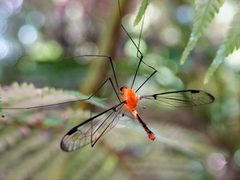
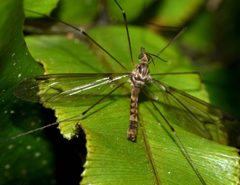
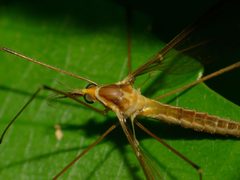
Pronunciation
How to pronounce Leptotarsus: /ˌlɛptoʊˈtɑrsəs/
These audio files are automatically generated. While they are not always 100% accurate, they are a good starting point.
Identification
Leptotarsus are distinguished from other Tipulidae by combinations of wing venation patterns, leg proportions, and male genitalia structures, though specific diagnostic features vary among subgenera. Members of the subgenus Tanypremna are characterized by elongated legs and slender . The subgenus Chlorotipula contains species with greenish or yellowish coloration. The subgenus Habromastix includes relatively large species with distinctive leg patterning. Definitive identification to species level typically requires examination of male terminalia and is beyond field identification for most .
Images
Distribution
The exhibits a predominantly Southern Hemisphere distribution. Significant occurs in Australia (particularly Western Australia based on epithets), New Zealand, and South America (Chile, Argentina). Additional species are recorded from the Caribbean (Guadeloupe), Pacific islands, and Atlantic islands. The subgenus Araucomyia is restricted to southern South America. The subgenus Maoritipula is to New Zealand. Several subgenera (Aurotipula, Chlorotipula, Habromastix) are primarily Australian.
Similar Taxa
- TipulaLarge Holarctic crane fly with overlapping general ; Leptotarsus distinguished by Southern Hemisphere distribution and specific wing venation patterns, though some subgenera were historically treated as Tipula groups.
- AustrotipulaAustralian crane fly with similar preferences; separated by genitalic characters and wing details.
- GynoplistiaNew Zealand crane fly sharing geographic range with Leptotarsus subgenus Maoritipula; distinguished by wing venation and body proportions.