
Tipulinae
typical crane flies
Genus Guides
8- Angarotipula
- Brachypremna
- Holorusia
- Leptotarsus
- Megistocera
- Nephrotoma(Tiger Crane Flies)
- Prionocera
- Tipula(Common Crane Flies)
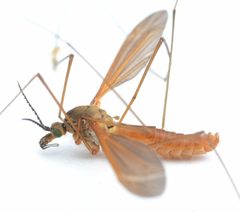
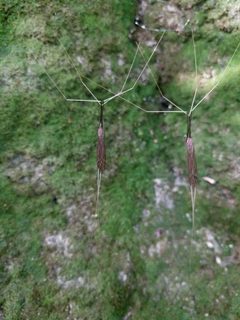
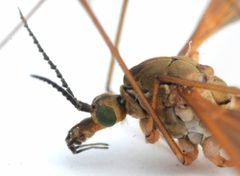
Tipulinae is a of crane flies (Diptera: Tipulidae) containing the Tipula and related genera. These are the 'typical' crane flies, characterized by their large size and elongated legs relative to other tipulid subfamilies. The subfamily is widely distributed across temperate and tropical regions, with documented in North America, Europe, and other continents.
Pronunciation
How to pronounce Tipulinae: /tɪˈpjuːlɪniː/
These audio files are automatically generated. While they are not always 100% accurate, they are a good starting point.
Identification
Images
Habitat
Larvae of Tipulinae are found in soil, decaying wood, or moist organic matter; specific microhabitat preferences vary by . are aerial and have been observed in across various open and wooded landscapes.
Distribution
Widely distributed across North America, Europe, and other temperate and tropical regions. Documented in Arkansas, Oklahoma, Texas, and Scotland with established .
Seasonality
Flying have been documented in Scotland through trapping studies, indicating seasonal aerial activity; specific timing varies by and latitude.
Life Cycle
Larvae are soil-dwelling or found in decaying organic matter; are aerial and do not feed substantially. Complete with , larva, pupa, and adult stages.
Behavior
exhibit flying activity patterns that have been studied through trapping methods. activity is a primary focus of behavioral observation in this .
Ecological Role
Larvae contribute to soil decomposition and nutrient cycling through feeding on decaying organic matter. may serve as prey for birds, bats, and other .
Similar Taxa
More Details
Taxonomic Note
Tipulinae contains the Tipula, which is the type genus of the Tipulidae and includes the majority of traditionally recognized as 'typical' crane flies. The classification within Tipulidae remains subject to ongoing revision.
Sources and further reading
- BugGuide
- Wikipedia
- iNaturalist taxon
- NCBI Taxonomy
- Catalogue of Life
- Studies on the Ecology of Larval Tipulinae (Diptera, Tipulidae)
- Observations on the Spatial Distribution of Flying Tipulinae (Diptera: Tipulidae) in Scotland
- New Geographic Distributional Records for Craneflies (Diptera: Tipulidae: Tipulinae: Tipula ) from Arkansas, Oklahoma and Texas, with Six New State Records