
Holorusia
Loew, 1863
Species Guides
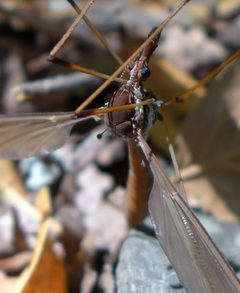
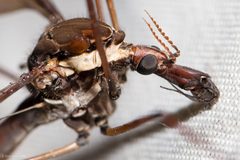
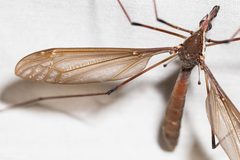
1- Holorusia hespera(Giant Western Crane Fly)
Holorusia is a of true crane flies (Diptera: Tipulidae) established by Loew in 1863. The genus includes Holorusia mikado, the largest known crane fly , which holds a Guinness World Record for wingspan. Species in this genus have aquatic or semi-aquatic larval stages and are distributed across multiple biogeographic regions including Asia, Australasia, Africa, and North America.
Pronunciation
How to pronounce Holorusia: //ˌhɒləˈruːsiə//
These audio files are automatically generated. While they are not always 100% accurate, they are a good starting point.
Identification
The is distinguished by its large size relative to other crane flies, with H. mikado reaching exceptional dimensions. can be separated from other Tipulidae by detailed examination of male and female genitalia structures. Larvae are robust, adapted to semi-aquatic environments, and possess morphological characters distinct from related genera such as Tipula.
Images
Habitat
Larvae inhabit semi-aquatic environments: slow-flowing stream areas, small waterfalls with accumulated leaf litter, drainage ditches, stream banks, and small springs with loose, gravelly soil rich in detritus. are terrestrial.
Distribution
occurs in Afrotropic, Australasian-Oceanian, Eastern Palearctic, Oriental, and Nearctic regions. Holorusia mikado is documented from Japan (Honshu, Kyushu, Shikoku Islands). Holorusia hespera occurs in North America.
Diet
Larvae are , feeding on wet, decomposing leaves. feeding habits are not documented in available sources.
Life Cycle
Complete : , larva, pupa, and . Larvae develop in semi-aquatic and can be reared to in laboratory conditions with wet substrate and decaying leaves. Specific duration of developmental stages is not documented.
Behavior
Larvae are aquatic/semi-aquatic that inhabit areas where leaf litter accumulates in water. No other are documented in available sources.
Ecological Role
Larvae function as in freshwater and semi-aquatic , processing decomposing leaf litter.
Human Relevance
Holorusia mikado holds the Guinness World Record as the largest crane fly . The is occasionally referenced in public education contexts, such as the UC Davis Arboretum's Nature's Gallery mural featuring Holorusia rubiginosa.
Similar Taxa
More Details
Size record
Holorusia mikado is recognized as the largest crane fly by wingspan, holding a Guinness World Record.
Taxonomic note
The was established by Hermann Loew in 1863 and currently includes multiple across five biogeographic regions.