
- Published on
Crane flies are more interesting than the giant-mosquito myth
- Authors

- Name
- Mike Porter
- @bugswithmike
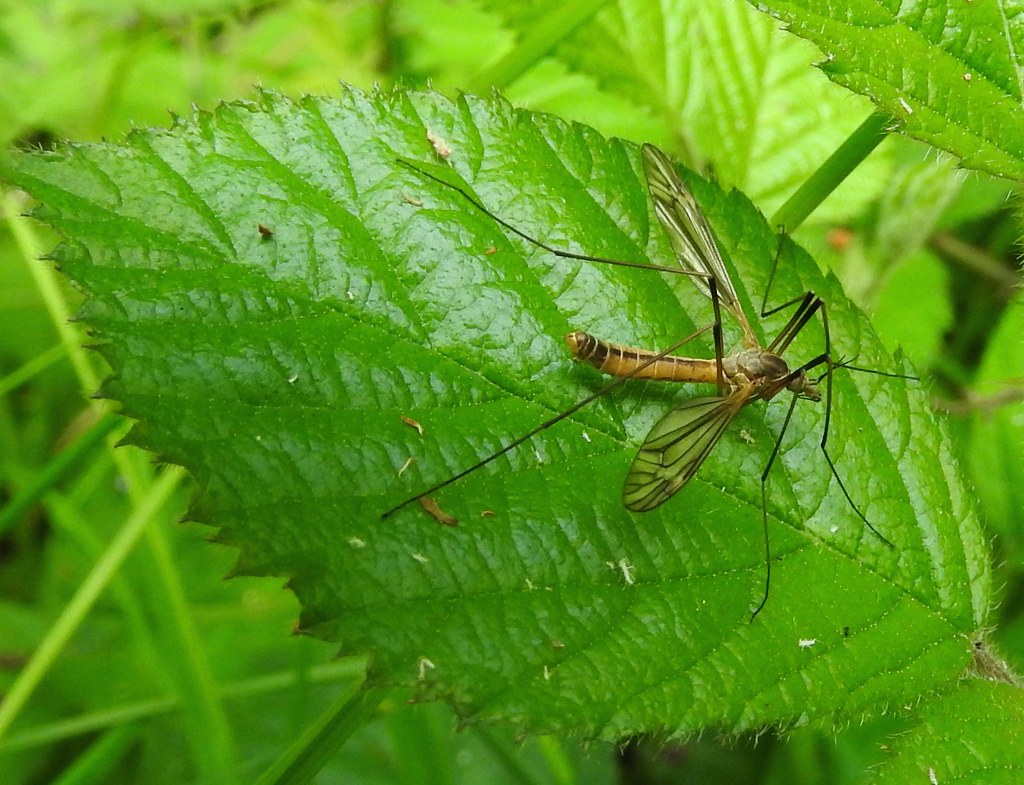
My most viewed TikTok video is about crane flies. They aren't the flashiest of insects, but they are definitely something you might be seeing a lot of as the weather warms up.
Most people only have one thought about crane flies, and it is usually some version of: why is there a giant mosquito in my house?
That is understandable. Crane flies have the same long-legged, narrow-bodied silhouette that makes people think “mosquito,” just scaled up and a bit clumsier. They bounce off walls, hang around porch lights, and generally look like they were assembled in a hurry. So the first thing to clear up: crane flies are not mosquitoes, and they do not bite.12
The more interesting thing about crane flies is that the awkward most people notice is often the least important part of the story. The adult stage is brief and mostly about mating and laying Depending on the adults may live only around a week or two, and many do not feed much if at all. Some species may sip nectar or water, but nobody should be imagining them as tiny aerial mosquito hunters.234
The larva is the real article
Crane flies are true flies and are members of the In broad terms they follow the usual four-part script: egg, larva, pupa, adult. But the adult stage is the part people overemphasize because it is the part that wanders indoors and startles them (or keeps their cat(s) entertained).
The larva is where most of the feeding happens, and often where most of the ecological importance sits. Crane fly larvae are called leatherjackets , which may sound cartoonish until you see one and realize it is fairly literal. They are blunt-ended, legless, gray-brown larvae with tough skin, and they often live in moist soil, leaf litter, compost, stream margins, rotting vegetation, or other damp places where organic matter is piling up.13
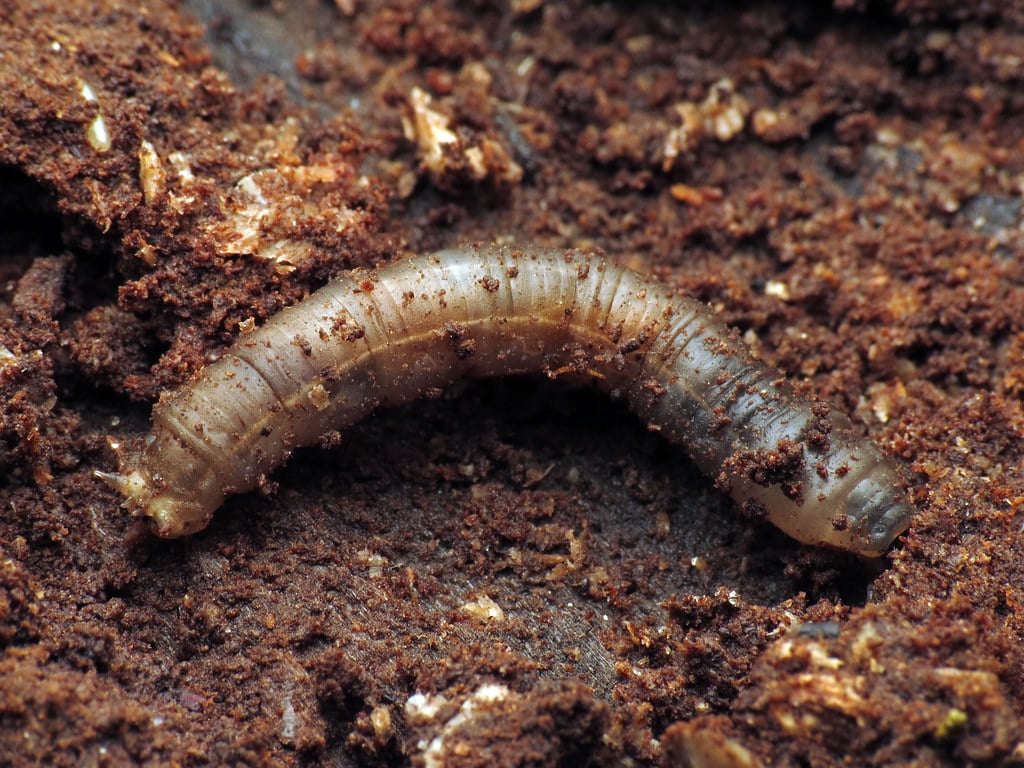
This is where crane flies stop being just “those floppy things around the porch light” and start becoming a real group of animals with a lot of ecological range.
Many crane fly larvae are or scavengers. In plain English, they help chew through dead plant material and the microbial life associated with it. Some live in wet forest litter. Some turn up in compost. Some occupy stream edges or aquatic In at least some aquatic species, the larvae function as of leaf litter, helping convert coarse organic debris into smaller, more biologically available material that other organisms can use.35
It's not glamorous, but it is real work. A lot of run on organisms that break down dead stuff so the rest of the system can keep moving. Crane fly larvae are part of that crew.
Why people think crane flies are useless
Adults often show up all at once, especially in spring or fall depending on the species, and they do not behave like especially competent fliers. They drift, bump, scramble around window screens, and die quickly. If your entire interaction with crane flies is a few adults pinballing around a lamp, it is easy to assume they are pointless.12
But in this case, “pointless” just means “I am only noticing the stage of life that is easiest for me to notice.”
Plenty of insects work like that. The visible adult is the public-facing version. The less obvious stages are where the feeding, growth, and ecological work happen. Crane flies just make that mismatch unusually obvious because the adult is so conspicuous and the larva is so hidden.
They are part of the food web in both stages. Crane flies, both the larvae and adults, are prey for birds, fish, amphibians, spiders, and other insects.3 So even when they are not decomposing leaf litter or chewing organic matter in wet soil, they are still helping move energy through the system by being edible.
The lawn-pest version is real, but not the whole story
A minority of crane fly species can be pests, especially in turf. Extension material in North America points to two species in particular: the European crane fly, Tipula paludosa , and the marsh or common crane fly, Tipula oleracea .1467
.jpg)
Image by Martin Cooper from Ipswich, UK
Used under a CC BY 2.0 license.
In those species, the leatherjackets feed on roots and crowns of grasses and may come above ground on damp nights to feed on blades as well. The result can be thinning turf, brown patches, and, in heavier the kind of lawn damage that makes people suddenly very interested in crane fly life cycles.467
Even here, though, the nuance matters.
The damaging stage is the larva, not the adult. Seeing a bunch of adults on the wall does not automatically mean disaster. Extension guidance also makes clear that healthy turf can tolerate some feeding, wet conditions strongly favor the pest species, and treatment is not always necessary. The University of California Integrated Pest Management program cites treatment thresholds in the rough range of 25 to 50 larvae per square foot, while also noting that well-maintained turf may tolerate fairly high numbers that would cause visible injury in weaker grass.6 NC State makes a similar point: control is often unnecessary outside heavier or chronic infestations.7
That is useful because people tend to collapse “can be a pest” into “is a pest.” Those are not the same thing. For most crane flies, the better description is closer to harmless nuisance adult, hidden larva, and ecological function that most people never notice.
Even the simple facts need a little nuance
Crane flies are a good subject if you enjoy finding out that the tidy version of a common insect is wrong in at least three ways.
The tidy version says they are giant mosquitoes. Wrong.
Then it says they are mosquito eaters. Also wrong.12
Then it says adults do not eat anything. That one is closer, but still not neat enough. Many adults seem to feed very little or not at all, but university and extension sources also note that some can take nectar or water.24 So the safest version is not “all adult crane flies do X.” It is that adult life is short, often lightly fed or unfed, and centered mostly on
The same goes for larvae. It is true that many are decomposers in moist habitats. It is also true that some are root-feeding pests, some live in aquatic systems, and some lineages are more ecologically varied than the average backyard summary admits.135
That breadth is part of what makes crane flies more interesting than their public image. They are not just a single familiar with a trivia fact attached. They are a big, varied group whose most noticeable members happen to be harmless enough that people mostly remember the silhouette.
Why the adult looks so dramatic if it does so little
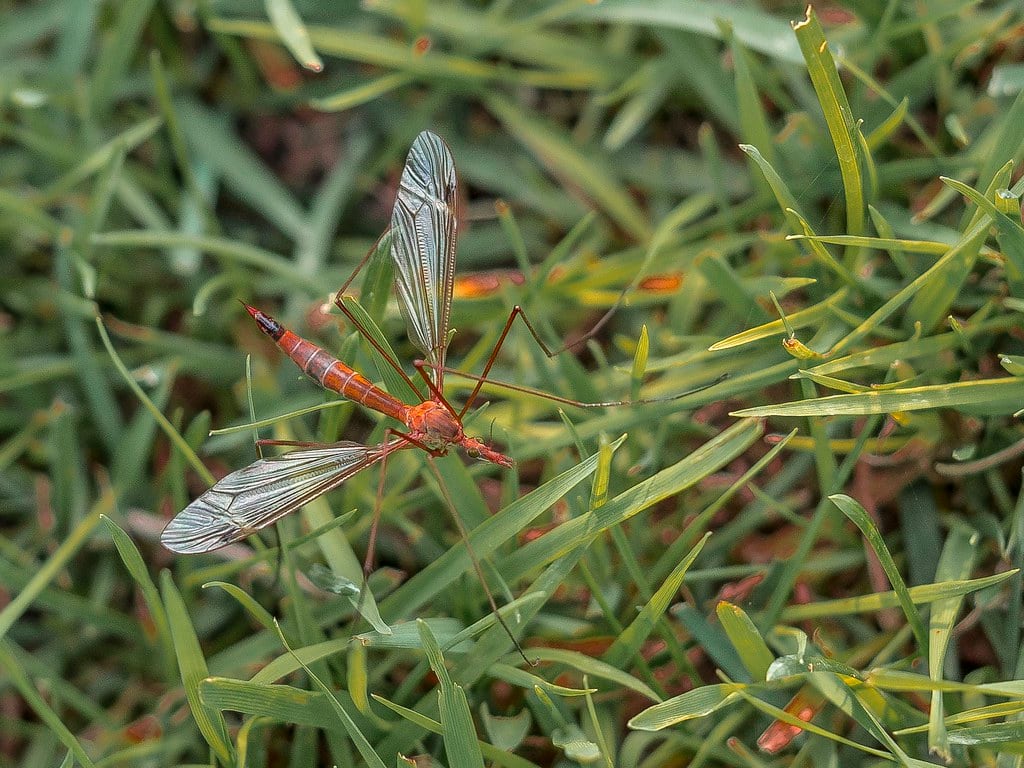
There is something a little funny about crane flies because the adult body looks like it ought to be doing more.
Long legs. Long wings. Long body. A general air of menace, if you are the sort of person who distrusts anything with too many appendages. And then the insect itself turns out to be medically harmless, physically fragile, and often near the end of its life cycle by the time you notice it.12
That mismatch is probably why people keep inventing stories about them. If an insect looks like that, surely it must be biting, hunting, or at least doing something dramatic.
Instead, a lot of crane flies are doing something less glamorous: arriving briefly as adults after spending much longer as larvae in mud, litter, turf, or stream margins.
Conclusion
The usual crane fly fact is that they are not giant mosquitoes.
But the better crane fly fact is that the part people notice most is often the least important part of their
The adult is brief, harmless, and mostly occupied with mating. The larva is where you find the real variety: decomposers in wet soil and leaf litter, shredders in aquatic systems, prey for all sorts of animals, and, in a smaller set of species, genuine lawn pests.
Crane flies are a good reminder that a lot of nature is easy to misread if you only pay attention when it blunders into your light fixture.