
- Published on
Why Carpenter Bees Seem Aggressive in Spring
- Authors

- Name
- Mike Porter
- @bugswithmike
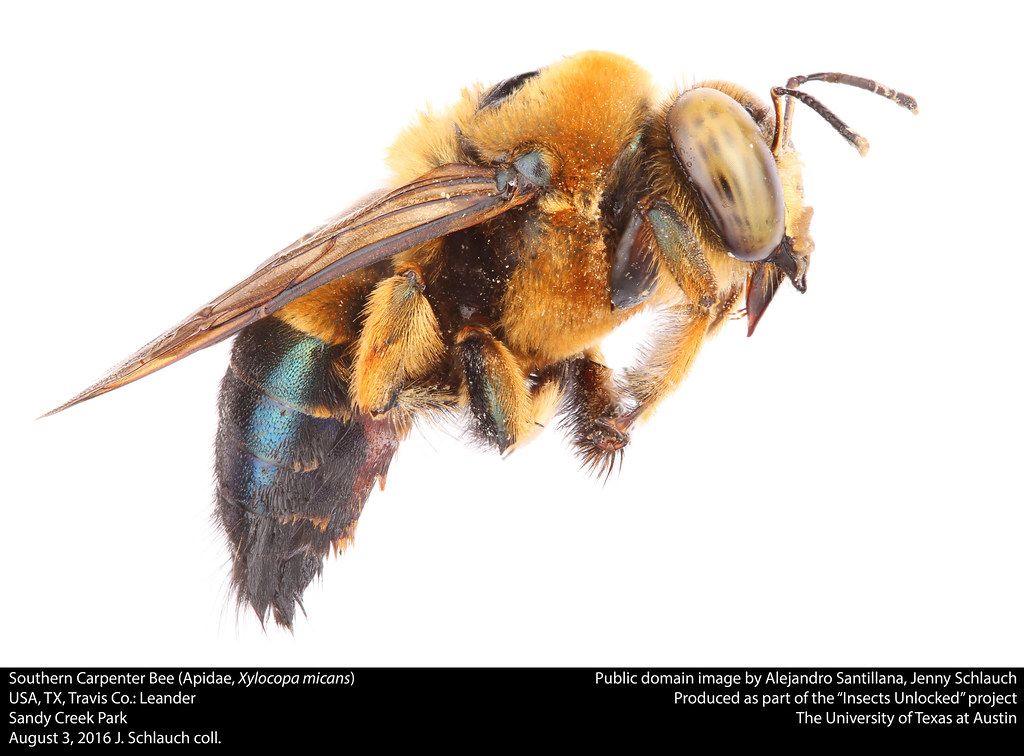
Every spring, carpenter manage to pick a fight with people who were just trying to stand on their own porch.
A bee hovers in front of your It darts back when you move. Then it comes right back again. If there are several of them around the same beam or railing, the whole scene can feel a lot more hostile than the word usually suggests.
So yes, carpenter bees can seem aggressive in spring. But the important clarification is that the people notice most is usually bluff, not an actual attack.
What you are often dealing with is a male carpenter bee patrolling a nesting site, looking for females, and charging at anything moving through his airspace.1234 That includes other bees, birds, pets, and you.
Why they suddenly act like this in spring
Carpenter bees overwinter as inside old tunnels and re-emerge in spring, often around April or May depending on the region.1234 That is when people start noticing them around eaves, porch rails, decks, soffits, fences, and other exposed wood.
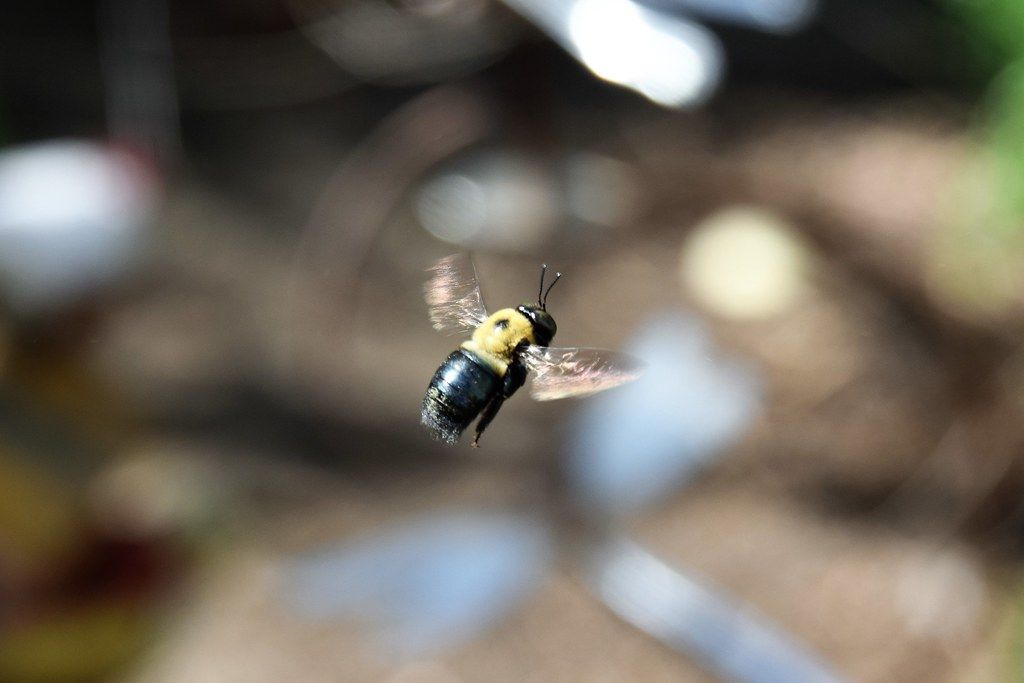
The males tend to appear early and patrol those areas aggressively.1234 They hover near nest sites and investigate anything that moves. From a human point of view, it can feel weirdly personal. From the bee's point of view, it is territory and mating season. But the good news for you is that male carpenter bees do not have stings.1234 So the bee doing the dramatic face-hovering is often the one least capable of actually hurting you.
The females are different
Female carpenter bees can sting, but extension sources are remarkably consistent on the next part: they usually do not unless they are handled, trapped, or strongly provoked.12345
They are usually busy with the job that gives carpenter bees their name. A female chews a nearly perfect round hole into wood, then turns and follows the grain to create a nest gallery.1234 Inside, she builds a series of each stocked with pollen and nectar and a single 1245
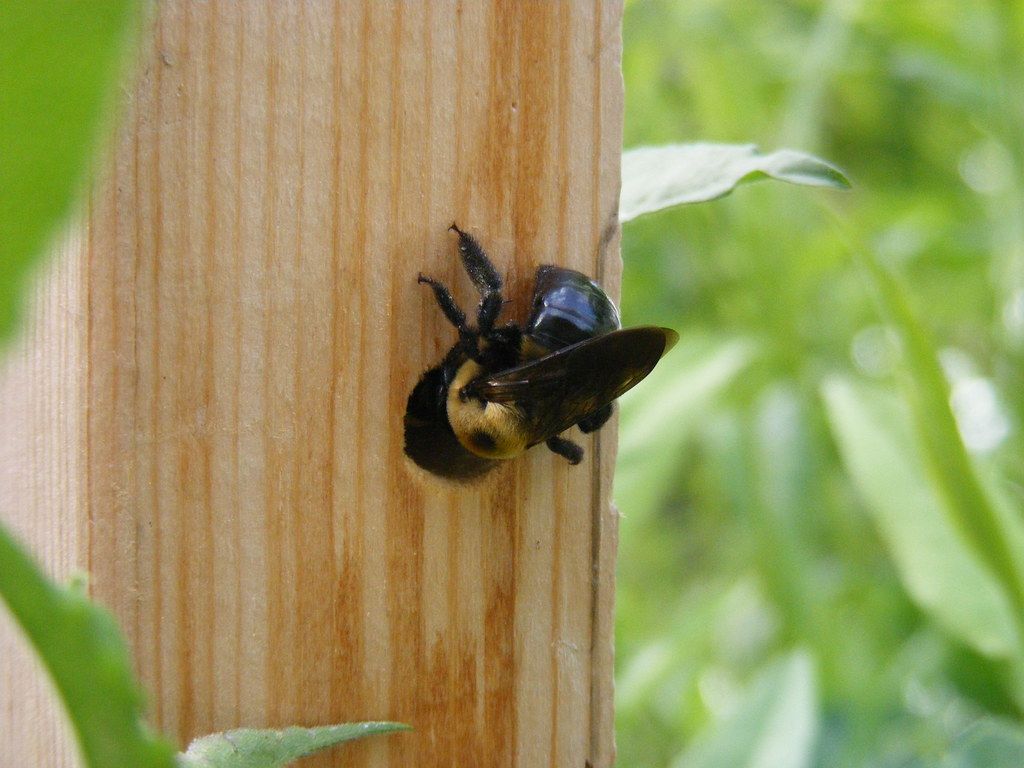
Image by Helena Jacoba
Used under a BY 2.0 license.
Carpenter bees are not hive-defending social insects in the way people imagine honey bees or yellowjackets are. They are mostly solitary or loosely social wood nesters, not little airborne guards protecting a 12345
That matters because it explains the mismatch between what people feel and what is usually happening. The males act aggressive but cannot sting. The females can sting but are usually busy with nesting and are comparatively docile.
What damage is real
It is easy to overcorrect in either direction. Carpenter bees are not harmless in the sense that their nesting can create real maintenance problems, but they are also not flying
Carpenter bees do not eat wood. They excavate it for nests.1234 A single tunnel is usually more of a nuisance and maintenance issue than a structural emergency.12345 The real damage usually comes from repetition: the same wood being reused, expanded, and revisited over multiple years.125
That is when the problem stops being a neat round hole and starts becoming a larger system of galleries inside the board.
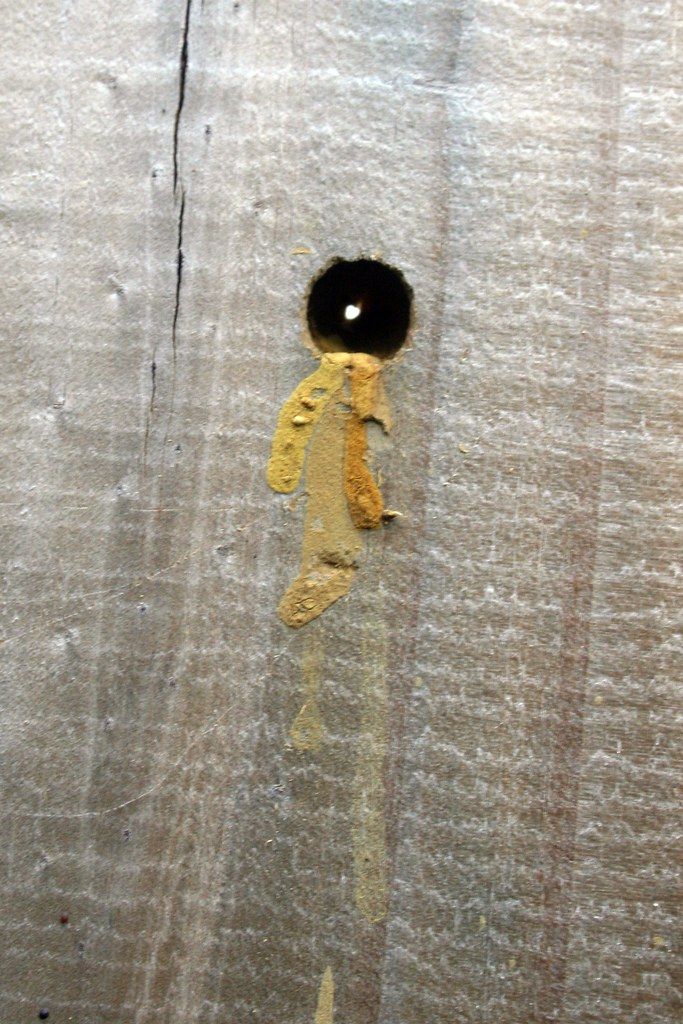
There is also secondary damage to think about. Carpenter bee holes can leave coarse sawdust beneath the opening, yellowish or brown staining on the wood, entry points for moisture, and eventually conditions that favor decay.1245 Woodpeckers may also tear into infested boards to get at larvae or adults, and in some cases the bird damage is more dramatic than the bee damage.1235
The main risk is usually not the bee stinging you. It is exposed wood becoming a repeated nursery site and a long-term maintenance problem.
Why spraying everything is usually the wrong first move
This is where panic tends to make people less effective.
Blanket spraying sounds decisive, but several extension sources argue against it as a first response. NC State notes that broad protective sprays on wood surfaces are short-lived and often not a sensible solution, especially since carpenter bees are active over a period of weeks and are not feeding on the wood surface.2 That same guidance says spraying the hovering bees themselves is not a sensible use of 2
The University of Georgia makes a similar point more directly: applying pesticides to the exterior surface of structural lumber is not effective and is not recommended for exterminating or preventing nests.5
That does not mean treatment is never justified. It means the target matters.
If damage is significant enough to act on, the more sensible strategy is targeted management: identify active or reused tunnel openings, treat those when needed, and then seal, repair, paint, or replace the wood so it is less attractive next season.12345
It is less satisfying than declaring war on every large bee you see, but it is much more likely to work.
What usually helps more
Carpenter bees prefer bare, weathered, unfinished, or cracked wood.12345 Painted and well-maintained wood is less attractive, even if it is not completely immune.1235
So the most useful first moves are often boring ones:
- paint or seal exposed wood
- repair or replace heavily tunneled boards
- fill cracks and defects before spring nesting starts
- avoid plugging active tunnels too quickly unless they have been properly treated or gone inactive12345
That is not as emotionally satisfying as spraying at the nearest hovering insect, but it is much better aligned with how carpenter bees actually use a structure.
They are not villains, just inconvenient bees
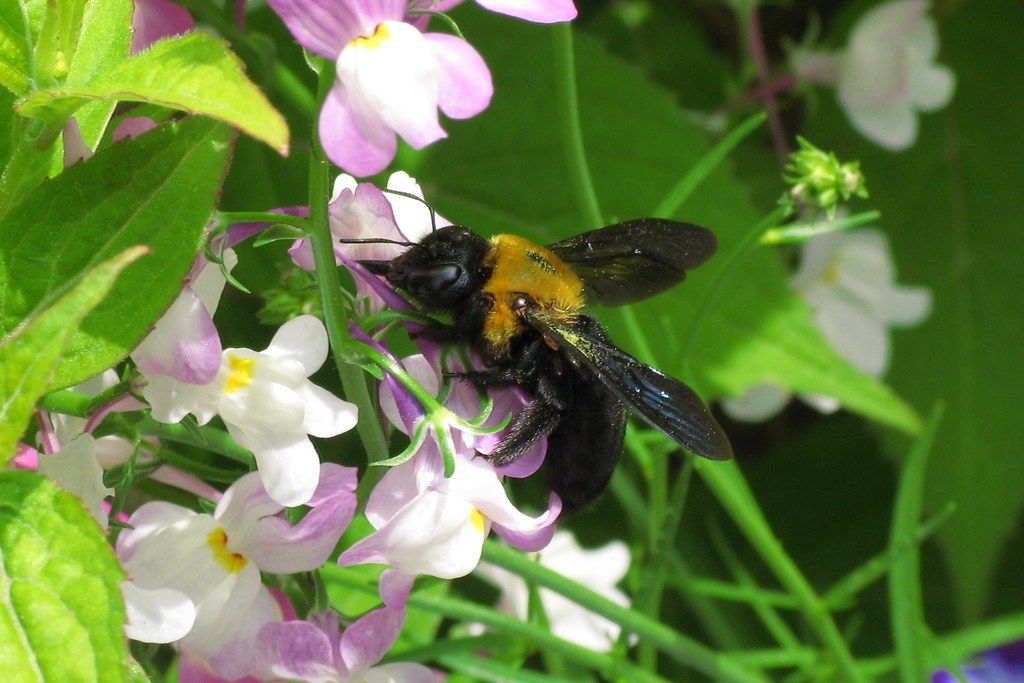
Image by TANAKA Juuyoh (田中十洋)
Used under a BY 2.0 license.
Carpenter bees are native pollinators, and as a group they are capable of buzz pollination, one of the more mechanically impressive things bees do.156 That does not make damage to a cedar railing imaginary. It just means the story is not “evil bee attacks homeowners.”
It is closer to this: a native wood-nesting bee has found that human structures contain a lot of dry, exposed lumber, and in spring the males make a show of defending that real estate.
So if carpenter bees seem aggressive in spring, your impression is not completely wrong. They really do fly at people. They really do act territorial. But the bee making the biggest scene is usually bluffing, and the problem worth worrying about is usually the wood, not your skin.12345
Footnotes
University of Maryland Extension — Carpenter Bees ↩ ↩2 ↩3 ↩4 ↩5 ↩6 ↩7 ↩8 ↩9 ↩10 ↩11 ↩12 ↩13 ↩14 ↩15 ↩16 ↩17 ↩18 ↩19
NC State Extension — Carpenter Bees ↩ ↩2 ↩3 ↩4 ↩5 ↩6 ↩7 ↩8 ↩9 ↩10 ↩11 ↩12 ↩13 ↩14 ↩15 ↩16 ↩17 ↩18 ↩19 ↩20
Purdue Extension Entomology — Carpenter Bees ↩ ↩2 ↩3 ↩4 ↩5 ↩6 ↩7 ↩8 ↩9 ↩10 ↩11 ↩12 ↩13 ↩14 ↩15
MU Extension — Carpenter Bees ↩ ↩2 ↩3 ↩4 ↩5 ↩6 ↩7 ↩8 ↩9 ↩10 ↩11 ↩12 ↩13 ↩14 ↩15
University of Georgia IPM — Eastern carpenter bee ↩ ↩2 ↩3 ↩4 ↩5 ↩6 ↩7 ↩8 ↩9 ↩10 ↩11 ↩12 ↩13 ↩14
PubMed / Scientific Reports — Carpenter bee thorax vibration and force generation inform pollen release mechanisms during floral buzzing ↩