
Nephrotoma suturalis
(Loew, 1863)
tiger crane fly
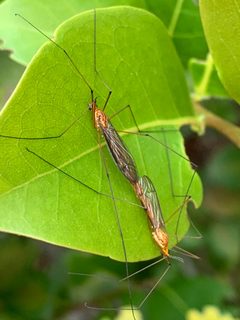
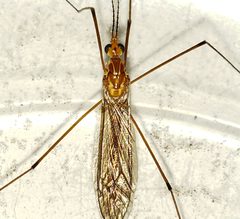
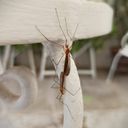
Nephrotoma suturalis is a of tiger crane fly in the Tipulidae, first described by Loew in 1863. The species has been extensively used as a model organism in research, particularly for studies of and spindle microtubule dynamics. Two are recognized: N. s. suturalis in the southeastern USA and N. s. wulpiana with a broader distribution including western North America and in Europe and Hawaii.
Pronunciation
How to pronounce Nephrotoma suturalis: //nɛfˈrɒtəˌmə suːtjʊˈreɪlɪs//
These audio files are automatically generated. While they are not always 100% accurate, they are a good starting point.
Images
Distribution
Native to North America, with two showing distinct ranges: N. s. suturalis occurs in the southeastern USA, while N. s. wulpiana ranges across western North America and the southeastern USA. The has been introduced to Hawaii, and N. s. wulpiana is in Spain and Portugal. GBIF records confirm presence in Hawaii.
Human Relevance
Widely used as a model organism in cytological and research due to the large size of crane fly , which facilitate detailed study of meiotic spindle organization, microtubule dynamics, and segregation. The has contributed to fundamental understanding of cell division mechanisms.
More Details
Research Significance
Nephrotoma suturalis have been a cornerstone model system for studying meiotic division since the mid-20th century. The exceptionally large size of primary spermatocytes (among the largest known in insects) allows for high-resolution analysis of spindle microtubule organization, kinetochore function, and movement. Key research contributions include: (1) demonstration of selective acetylation of kinetochore microtubules, supporting the hypothesis that tubulin subunits add at kinetochores during metaphase; (2) quantification of microtubule distribution in anaphase spindles, showing interzonal regions contain 60-80% of microtubules compared to chromosome-to-pole regions; (3) documentation of amphitelic orientation of and associated "bridging" material between kinetochores. These findings have advanced understanding of conserved mechanisms of cell division across .
Subspecies Differentiation
The two recognized show primarily geographic rather than morphological differentiation in most sources. N. s. wulpiana has substantially broader distribution, including both western North America and introduced ranges, suggesting greater ecological flexibility or human-mediated capacity compared to the nominate subspecies.
Sources and further reading
- BugGuide
- Wikipedia
- GBIF taxonomy match
- iNaturalist taxon
- NCBI Taxonomy
- Catalogue of Life
- The real Eleodes suturalis… | Beetles In The Bush
- MICROTUBULE DISTRIBUTION IN THE ANAPHASE SPINDLE OF PRIMARY SPERMATOCYTES OF A CRANE FLY (NEPHROTOMA SUTURALIS)
- Acetylated α‐tubulin in spermatogenic cells of the crane fly Nephrotoma suturalis: Kinetochore microtubules are selectively acetylated