
Pilaria tenuipes
(Say, 1823)
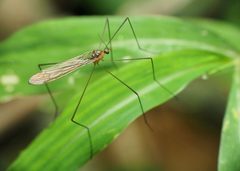
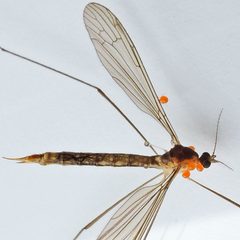
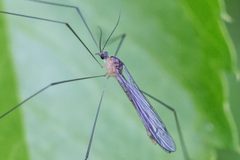
Pilaria tenuipes is a crane fly in the Limoniidae, first described by Thomas Say in 1823 under the name Limnobia tenuipes. It is a small, delicate nematoceran fly distributed across much of North America. The is one of approximately 400 species in the Pilaria, which are typically associated with moist . Despite its wide distribution, detailed biological information remains limited.
Pronunciation
How to pronounce Pilaria tenuipes: /pɪˈlɑːriə ˈtɛnjʊˌiːps/
These audio files are automatically generated. While they are not always 100% accurate, they are a good starting point.
Images
Distribution
Recorded from Canada (Ontario, New Brunswick, and presumably other provinces), the United States (from Minnesota south to Kansas, Texas, and Florida), and Mexico. The occurs in both the Nearctic and Neotropical regions.
More Details
Taxonomic history
Originally described as Limnobia tenuipes by Thomas Say in 1823, later transferred to the Pilaria. The genus Pilaria was formerly treated as a subgenus of Limnophila.
Observation frequency
As of the data source, there were 373 iNaturalist observations, indicating it is moderately well-encountered by citizen scientists but not among the most commonly reported crane flies.