
Pedicia procteriana
Alexander, 1939
hairy-eyed crane fly
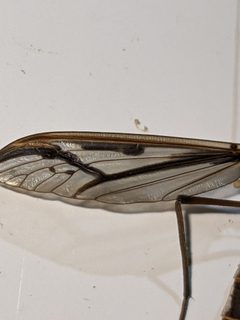
Pedicia procteriana is a of crane fly in the Pediciidae, commonly known as hairy-eyed crane flies. It is a Nearctic species found in northeastern North America. Like other members of Pediciidae, it belongs to the group of crane flies distinguished by densely hairy , a trait reflected in its . The species was described by Charles Paul Alexander in 1939.
Pronunciation
How to pronounce Pedicia procteriana: //pɛˈdɪʃiə prɒktɛˈriːɑːnə//
These audio files are automatically generated. While they are not always 100% accurate, they are a good starting point.
Identification
Images
Appearance
possess the characteristic densely hairy that distinguish the Pediciidae from other crane fly families. As with other Pedicia , the body is slender with long legs typical of crane flies. Specific coloration and body proportions have not been documented in available sources.
Habitat
Associated with forested and riparian environments typical of Pediciidae, where larvae develop in moist substrates. Specific microhabitat preferences for this are not documented.
Distribution
Nearctic region: Canada (Saskatchewan, Ontario, Quebec) and USA (Maine, Pennsylvania, Massachusetts, Vermont).
Seasonality
activity period not documented in available sources.
Ecological Role
are not known to feed. Larval presumed similar to other Pediciidae, which are generally or in moist forest floor , but specific role for this is undocumented.
Similar Taxa
- Other Pediciidae speciesShare the characteristic hairy-eyed trait; require detailed morphological examination to distinguish
- Tipulidae (typical crane flies)Lack the densely hairy that define Pediciidae; eyes are smooth or sparsely haired
More Details
Taxonomic authority
Described by Charles Paul Alexander in 1939, a prolific dipterist who described thousands of crane fly .
Observation records
iNaturalist documents 133 observation records, suggesting the is encountered with moderate frequency within its range.