
Gelechia
Hübner, [1825]
Species Guides
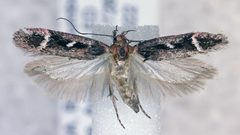
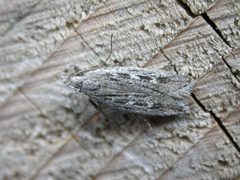
10Gelechia is a of small in the Gelechiidae, first described by Hübner in 1825. The type is Gelechia rhombella. Species in this genus are associated with various plants including cotton (Gossypium), juniper (Juniperus), and Palo Verde trees (Parkinsonia). Some species have been moved to other genera based on morphological revisions, such as Gelechia acanthopis which was transferred to the new genus Sitotrogoides. The genus has been recorded from Europe, Asia, and North America.

Pronunciation
How to pronounce Gelechia: //ɡəˈlɛkiə//
These audio files are automatically generated. While they are not always 100% accurate, they are a good starting point.
Images
Habitat
varies by . Gelechia senticetella inhabits juniper woodlands in Bulgaria. Gelechia gossypiella is found in cotton agroecosystems, persisting in fields between harvest and subsequent sowing. Former members of this , such as those now placed in Faculta, occur in Sonoran Desert habitats on Palo Verde trees.
Distribution
Recorded from Denmark, Norway, and Sweden based on GBIF distribution records. Individual have broader ranges: Gelechia senticetella in Bulgaria; Gelechia gossypiella in cotton-growing regions (implied from Egypt and general cotton distribution); and former members in southwestern North America (southern California, Arizona, southern New Mexico, Baja California Sur).
Host Associations
- Gossypium - Gelechia gossypiella associated with cotton; inferred from epithet and study context
- Juniperus excelsa - Gelechia senticetella is a pest of this juniper in Bulgaria
Life Cycle
varies by . Gelechia gossypiella persists through the inter-harvest period in cotton fields, with tracking from cotton harvest to subsequent sowing. Gelechia senticetella is attacked by primarily during larval stages, with killed before .
Ecological Role
Some function as agricultural pests. Gelechia senticetella serves as for a complex of 16 species in Bulgaria, including primary parasitoids (Braconidae, Ichneumonidae, Eulophidae, Eupelmidae, Encyrtidae, Pteromalidae) and hyperparasitoids. rates in this system reached 57.9% in peak years.
Human Relevance
Gelechia gossypiella is a cotton pest of agricultural concern, with studies conducted by agricultural services. Gelechia senticetella is a pest of ornamental and forest juniper. Historical taxonomic confusion has occurred, with placed in this later transferred to other genera (e.g., Faculta, Sitotrogoides).
Similar Taxa
- Sitotrogoides established for Gelechia acanthopis based on male genital ; distinguished by lack of muscle m3 in musculoskeletal apparatus
- FacultaFormerly included now placed here; Faculta inaequalis was previously known as Gelechia inaequalis and G. clistrodoma
More Details
Taxonomic revisions
Gelechia acanthopis Meyrick, 1932 was transferred to the new Sitotrogoides based on functional of male genitalia, specifically the lack of muscle m3 which associates it with Sitotroga rather than other Pexicopiini genera. New records from Korea extended its known distribution beyond Japan.
Parasitoid complex
In Bulgaria, Gelechia senticetella 16 : Habrobracon stabilis, Hormius moniliatus, Phanerotoma tritoma (Braconidae); Diadegma consumptor, Liotryphon cydiae, Scambus pomorum, Scambus foliae, Pimpla turionellae, Eudelus simillimus, Mesochorus sp. (Ichneumonidae); Sympiesis acalle, Aprostocetus sp. (Eulophidae); Eupelmus urozonus (Eupelmidae); Copidosoma thompsoni (Encyrtidae); Calliprymna bisetosa, Mesopolobus sp. (Pteromalidae). Three species are hyperparasitoids.
Sources and further reading
- BugGuide
- Wikipedia
- GBIF taxonomy match
- iNaturalist taxon
- NCBI Taxonomy
- Catalogue of Life
- Encyrtid Holdings | Entomology Research Museum
- Bug Eric: Moth Monday: Palo Verde Webworm
- The life history of Gelechia gossypiella from the time of the cotton harvest to the time of cotton sowing
- Ministry of Agriculture, Egypt: Technical Service, Bulletin No. 4. The Life History of Gelechia Gossypiella
- Studies on the parasitoids of Gelechia senticetella (Stgr.) (Lepidoptera: Gelechiidae) in Bulgaria
- A new genus of Pexicopiini (Lepidoptera: Gelechiidae) for “Gelechia” acanthopis Meyrick, 1932, with review of functional morphology of male genitalia in allied genera